
Last updated October 15, 2026
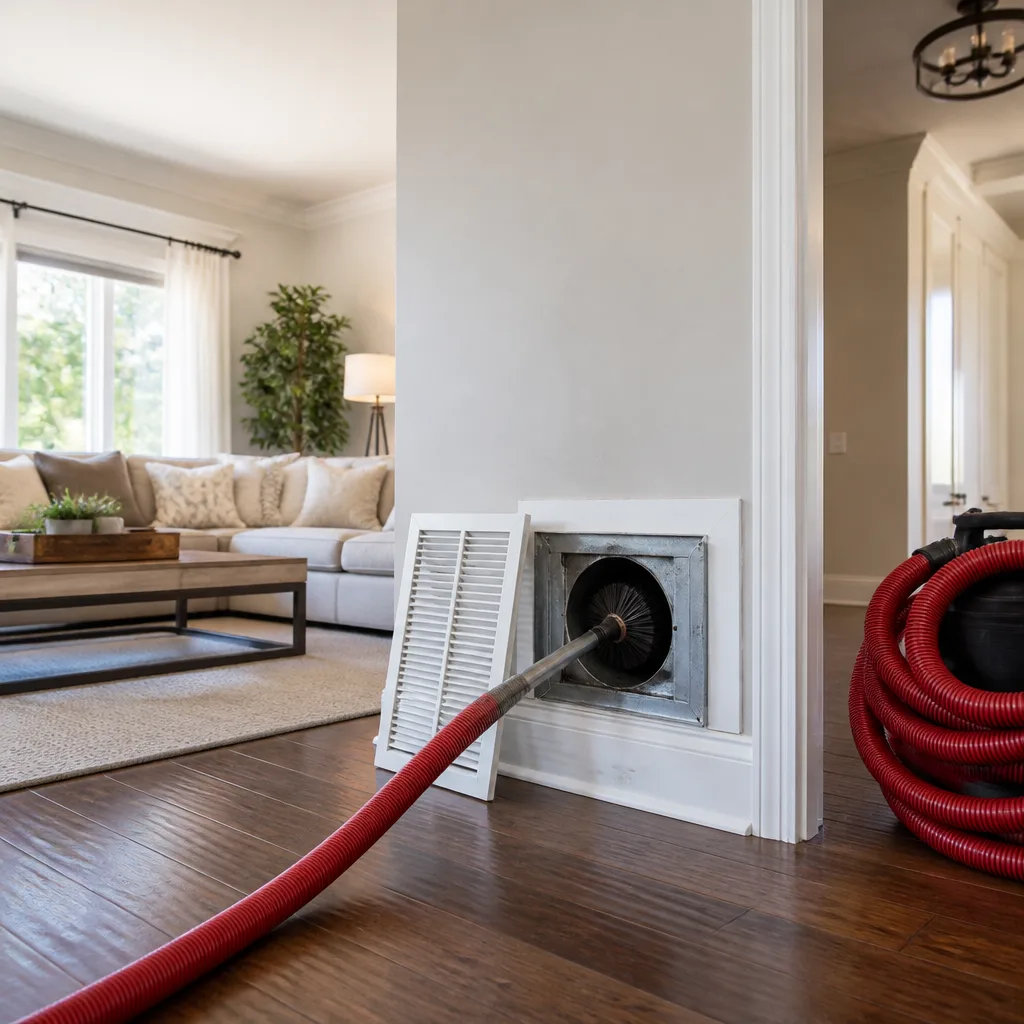 Whole-home duct cleaning
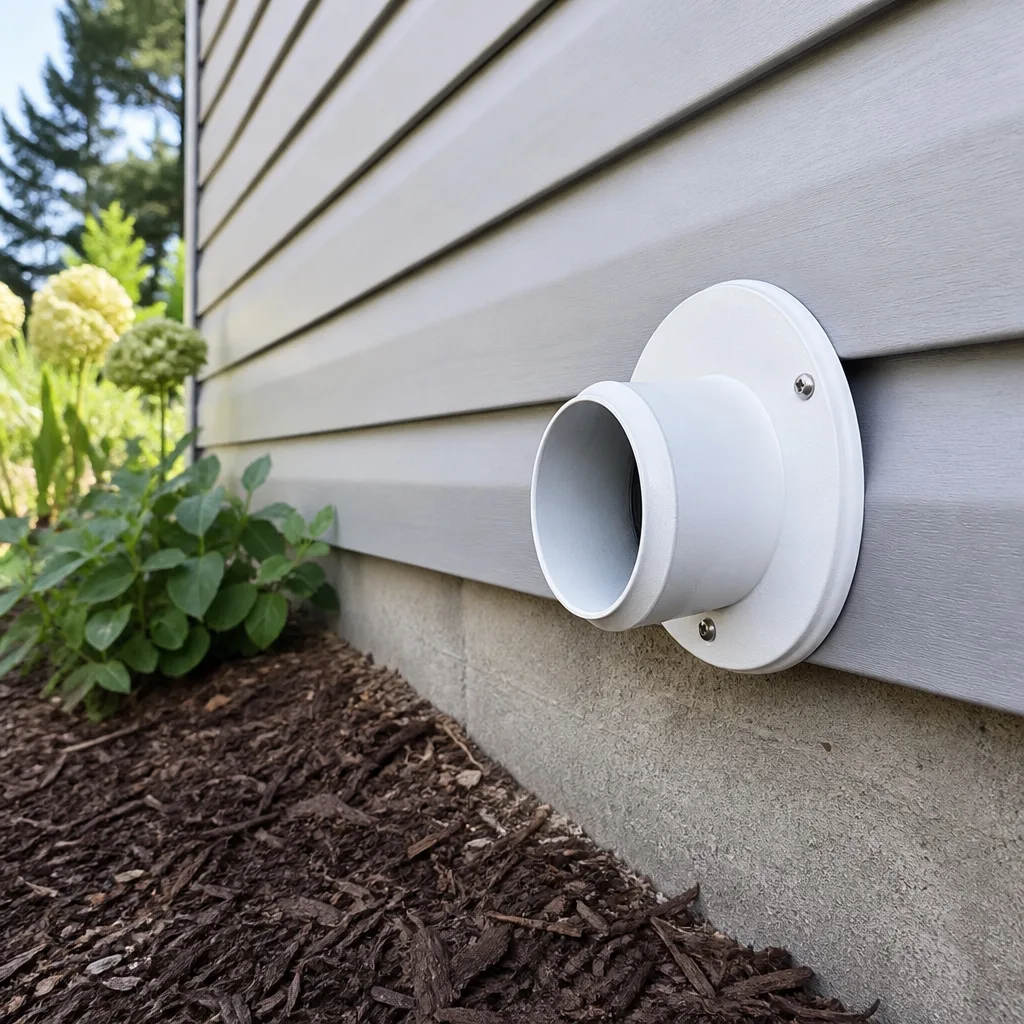 Dryer vent cleaning
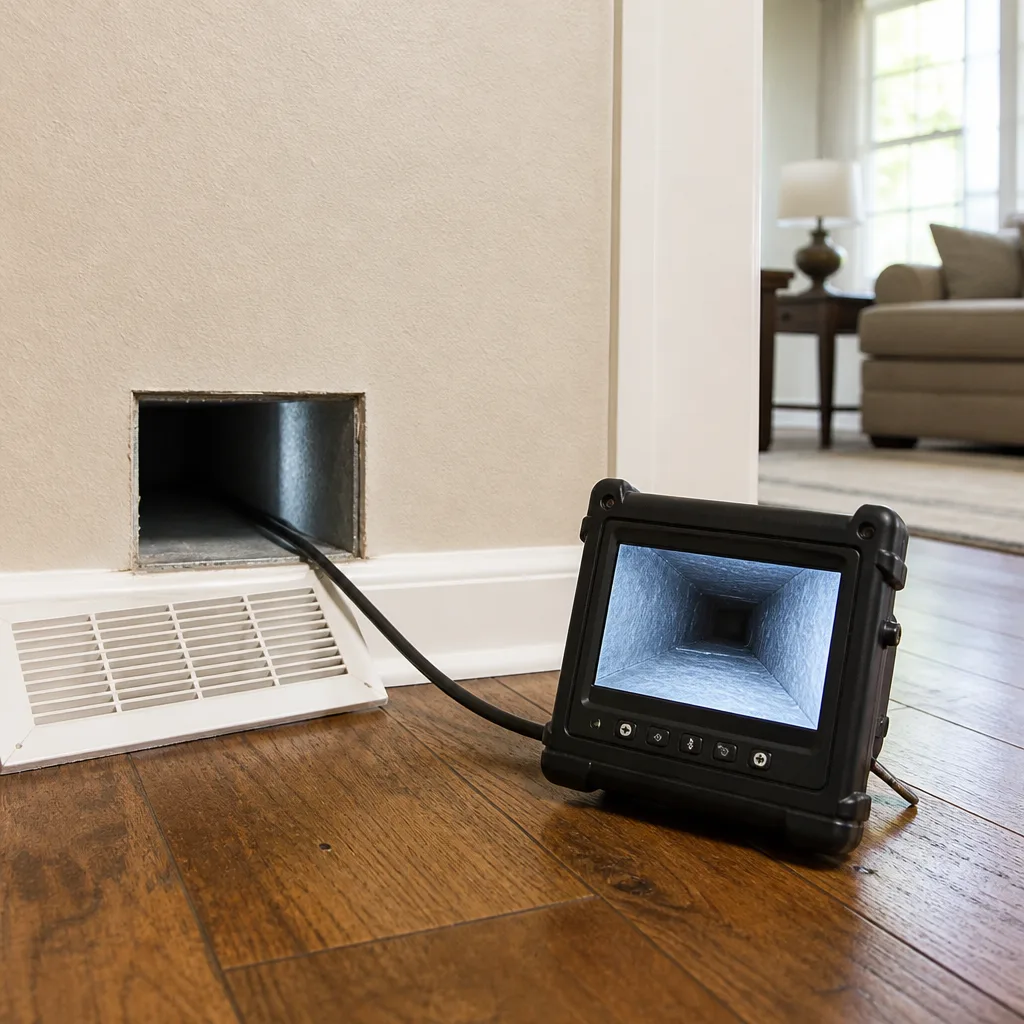 Camera inspection
 Sanitizing & deodorizing
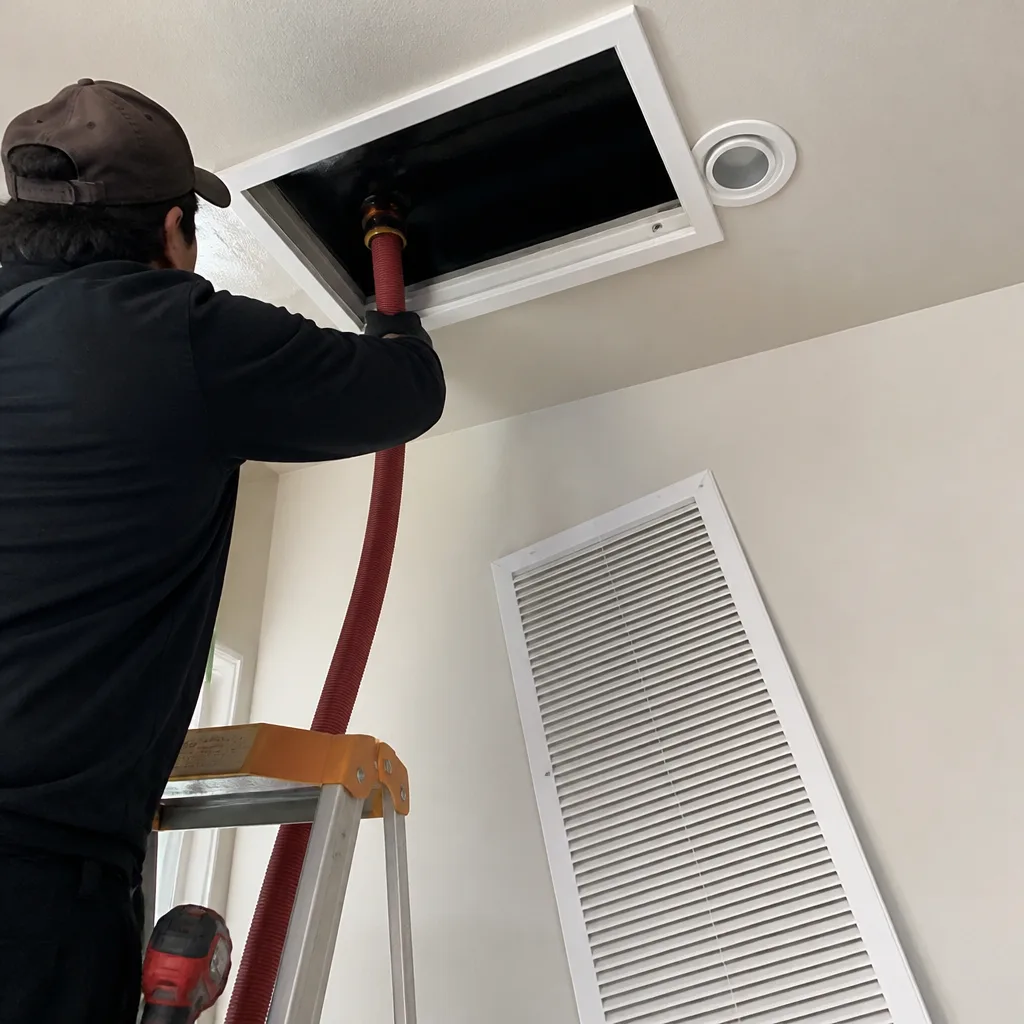
Whole-system duct and dryer vent check with before-and-after photos - you see exactly what came out of your vents
That "$99 whole-house special" is a bait ad - the real number appears once they are in your hallway, or the "clean" is a shop-vac at the register. We photograph the inside of your ducts before and after instead.
Air Duct Cleaning Permits, Codes & Inspections in TX: What You Need to Know
Here’s something that surprises most Austin homeowners: the duct cleaning technician standing in your hallway with a rotating brush probably doesn’t need a permit. But the moment that same tech reaches for sheet metal snips, foil tape, or a screwdriver to repair, seal, or modify a duct, Texas code says the job just became something else entirely. Most people can’t see that line, and paying for work on the wrong side of it is how you end up with an insurance claim that gets denied or a home sale that stalls at inspection. This guide-along with our The Complete Guide to Air Duct Cleaning in Austin-walks you through where Texas draws the line between cleaning and mechanical work, what Austin adds on top of state code, and how to protect yourself before anyone touches your ductwork.
Styles & brands we work with
Quick Answer
Air duct cleaning itself does not require a permit in Texas, because the state classifies it as maintenance rather than mechanical work. However, any duct repair, sealing, modification, or component replacement that goes beyond cleaning falls under mechanical permitting rules, and Austin has its own amendments to the International Mechanical Code that tighten those requirements. Before you let any contractor patch or alter a duct during a our Air Duct Cleaning services visit, ask for their Texas mechanical contractor license number and confirm whether a permit is needed for that specific scope.
Table of Contents
- How Texas Defines Cleaning vs. Mechanical Work
- Austin’s Local Amendments to the International Mechanical Code
- How Permit History Affects Your Home’s Sale and Insurance
- Questions to Ask Any Contractor Who Proposes Duct Repair
- Homeowner Liability When a Cleaning Company Uses Unlicensed Subs
- Texas Mechanical Code Requirements for Duct Systems
- What a Duct Repair Inspection Actually Looks Like in Austin
- Common Mistakes to Avoid
- When to Call a Professional
- Frequently Asked Questions
- The Bottom Line
How Texas Defines Cleaning vs. Mechanical Work
Texas building codes are built on the International Mechanical Code, which the state adopts with specific amendments. The distinction that matters for homeowners is this: cleaning removes contaminants from the interior surface of existing ducts. Mechanical work alters, repairs, replaces, or extends the duct system itself. The first doesn’t require a permit. The second often does.
Here’s how that plays out in real terms:
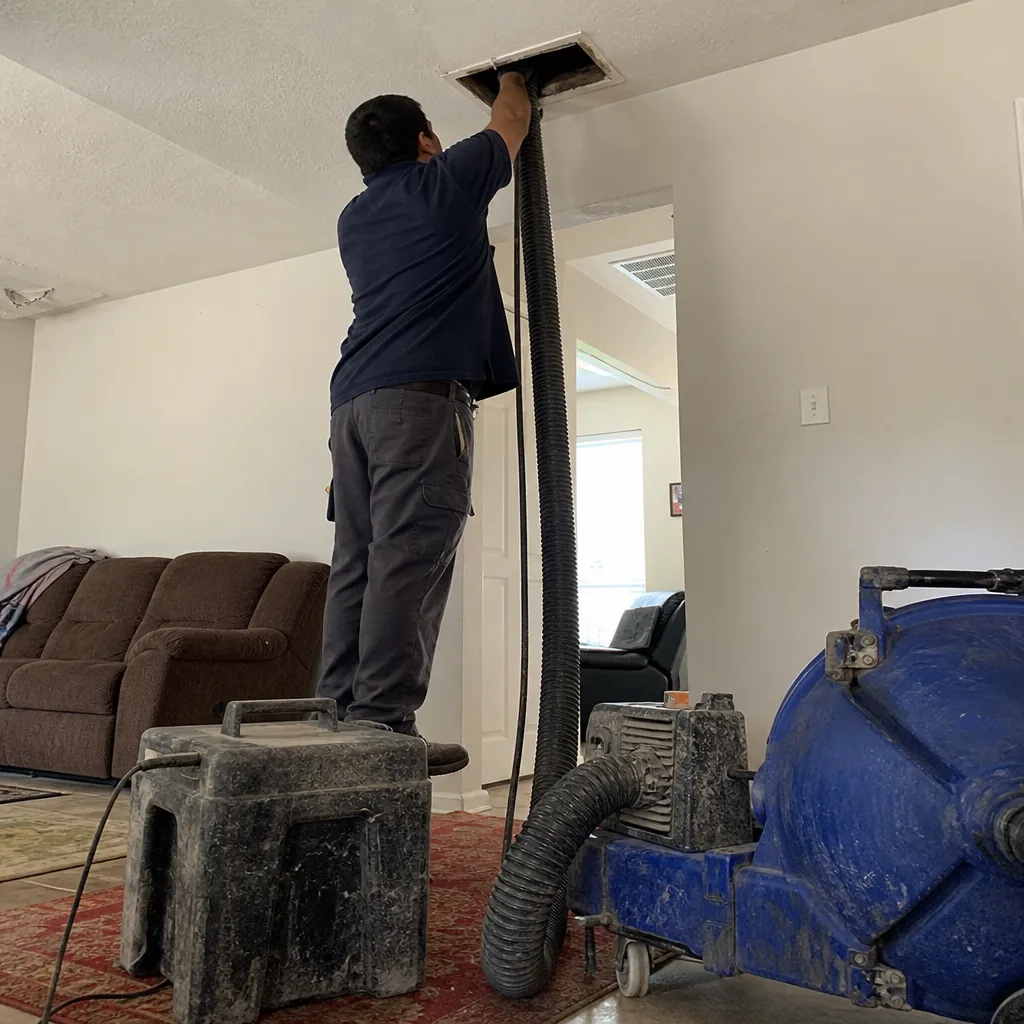
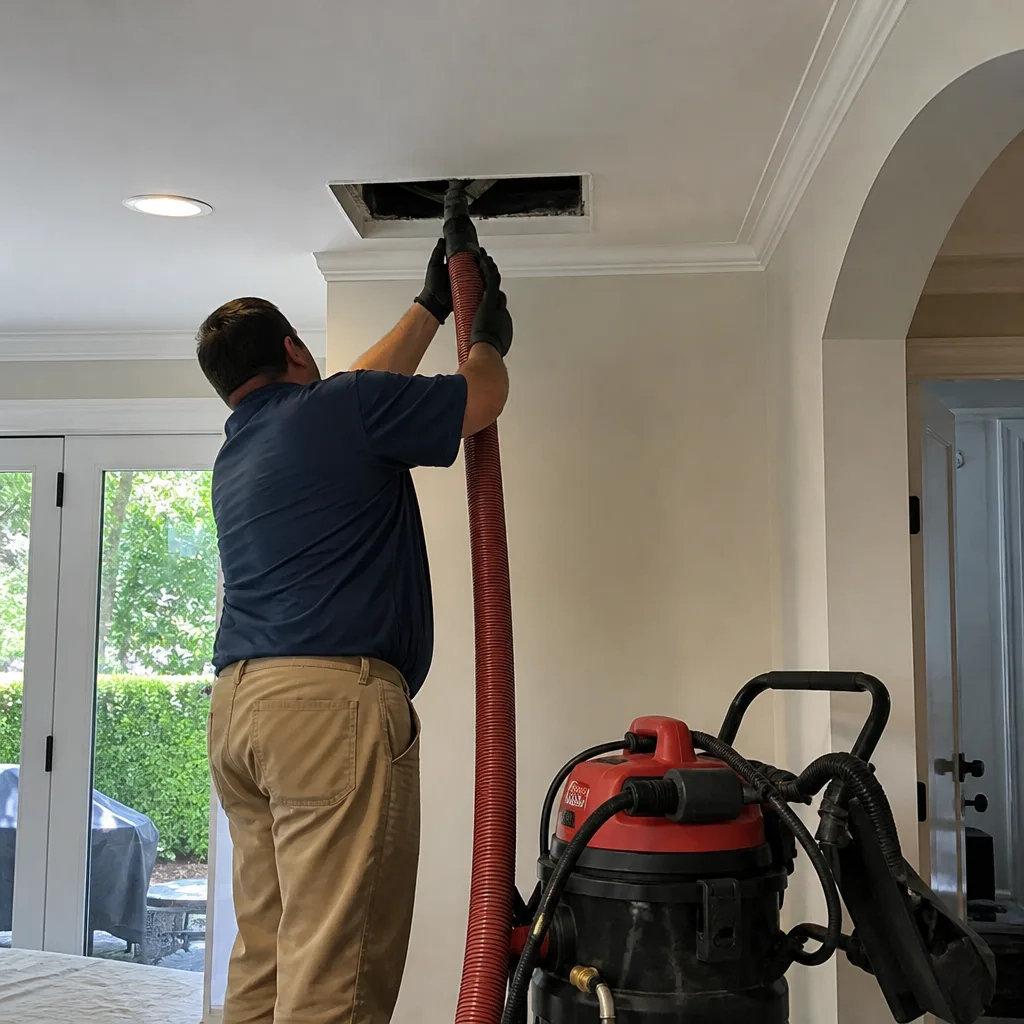
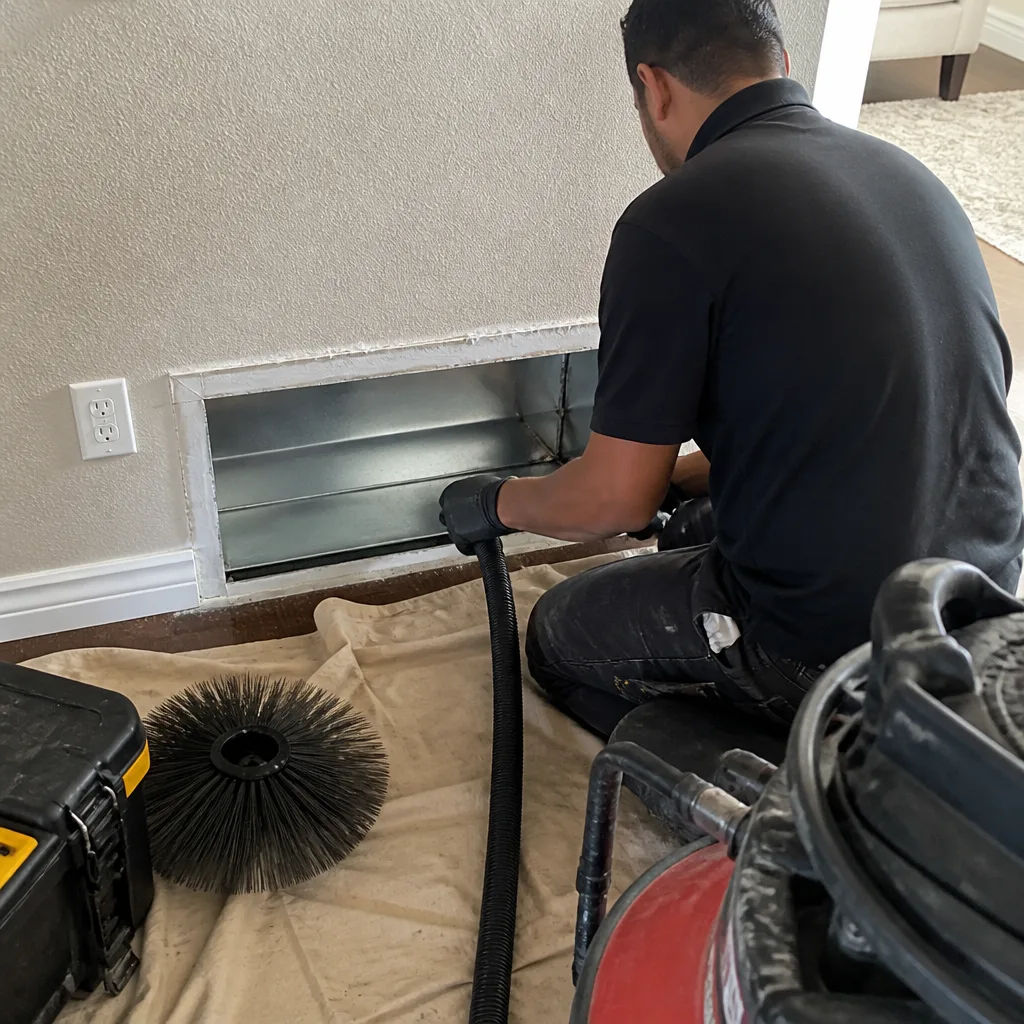
- Cleaning (no permit): Negative-pressure extraction using a HEPA-filtered vacuum, rotary brush agitation of interior duct surfaces, removal of debris from registers and plenums, sanitizing interior surfaces with EPA-registered products, and camera inspection of duct interiors.
- Repair (permit may be required): Reconnecting a duct joint that has separated at the plenum, replacing a crushed section of flex duct, sealing gaps at register boots with mastic, patching holes in sheet metal ducts, adding or relocating a supply register, and replacing duct insulation that has torn away from the exterior.
What’s the practical difference? A cleaning job leaves your duct system exactly as it was, minus the dust and debris. A repair changes the physical configuration or restores structural integrity that had failed. Texas treats that second category as mechanical work because a badly executed repair can compromise airflow, create condensation problems, or pull combustion gases back into your living space.
We’ve walked through Austin homes in neighborhoods like Allandale and Crestview where a “cleaning” visit-often missing the Air Duct Cleaning Warning Signs: A Austin Homeowner’s Reference Guide-turned into an on-the-spot repair offer with no permit attached. The repair might have been fine. It might also have been unpermitted mechanical work that never appeared on any record. That’s the risk we’re talking about.
Austin’s Local Amendments to the International Mechanical Code
The City of Austin does more than adopt the state mechanical code. It layers local amendments on top of it through the Austin Building Codes Division, and those amendments affect HVAC-adjacent work in ways that surprise homeowners who have lived in other Texas cities.
Key points to understand about Austin’s approach:
- Austin requires mechanical permits for duct modifications beyond minor repair. The city’s position is that any change to the design, layout, or capacity of a duct system is mechanical work subject to permitting. That includes adding a new supply run, relocating a return, or resizing duct to correct airflow imbalances.
- Duct sealing at the plenum or trunk line is treated as mechanical repair in Austin. Sealing a small leak at a register boot with mastic is generally considered maintenance. But sealing at the central plenum, where the duct connects to the air handler, is structural repair in the city’s view and can trigger a permit requirement depending on scope.
- Replacement of duct sections counts as alteration, not maintenance. If a crushed or torn section of flex duct needs replacement, Austin code treats that as an alteration of the mechanical system. A permit applies, and the work must be done by someone who holds the appropriate Texas mechanical license.
- Inspections are required for permitted work. When a permit is pulled for duct repair in Austin, the city requires an inspection to verify the work meets code. That inspection history becomes part of your home’s permanent record.
The climate angle matters here too. Austin’s heat and humidity stress duct systems in ways that colder or drier climates don’t. Attics routinely hit 140 degrees in summer, and flex duct degrades faster under that kind of heat load. Condensation on the exterior of ducts in humid shoulder seasons accelerates insulation breakdown. Homeowners in Austin deal with duct failures at a higher rate than people in most of the country, which means the question of repair scope comes up more often here.
How Permit History Affects Your Home’s Sale and Insurance
Unpermitted duct work is one of those things that sits quietly in your walls until the day it doesn’t. Here’s how it surfaces.
When you sell your home: Austin’s real estate market is among the most disclosure-heavy in Texas. Sellers are required to disclose known material defects, and buyers increasingly hire specialized inspectors who look specifically at HVAC systems. An inspector who finds evidence of recent duct modification that doesn’t match any permit record will flag it in the report. That flag can kill a deal, force a price concession, or require the seller to pull a permit retroactively and correct any code violations found during the resulting inspection. Retroactive permits cost more than permits pulled before work begins.
When you file an insurance claim: This is where the stakes get highest. If a homeowner files a claim for water damage caused by condensation from an improperly sealed duct, the insurer will investigate the cause. If the investigation reveals the duct was sealed or modified without a permit by an unlicensed contractor, the insurer has grounds to deny the claim on the basis that the work was not performed to code and altered the insured risk without disclosure. The opening hook of this guide wasn’t hyperbole. An unpermitted duct patch can genuinely void coverage for a related claim.
What appears on your home’s permit record matters because it’s the only paper trail that separates “maintenance” from “mechanical work” in the eyes of a bank, an insurer, or a buyer’s attorney. No permit means no record. No record means no proof the work met any standard at all.
Questions to Ask Any Contractor Who Proposes Duct Repair
When a technician finds something during a duct cleaning visit in Austin and suggests a repair, you have a decision to make in real time. These are the questions that separate licensed, accountable contractors from everyone else.
- “Are you licensed to perform mechanical work in Texas?” Ask for the specific license number and verify it through the Texas Department of Licensing and Regulation. Duct cleaning alone doesn’t require a mechanical license, but duct repair does. A cleaning-only company that proposes repair work should be able to produce a mechanical contractor license or tell you they can’t do the work themselves.
- “Does this repair require a permit in Austin?” The answer should be specific and immediate. If they say no, ask why. If they say yes, ask whether they’ll pull it or whether you need to. Some contractors prefer the homeowner to pull the permit, which is legal but shifts responsibility to you.
- “Will this work be inspected by the city?” If the repair is permitted, inspection should follow. A contractor who waves off inspection is telling you something important about their process.
- “What exactly are you going to do, and what will it cost?” You want a written scope of work and a written price before anything starts. Not an estimate. A written price. A technician who can’t put the price on paper before beginning the work is not someone you want modifying your duct system.
- “What happens if the repair doesn’t hold?” Some contractors will fix it again for free. Some won’t. The answer tells you how they think about accountability. At Linden Air Duct Austin, every repair is covered by a written guarantee, and if the repair fails within the covered period, we come back at no charge.
Homeowner Liability When a Cleaning Company Uses Unlicensed Subs
Here’s a scenario we’ve seen multiple times in Austin. A homeowner hires a duct cleaning company. The tech finishes the cleaning and points out a torn flex duct in the attic. The company doesn’t do repairs themselves, but they know a guy. That guy shows up, patches the duct, and leaves. No permit, no license, no record.
Who’s holding the bag if that patch fails and water pours through the ceiling? The homeowner. Here’s why:
- The cleaning company’s insurance typically covers cleaning work only. If their policy doesn’t extend to mechanical repairs, the homeowner has no claim against the company’s coverage.
- The unlicensed sub may have no insurance at all. If the subcontractor isn’t licensed, they almost certainly aren’t insured for mechanical work in Texas. That leaves the homeowner’s policy as the only source of recovery, and the insurer may deny the claim because the work was unpermitted.
- Texas courts have consistently held that homeowners are responsible for verifying contractor licensing. You can’t plead ignorance. The law expects you to ask.
- The subcontractor has no relationship with you on paper. No contract, no warranty, no guarantee. If the work fails, you’re relying on a handshake with someone you never intended to hire.
The solution is simple but non-negotiable: if repair work is proposed during a cleaning visit, confirm the person doing the repair is licensed for mechanical work, insured for that scope, and willing to put the work in writing with a permit if Austin requires one. If any of those three is missing, the repair can wait.
Texas Mechanical Code Requirements for Duct Systems
If you’re going to understand what licensed contractors are working toward, it helps to know what the code actually says about duct systems. Texas adopts the International Mechanical Code with state-specific amendments, and the relevant sections for duct work focus on these areas:
- Duct materials and construction: Ducts must be constructed of approved materials, with specific standards for sheet metal gauge, flex duct rating, and connector types. The code specifies minimum material standards for any replacement section.
- Duct sealing requirements: All duct joints and seams must be sealed with approved materials: mastic, metal tape that meets UL 181 standards, or gasketed connector systems. Plain cloth tape, which many homeowners remember from older repairs, doesn’t meet code and shouldn’t appear anywhere in a modern duct system.
- Duct insulation: Supply ducts running through unconditioned spaces like Austin attics must be insulated to a minimum R-value based on the climate zone. Austin’s climate zone requires more insulation than many other parts of the country because the attic heat load is so intense.
- Clearances and support: Ducts must be supported at specified intervals and maintained at specified distances from combustible materials. A duct that’s sagging between supports is a code violation waiting to happen.
- Access requirements: Equipment that requires service, including some duct components, must remain accessible after installation. That means a repair that boxes in a damper or access panel is a code problem.
None of this matters to a homeowner during routine cleaning. But it all matters the moment a repair is proposed, because a licensed contractor’s work is supposed to meet these standards, and the inspection that follows a permitted repair verifies that it does.
What a Duct Repair Inspection Actually Looks Like in Austin
If a permit is pulled for duct work in Austin, here’s what the process typically involves, step by step:
- The permit is filed before work begins. The contractor or homeowner files the permit application with the City of Austin Building Codes Division, describing the scope of the mechanical work.
- Work is completed to code standards. The repair, seal, or replacement is performed by a licensed mechanical contractor using materials and methods that meet the International Mechanical Code as amended by Austin.
- The inspection is scheduled. The contractor or homeowner schedules a mechanical inspection through the city. In our experience, Austin inspection timelines vary by season, but plan on a window of days rather than hours.
- The inspector verifies the work. The inspector checks materials, connections, sealing, insulation, and clearances. They’ll typically photograph the work and record the inspection in the city’s permit system.
- The permit is closed. Once the inspection passes, the permit is closed and the work becomes part of your home’s official record. That record is what protects you later during a sale or insurance claim.
For pure duct cleaning, none of this applies. The work is non-permitted maintenance, and the only record is the invoice you keep. That’s fine, because nothing about the duct system changed. The permit process exists for work that alters the system, and Austin takes that distinction seriously.
Common Mistakes to Avoid
- Accepting a repair offer from a cleaning tech without verifying mechanical licensing. The tech who cleans your ducts may be excellent at cleaning and entirely unqualified to modify your duct system. These are different trades with different licensing requirements in Texas.
- Assuming all duct sealing is the same. Sealing a register boot with mastic is maintenance. Sealing a plenum connection is mechanical repair. Austin treats them differently, and so should you.
- Paying cash without a written scope of work. A handshake and a verbal price don’t help you if the repair fails or if a buyer’s inspector asks questions later. Get the scope, price, and guarantee in writing before work starts.
- Believing a permit is “just paperwork.” In Austin, the permit record is what separates code-compliant mechanical work from guesswork. It’s also the only proof you have that the work was inspected.
- Ignoring the contractor’s insurance status. If the person modifying your ducts isn’t insured for mechanical work, you’re the insurer of last resort. That’s a role no homeowner should accept.
- Patching ducts with household tape. The gray cloth tape that looks like duct tape has no place in a duct system. It fails within months in Austin attic heat and leaves behind a sticky residue that makes future repairs difficult. We see this in older Austin homes constantly.
When to Call a Professional
Routine duct cleaning is a scheduled, professional job that doesn’t require a permit in Texas. But when the scope shifts toward repair, sealing, or modification, you need someone who holds a Texas mechanical contractor license and knows Austin’s local amendments to the International Mechanical Code. Specific situations that call for professional mechanical work include a separated duct joint at the plenum, collapsed or torn flex duct, register boots that have pulled away from the ceiling or floor, significant duct leaks discovered during a cleaning inspection, or any repair that changes airflow to one or more rooms. If you’re unsure whether a proposed repair needs a permit in Austin, start with a conversation. Linden Air Duct Austin offers free estimates across the Austin area. Call (940) 461-7203 and we’ll walk you through what’s needed, what’s permitted, and what the right scope actually looks like.
Frequently Asked Questions
No. Air duct cleaning is classified as maintenance work under Texas building codes and doesn’t require a mechanical permit. The work leaves your duct system unchanged and is treated the same way as carpet cleaning or gutter maintenance from a permitting perspective.
Austin requires a mechanical permit when duct work goes beyond cleaning and maintenance into repair, sealing at the plenum or trunk line, replacement of duct sections, or any change to the design or layout of the system. If a contractor tells you a permit isn’t needed for this type of work in Austin, ask them to explain why in writing.
A contractor performing duct repair or modification in Texas must hold a mechanical contractor license issued by the Texas Department of Licensing and Regulation. Duct cleaning alone does not require this license, which is why you should always ask what license the person doing repair work actually holds.
Yes, in specific circumstances. If an insurance claim is tied to work performed without a permit by an unlicensed contractor, and the insurer determines the unpermitted work caused or contributed to the damage, the claim can be denied. This is most common with water damage claims stemming from improperly sealed or connected ducts.
Duct repair in Austin typically ranges from $250 to $900 depending on the scope: a simple register boot reseal might run $250 to $400, while replacing a section of torn flex duct or repairing a failed plenum connection often lands in the $500 to $900 range. Whole-system duct replacement is a different discussion entirely and typically starts above $3,000. At Linden Air Duct Austin, we put a written price in front of you before any work begins, so there are no surprises at the end of the job. Call (940) 461-7203 for a free estimate based on your specific situation.
Most Austin homes benefit from air duct cleaning every 3 to 5 years, though homes with pets, recent renovation work, or allergy-sensitive occupants may need it more often. Austin’s cedar season and dust levels push many homeowners toward the shorter end of that range. If you’re noticing visible dust around registers or reduced airflow, a professional inspection can tell you whether cleaning is due or whether a repair issue is causing the problem. Learn more about our air duct cleaning services in Austin, and read up on our dryer vent cleaning or air duct repair options if that’s what the inspection points toward.
The Bottom Line
Texas draws a clear line between cleaning and mechanical work, and Austin enforces that line with its own amendments to the International Mechanical Code. Cleaning your ducts is maintenance. Repairing, sealing, or modifying them is mechanical work that may require a permit, a licensed contractor, and a city inspection. The record created by a permit is the only proof you have that the work met code, and without it, a home sale or insurance claim can turn into a slow-motion nightmare. Ask the right questions before any repair begins: licensing, permits, inspection, written price, and a written guarantee. For more guides & resources, or if you’re not sure where a proposed job falls, call us at (940) 461-7203 and we’ll help you figure it out.
Written by Marcus Veale, Owner at Linden Air Duct Austin, serving Austin since 2004.
See the difference
 Before
 After
After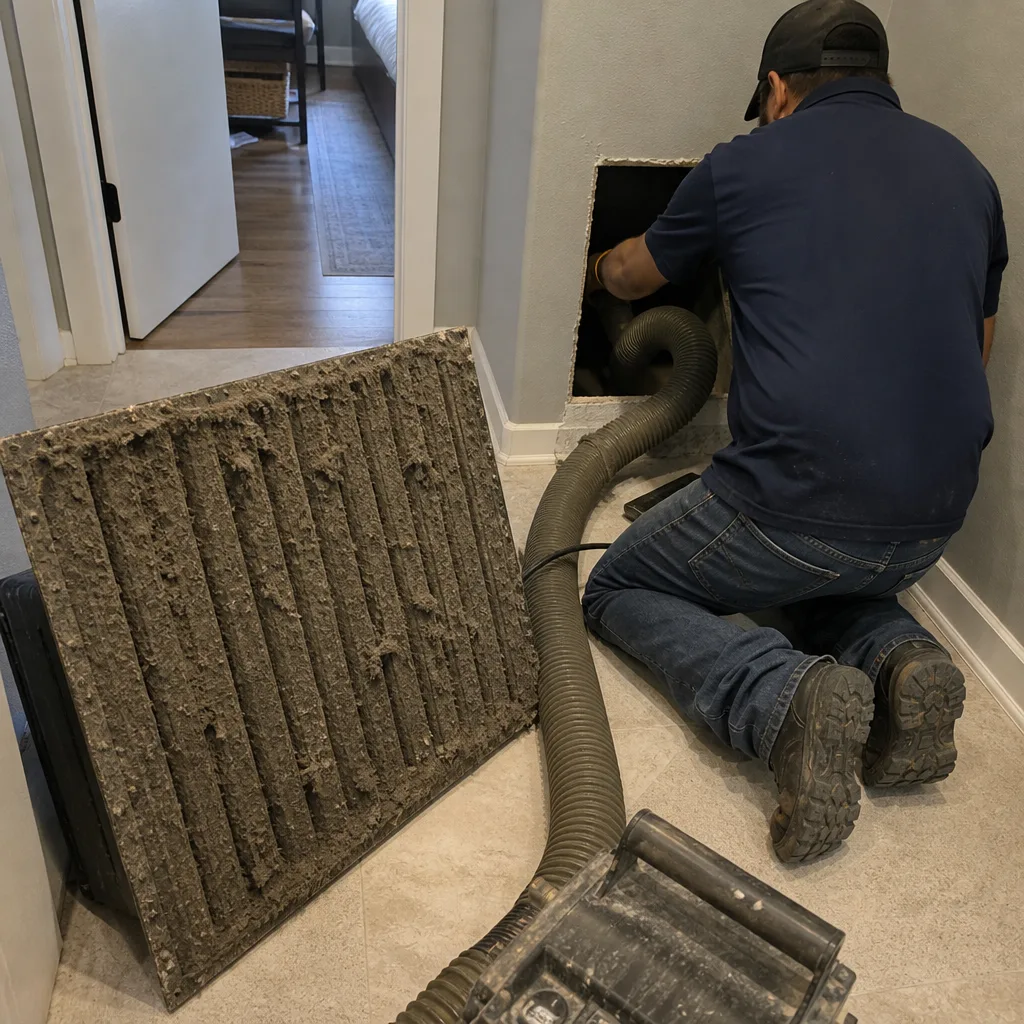 Before
 After
After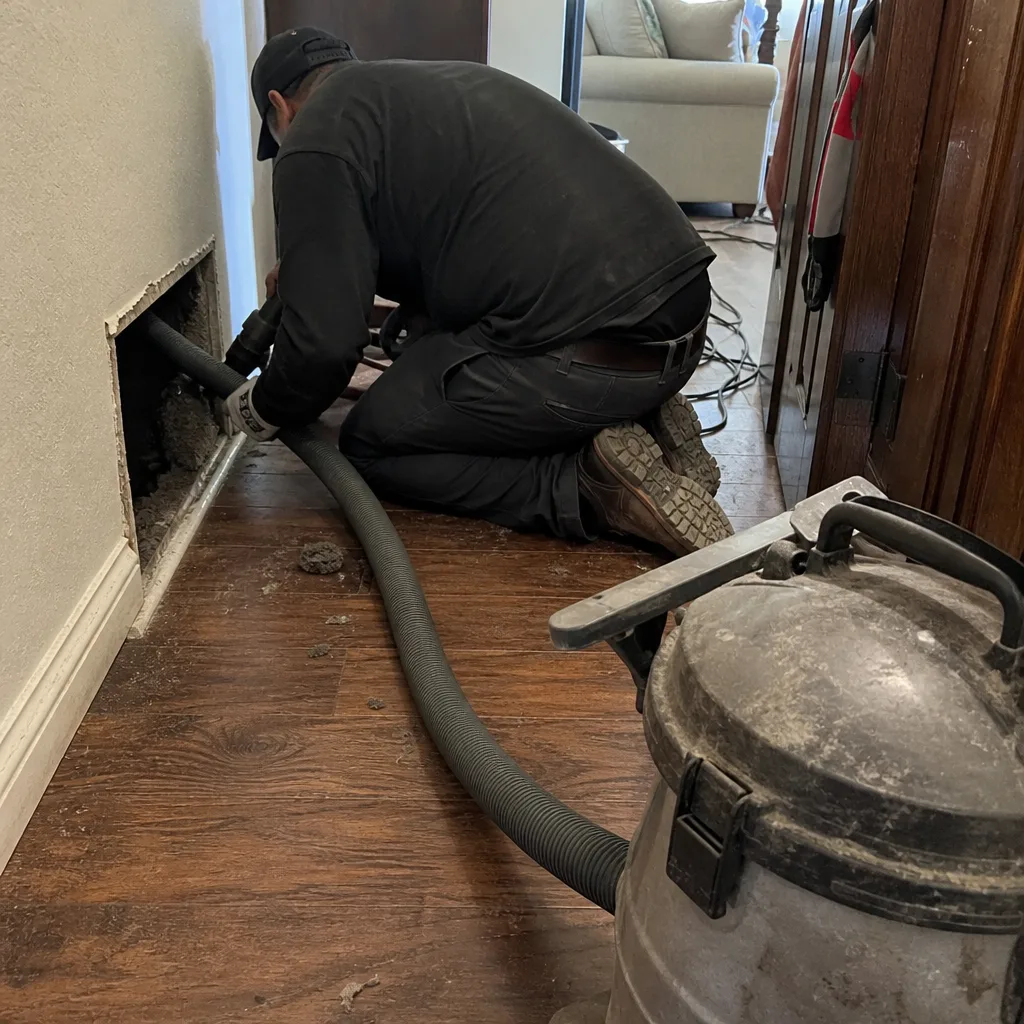 Before
 After
After