
Last updated October 15, 2026
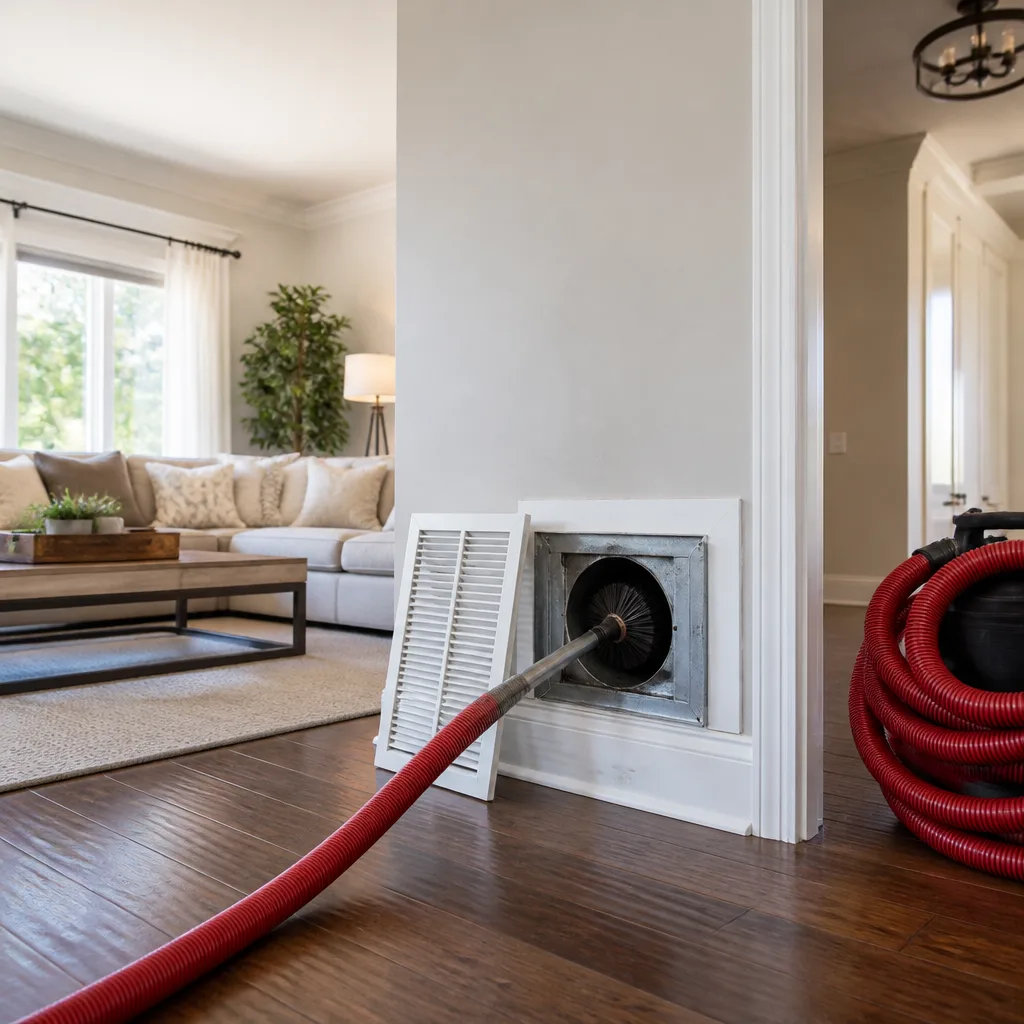 Whole-home duct cleaning
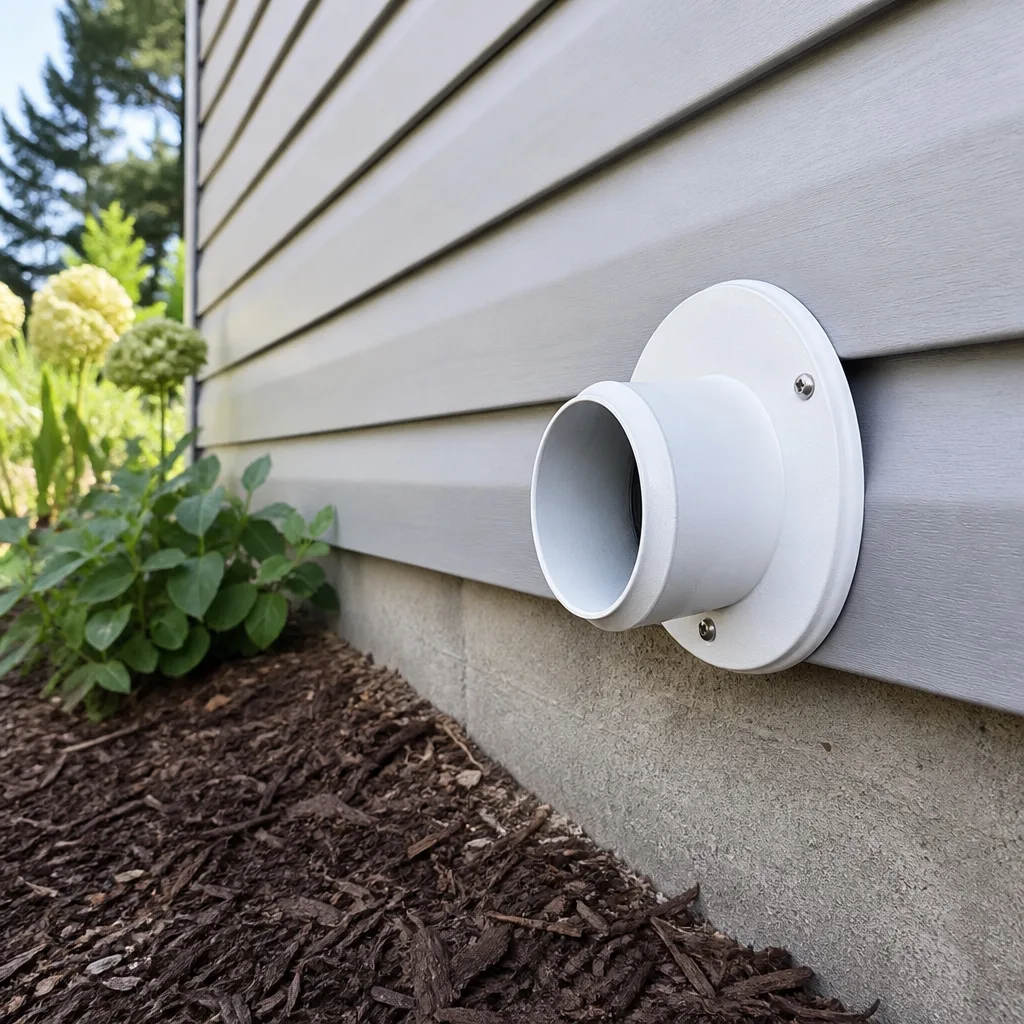 Dryer vent cleaning
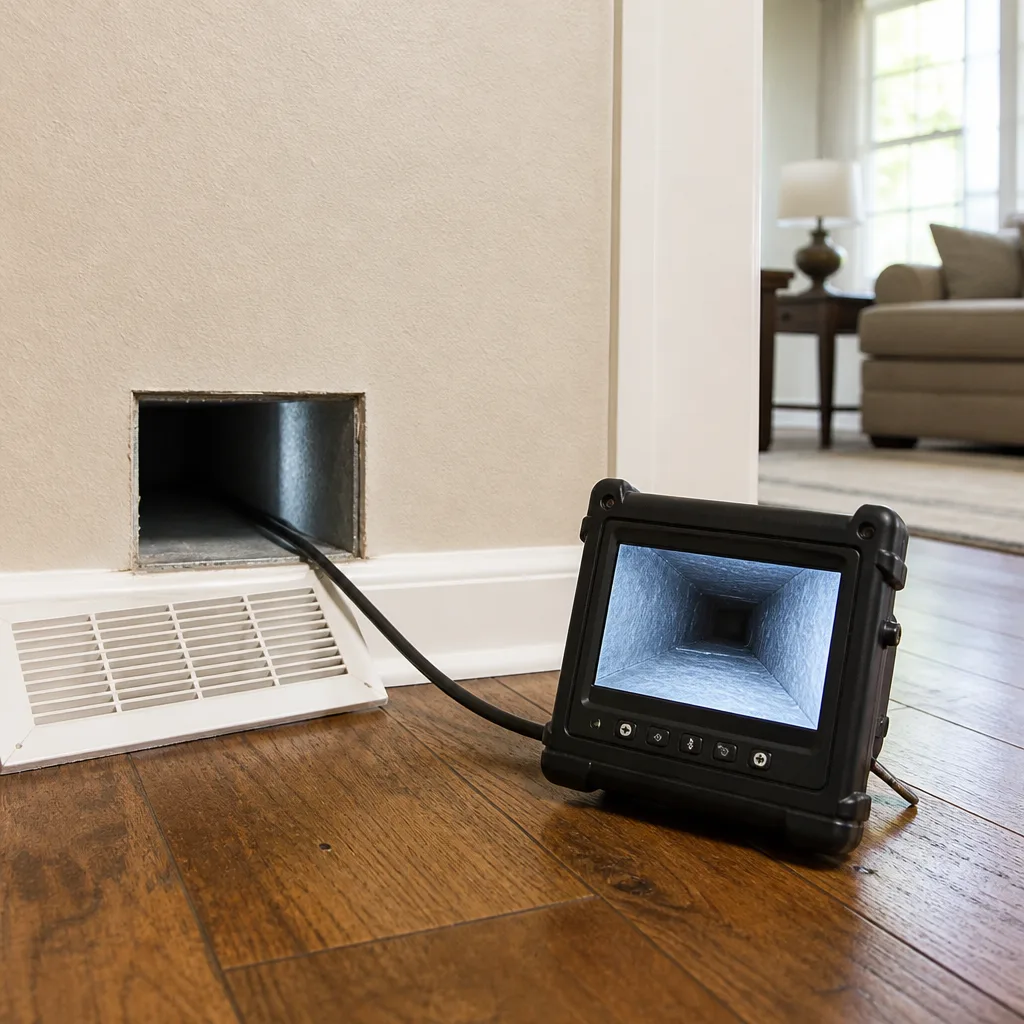 Camera inspection
 Sanitizing & deodorizing
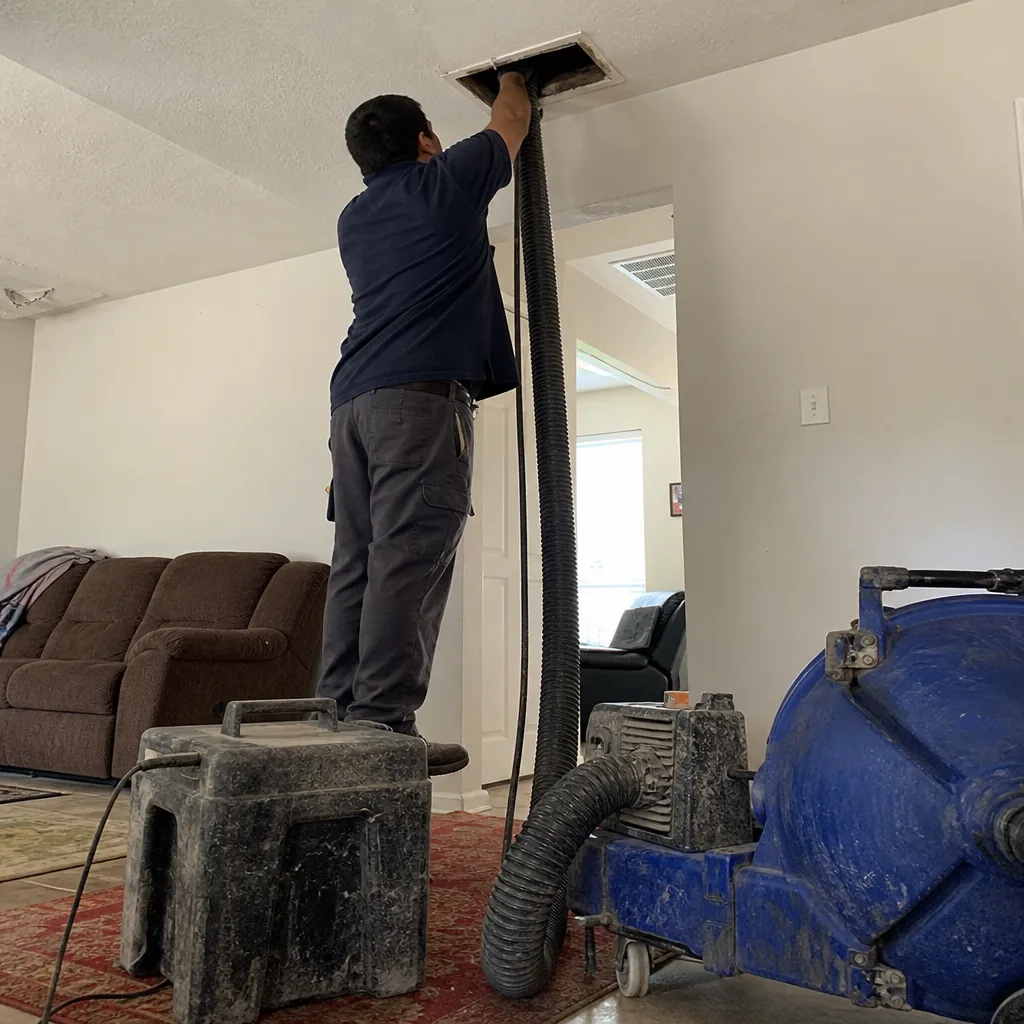
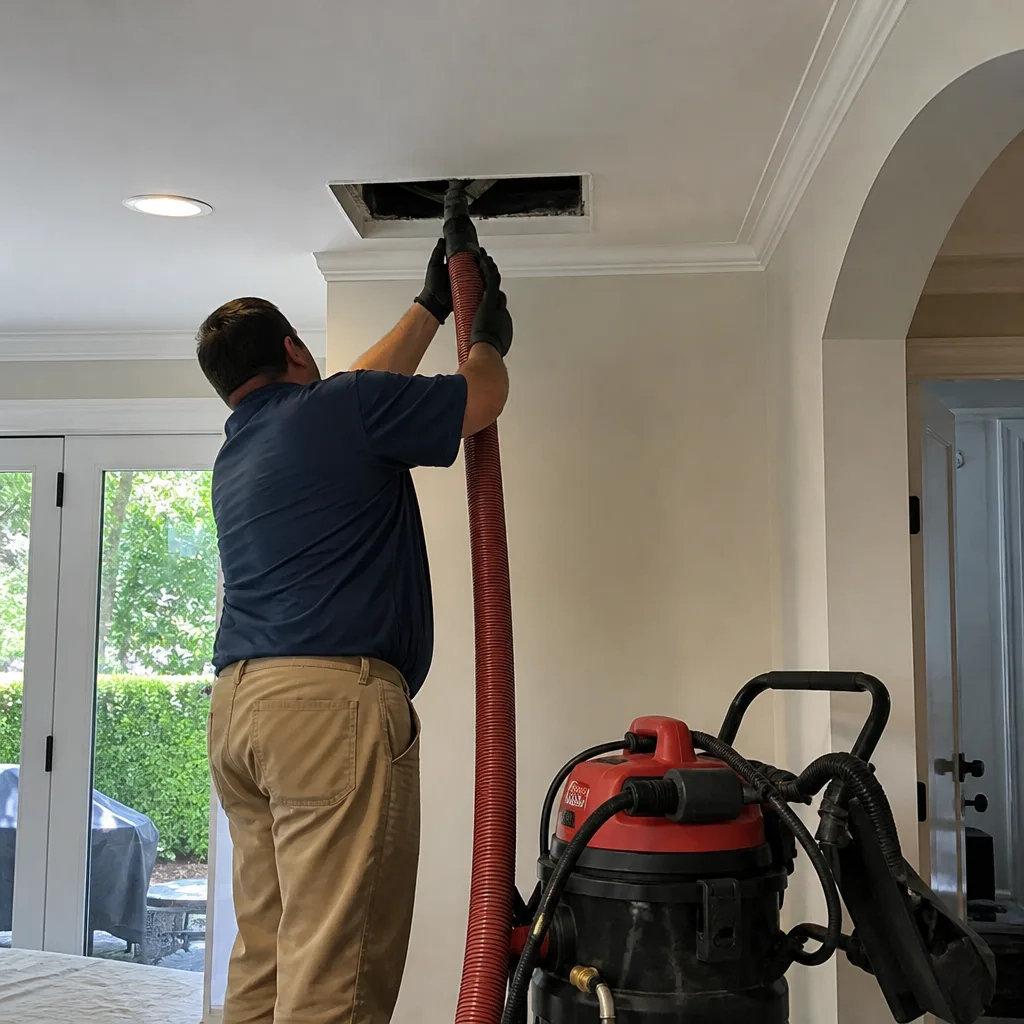
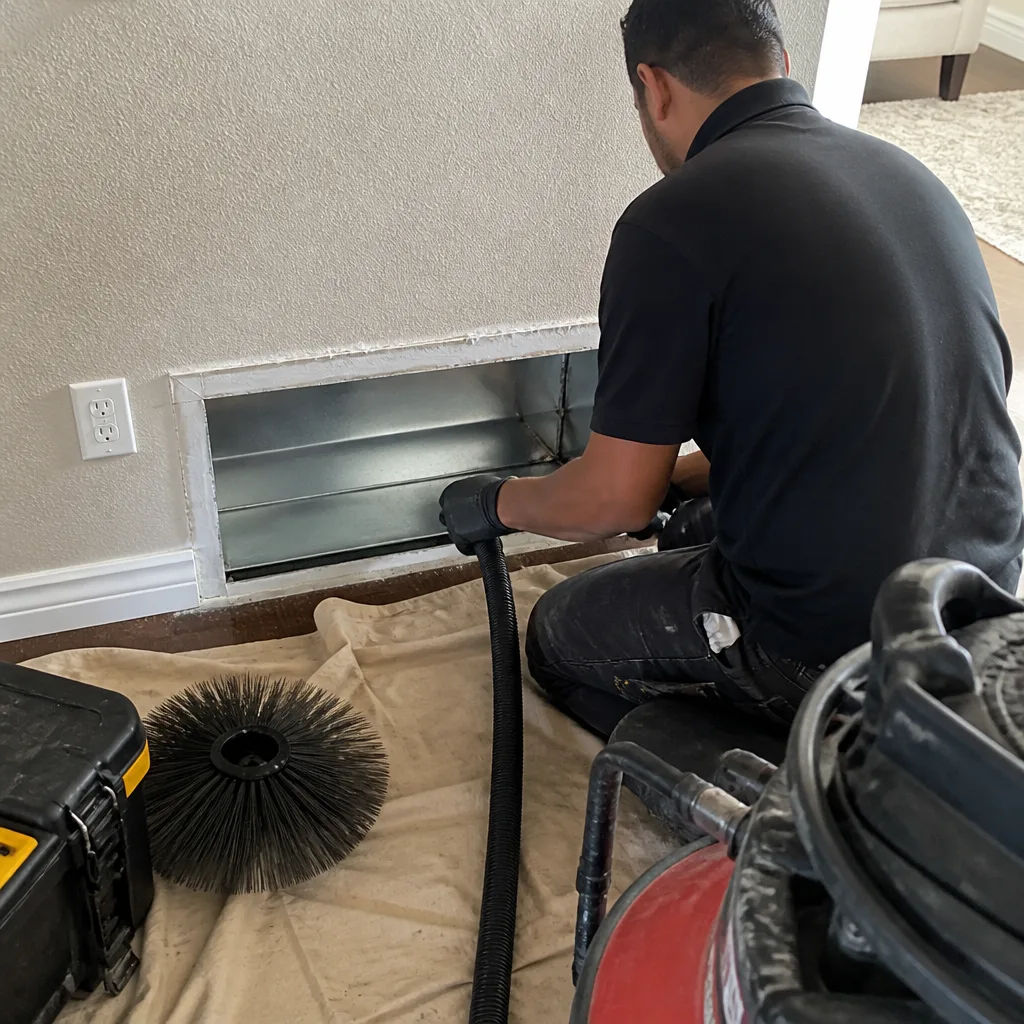
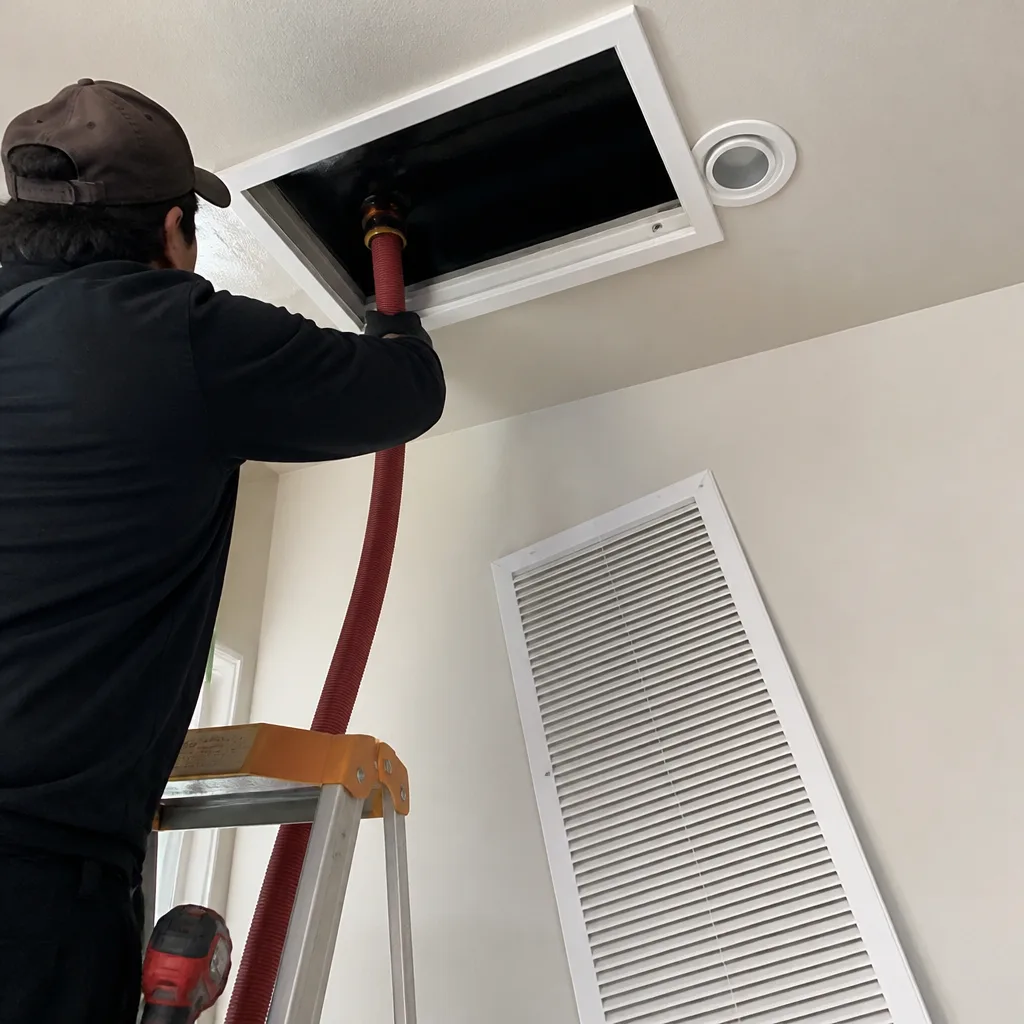
Whole-system duct and dryer vent check with before-and-after photos - you see exactly what came out of your vents
That "$99 whole-house special" is a bait ad - the real number appears once they are in your hallway, or the "clean" is a shop-vac at the register. We photograph the inside of your ducts before and after instead.
Air Duct Cleaning Warning Signs: A Austin Homeowner’s Reference Guide
Most Austin homeowners only think about their air ducts when something obvious goes wrong – a room that won’t cool, a smell that won’t leave, a bill that keeps climbing. The reality is less dramatic and more useful: your ducts send out quiet signals for months before any of that happens. You just have to know what you’re listening for. This guide is a reference for reading those signals in an Austin house – where the humidity, the cedar pollen, the construction dust, and the long cooling season all write a specific signature into the air you breathe. By the end, you’ll be able to walk through your own home and make a judgment call without a technician telling you what to think.
Quick Answer
The most reliable air duct cleaning warning signs in Austin are a musty smell when the AC cycles on, visible dust buildup or dark streaking around supply registers, rooms that stay warm no matter how low you set the thermostat, and air filters that load up with gray fuzz much faster than normal. These signs usually appear gradually and in combination, not all at once. If you’re noticing two or more, the duct system is worth inspecting – and our Air Duct Cleaning services can usually fix it more affordably than waiting until a register stops moving air entirely.
Styles & brands we work with
Table of Contents
- The Sensory Inventory: What You Smell, Hear, and See
- Austin-Specific Warning Signs: Humidity, Mold, and What’s Normal Here
- Warning Signs That Follow Specific Events
- Performance Signals: Cooling Failures, Rising Bills, and Filter Loading
- How to Document Warning Signs Before Calling a Contractor
- Common Mistakes to Avoid
- When to Call a Professional
- Frequently Asked Questions
The section below walks through the signs that matter most – and just as importantly, the ones that don’t. Because a lot of what gets sold as a “warning sign” on the internet is either normal household dust or a pitch for a service you don’t need. For a deeper look at what actually matters, see The Complete Guide to Air Duct Cleaning in Austin.
The Sensory Inventory: What You Smell, Hear, and See
Before you start unscrewing vent covers or buying test kits, do a simple walkthrough of your home. Not looking for anything dramatic. Looking for patterns. The best diagnostic tool you own is your own attention, applied consistently across every room. Here’s a structured way to gather real information.
1. The smell test: three distinct odors, three distinct problems
Musty or “wet basement” smell when the AC cycles on. This is the single most common warning sign in Austin, and for a specific reason. When cold air moves through ductwork in a humid climate, condensation forms on the outside of the ducts and inside supply boots. That moisture doesn’t dry quickly in Austin’s humidity. Over time, it becomes exactly the environment where mold grows. You’ll notice this smell most in the first few minutes after the blower kicks on – that’s when it’s pushing air that’s been sitting in the system.
Burning or electrical smell, or a smell like hot metal. This one is different. If you smell something burning – especially when the heat runs – shut the system off and call a professional. It can indicate a failing blower motor, debris sitting against a heat exchanger, or wiring overheating. On a heat pump, which most Austin homes run, a smell like warm dust on first start of the season is common and clears in minutes. A persistent burning smell is not that. Do not ignore it.
A chemical or solvent smell. This is rare, but it matters. If you recently had painting, floor refinishing, pest treatment, or foam insulation work done, the fumes get pulled into the return ducts and can linger for weeks. The duct system acts like a sponge for volatile organic compounds. If the smell sticks around long after the project is done, the ducts may be holding those compounds and releasing them every time the blower runs. That’s a cleaning issue, and it’s one of the few times when duct cleaning provides immediate, noticeable relief.
2. The sound test: three sounds worth your attention
Rattling from the registers or inside the walls. Loose debris in the ducts – drywall chunks, paint chips, dead insects, hardware from old filters – makes a mechanical rattle when air pressure shifts. You’ll usually hear it at fan start or stop, when the pressure changes suddenly. A single loose screw doesn’t mean your ducts are contaminated. Persistent rattling across multiple rooms means there’s material in the trunk lines that shouldn’t be there.
Whistling or high-pitched hissing at a specific register. This is almost always an airflow problem, not a dirt problem. It means the duct is undersized, collapsed, pinched, or that the damper on that run is partially closed. The air is being forced through a smaller opening than the system was designed for. That restriction does two things: it strains the blower motor, and it invites dust to settle in the low-velocity zones right behind the restriction. Solving the whistle usually means a duct repair, not a cleaning.
Silence from a register that used to move air. This is the one people miss because it’s not a sound – it’s an absence. Walk your house and hold a tissue at each register while the system runs. The tissue should flutter. If one register is dead – zero airflow – you have a disconnected or collapsed duct run, not a dirty duct. Air is being pumped into a wall cavity or an attic instead of your room. In our experience, when an Austin homeowner says “that room just never cools well,” a disconnected run is the culprit more than half the time.
3. What you see at the registers
Gray or brown smudging around supply registers. This is what air duct cleaning companies call “wall marks” or “filter lines,” and it’s a real signal. When particulate-laden air exits a register, the heaviest particles deposit on the wall or ceiling right at the edge of the airflow pattern. Over months, it builds into a shadow-like stain. If you wipe it away and it comes back within weeks, the air inside your ducts is carrying more particulates than normal. If it has been building for years, the ducts are overdue.
Visible dust that reappears within 24 to 48 hours of dusting. Every house in Austin has dust. If you dust a surface on Monday and can write your name in it by Wednesday, something is actively pumping particulate into your living space at a high rate. The duct system is not the only possible source, but it’s the most common one when the dust is fine, gray, and evenly distributed across multiple rooms rather than concentrated near a single window or door.
Dark spots or speckling on the inside of a vent cover you’ve removed. If you’re comfortable popping off a register cover (it takes about thirty seconds with a screwdriver), look inside the boot – the metal box that connects the round duct to the rectangular register opening. Dark speckling or fuzzy patches here are often mold. In Austin’s humidity, we see this in homes where the supply boot is not insulated, which lets condensation form every time the AC runs. It’s a localized finding, and it usually means the boot needs cleaning and sealing, not that the entire duct system is mold-infested. But it’s a signal that deserves a professional look.
None of these three sensory signals, by itself, means “your ducts need cleaning today.” One smell, one sound, one register mark is a data point. Two or more of these, especially across multiple rooms, is a pattern. Patterns are what you act on.
Austin-Specific Warning Signs: Humidity, Mold, and What’s Normal Here
Everything you read above changes in Austin because of one thing: our humidity profile. We’re not Houston or Corpus Christi, but we’re also not Phoenix or El Paso. Austin sits in a humid subtropical zone, which means long stretches of the year where outdoor dew points hover in the 60s and 70s. That matters for ductwork in ways most national duct-cleaning guides never mention.
When your AC runs, the supply air is around 55 to 60 degrees. Duct surfaces are colder than the surrounding attic air, which is often 120-plus degrees in July and holding a lot of moisture. If the duct insulation is compressed, torn, or inadequate – and in a house more than 15 years old, some portion of it usually is – condensation forms. Condensation inside a duct system is the single biggest driver of mold in Austin air ducts. Not the dust. Not the pet hair. The moisture.
Here’s how mold risk in Austin breaks down between two different locations in the system:
- Surface mold at the register face or inside the boot. This is what you can see yourself. It’s often gray, black, or green-black speckling inside the vent opening or on the surrounding ceiling. It’s typically caused by condensation at the supply boot, and it’s usually confined to the last few feet of the duct run. This is a real problem, but it’s a localized one. Cleaning, sealing, and insulating the boot solves it. It does not necessarily mean your entire duct system needs to be replaced or remediated.
- Deeper contamination inside the trunk lines or flex duct. This is what you cannot see without a camera. If condensation has been occurring at multiple points along the duct run – damaged insulation, disconnected joints, crushed flex duct that holds water – mold can establish inside areas that are completely invisible from the living space. The most common sign of this is a persistent musty smell that you can’t localize to any one register, or that comes from multiple registers at once. That’s a whole-system issue, and it’s usually what a homeowner senses before they see anything.
What separates Austin from a place like Denver is that our “dry season” doesn’t dry out duct interiors the way a true arid climate does. Winter in Austin is short and mild. The system never gets a long, hot, bone-dry rest period. Whatever moisture found its way into the duct in August is still there in December. That’s why a musty smell in an Austin home doesn’t reliably resolve itself – the cycle that created it keeps running.
One more Austin-specific note: our cedar and oak pollen seasons are long, and our spring oak season in particular loads an enormous amount of fine organic matter into the air. A good portion of that ends up in return ducts. Pollen is respiratory irritant on its own, but in a slightly damp duct environment, it also becomes food for whatever micro-life is trying to establish. If someone in your Austin house has allergies that spike every time the AC kicks on, that’s often a pollen-loading issue in the ducts more than an outdoor exposure issue.
Warning Signs That Follow Specific Events
Not all duct contamination is gradual. Some of the clearest warning signs appear quickly after a specific event in your home’s life. If you know the event happened, you know the duct system was affected. That’s valuable because it lets you clean based on causality, not guesswork.
After a renovation or major remodel
We’ve never met an Austin remodel that didn’t put dust into the ducts. Drywall sanding produces particles fine enough to stay suspended for hours, and if the HVAC system ran at any point during the project, those particles got pulled into the return side and distributed through the supply side. The same is true for tile cutting, hardwood floor sanding, and texture work. Even with the professional crews taping off the vents, the negative pressure created by the return ducts draws dust around the edges of that tape.
The warning signs here are specific: fine white or gray dust on horizontal surfaces in rooms far from the work area, persistent cough or sinus irritation among household members, and a system that seems to circulate more dust than it did before the project. If the renovation included demolition of anything built before 1980 in an Austin home, there’s an additional consideration around older materials, and that’s a conversation worth having with a professional who knows what they’re looking at.
After a pest infestation or pest control treatment
Rodents and insects live in attics and wall cavities in Austin – it’s simply a fact of our climate and ecosystem. When rodents nest near or inside ductwork, they leave behind droppings, urine, nesting material, and in some cases the animals themselves. After the pest issue is resolved, the ducts often still contain what the pests left behind. The smell is specific: a sharp, ammonia-like or deeply organic odor that intensifies when the blower runs. It’s not musty like mold. It’s more like an old barn. That distinction matters.
Pest control treatments present a different issue. Foggers and spray treatments release compounds that get pulled into the duct system and can settle on duct liner and filters. If the treatment happened while the HVAC was running, assume the ducts picked up residue. In most cases, replacing the filter and cleaning the ducts resolves it. If the chemical smell persists after cleaning, the duct liner itself may have absorbed the compound, and that’s a repair conversation.
After a flood or major water event
This is the most serious trigger on this list. If your Austin home experienced water intrusion – a plumbing leak, a roof leak, a water heater failure, or flooding during one of our heavy storm events – and the water reached anywhere near your ductwork, you cannot afford to assume it dried out on its own. It didn’t. Fiberglass and flex duct insulation wick water like a sponge. The duct interior stays damp for weeks, and in Austin’s heat, that means mold colonization happens fast.
The warning signs here are obvious and urgent: musty smell from the registers, visible water staining on or around ducts, crumbling duct insulation, or visible mold growth at the supply boots. If you can see these, you already need professional attention. Do not wait. The mold load in a water-damaged duct system will only grow deeper and more expensive to remediate the longer it sits.
After an HVAC system replacement
This one surprises people, and it should. You just paid for a new system. Why would the ducts be dirty? Because the new system has a more efficient blower and often higher static pressure than the old one. When the new equipment fires up for the first time, it blows through ducts that the old system had been passing air through at lower velocity for a decade or more. All the dust that settled in the low-velocity corners of the old system is now being scoured loose and blown into the house.
If you’re seeing a burst of gray dust at the registers in the weeks after a system replacement, that’s not the new equipment malfunctioning. That’s the new equipment doing its job. The right move is to clean the ducts shortly after the replacement so the entire system – new equipment, existing ducts – starts clean and stays that way. And cleaner ducts extend the life of that new blower motor and coil, which is the part of the new system most vulnerable to being fouled by dust loading.
Performance Signals: Cooling Failures, Rising Bills, and Filter Loading
Not all duct problems announce themselves through smells or sounds. Some show up only in numbers: the temperature in the bedroom at 4 p.m., the electric bill in August, the filter you swear you just changed. These are slower signals, but they’re also the most universal – which is why they’re also the most useful.
Rooms that won’t cool, no matter the thermostat setting
An Austin home in August should cool fairly evenly. There will always be some variance – a west-facing room will run warmer in late afternoon. That’s normal, and it’s not a duct problem. But if one room is consistently 5 to 8 degrees warmer at all hours, in all seasons, and the thermostat keeps running the system longer to satisfy it, you have an airflow imbalance. That trace back to the duct system: a disconnected run, a crushed flex duct, a leaking plenum, or a damper that’s stuck closed.
The test is simple. Close the door to that warm room and feel the pressure change. If the door closes harder than it should – it pulls shut or you feel resistance – that room has too much supply air and not enough return path. If the room is warm and the door closes with no resistance, the supply run itself is likely compromised. Either way, the fix is duct-level, not thermostat-level.
Electric bills climbing without a matching change in usage
Your Austin Energy bill is a feedback signal. It tells you how hard your system is working relative to the same month last year. If July of this year is noticeably higher than July of last year, and your thermostat settings and usage patterns haven’t changed, something in the system is working harder than it was. Common culprits: a clogged evaporator coil from dust bypassing the filter, blower motor strain from restricted airflow, or duct leaks that dump conditioned air into the attic instead of the living space.
Dirty ducts themselves don’t use extra electricity directly. But the consequences of dirty ducts – restricted airflow, fouled coils, blower strain – absolutely do. It’s a chain reaction that shows up on your bill before it shows up anywhere else. A 10 to 15 percent unexplained rise in summer cooling costs is a pattern worth investigating.
Filters loading faster than they used to
Here’s a signal almost no one notices: your filter is a capture device. It’s designed to pick up whatever is moving through the system. When the same 1-inch or 4-inch filter that used to go three months before showing gray now shows gray in three weeks, the system is moving more particulate than it used to. That’s a change in the source, not the filter.
Where is the particulate coming from? Usually one of these: construction or renovation debris still in the ductwork, pest activity, degraded duct liner shedding fibers, or the ducts pulling unfiltered air from the attic through leaks. If your filter is loading fast and you haven’t changed anything about the house, the ducts are the most likely upstream source. Changing filters more often helps, but it’s treating the symptom. The source is inside the system.
One important note on filters: if you’re using a very high-MERV filter like a MERV 13 or higher in a system not designed for it, the increased resistance can reduce airflow and actually make all of these performance problems worse. A filter that’s too restrictive acts like a damper. For most Austin homes, a MERV 8 to 11 filter offers a workable balance of filtration and airflow, and the rest of the particulate problem is better solved by cleaning the source than by choking the system.
How to Document Warning Signs Before Calling a Contractor
This section is the one that will actually save you money. Because here’s the uncomfortable truth: the duct cleaning industry has a reputation for a reason. Some companies use the customer’s own uncertainty as a sales tool. The technician shows you a picture of a dusty duct (every duct has some dust), tells you it’s hazardous, and quotes a number that magically grows as the job progresses. The best defense is to walk in with your own documentation – your own observations, recorded with dates, photos, and notes that make the conversation a shared investigation rather than a sales pitch. You can also explore more guides & resources on our blog to build your knowledge before you call.
Also, write down the name and number the person who answers the phone gives you, and ask for the name of the technician who will perform the work. If the company can’t tell you who’s showing up, that’s a warning sign about the company, not your ducts.
Here’s the step-by-step method we recommend to any Austin homeowner who’s noticed something and wants to prepare before making the call:
- Create a note file, or use a simple notebook. Give each room a heading. Under each heading, record the date and a one-sentence observation: “Master bedroom – musty smell at register when AC starts, 8/14.” Or “Living room – dust on console table two days after dusting.” Simple. Specific. Dated.
- Take photos, even if they’re imperfect. Photograph the register covers you can remove, the visible dust on walls, the filter before you change it, the vent grilles with dark streaking. Use your phone. The value here isn’t artistic quality – it’s establishing a baseline so you can compare before and after. A dated photo of a dirty boot before cleaning is the single most powerful piece of evidence you can hold when it’s time to verify the work was done right.
- Change your filter, and photograph the old one first. The day you replace the filter, snap a photo of the old one next to the new one. Note the date and how long the old filter was in place. Do this every change. After three or four changes, you’ll have a loading-rate record that’s more honest than any contractor’s opinion.
- Check the same register in the same room every week for a month. Pick the register where you first noticed the issue. Look at it weekly. Is the dust accumulation accelerating? Is the smell consistent or intermittent? Is the tissue test showing weakening airflow? Patterns over time tell you if you have a stable issue or a worsening one.
- Bring your notes to the contractor conversation. When you call, say something like: “I’ve been tracking a musty smell from the bedroom register for four weeks, the filter loaded in 22 days, and the room runs five degrees warm. I’d like someone to look at the supply run and show me what’s actually in the duct on camera before quoting.” That sentence, with your specifics and your request for camera evidence, changes the whole dynamic of the call. It signals that you’ve done your homework and you’ll know the difference between a real finding and a generic pitch.
Documentation also matters after the job. Every reputable duct cleaner in Austin should show you before-and-after photos of your own ducts. Not stock photos. Not a video from another job. Your ducts, your home, with recognizable reference points. If a company can’t or won’t provide that, the work wasn’t verified. That’s what separates legitimate operators from the bait-and-switch shops that have given this industry its reputation.
The Warning Sign Checklist: 10 Questions to Ask Your Austin Home
If you want a single reference tool you can use this afternoon, here it is. Ten questions. Answer honestly. The number of “yes” responses tells you how urgently to act.
- Do you smell a musty odor when the AC first kicks on?
- Can you see gray or brown smudging around any supply register?
- Does dust reappear on furniture within two or three days of cleaning?
- Is there any room in the house that consistently runs warmer than the others?
- Did you have renovation, pest, or water damage work done in the last year?
- Has your filter been loading visibly faster than it used to?
- Is your Austin summer electric bill higher than last year without a change in usage?
- Do you hear rattling, whistling, or buzzing from the vents?
- Can you see dark speckling or staining inside any register boot?
- Does anyone in the home have allergy symptoms that improve when they leave?
One or two “yes” answers: note the pattern and continue documenting. Three to five: get a camera inspection of the duct system. Six or more: the system is likely degraded and overdue for professional attention. There’s no one signal that matters most. It’s the clustering that tells you the ducts are the source, and the earlier you act, the smaller and cheaper the job tends to be.
Common Mistakes to Avoid
- Assuming a dusty register means dirty ducts need immediate cleaning. All ducts have some dust. The question is whether the dust is surface-level and normal, or whether it indicates deeper accumulation. One dusty register in one room is not a system emergency. Persistent dust in every room, combined with other signals, is a different matter. Get an actual camera look before committing to a cleaning.
- Hiring on price alone. Austin has dozens of duct cleaning companies, and the lowest bid is often the most expensive choice. The discount shops are notorious for quoting one number on the phone and another after the technician “finds something.” If a price sounds too good, it usually excludes what the job actually needs. The honest operators write the price down before work begins and stand by it.
- Waiting until the smell is unbearable to investigate. A mild musty smell in June is a manageable problem. By August, in Austin humidity, that same spot has had eight more weeks to colonize. The earlier you investigate a smell, the more localized and cheaper the fix.
- Ignoring the filter loading rate. Your filter is a data source. Change it on schedule, note the dates, and pay attention when the loading rate accelerates. It’s one of the earliest and most reliable indicators that the duct system is carrying more particulate than before.
- Letting a contractor “eyeball” the situation without camera proof. Any legitimate assessment of a duct system involves a camera. If the technician can’t show you the inside of your ducts on a screen, they’re making assumptions based on things they cannot see. An honest diagnosis requires eyes on the actual duct interior.
- Treating the register as the whole duct system. The register boot is the last 18 inches of the run. Cleaning or replacing a boot doesn’t address the 20, 30, or 50 feet of duct behind it. If the finding is at the register, the question is always: what’s behind it? Get the full picture before agreeing to a partial fix.
- Assuming the AC filter protects the ducts. The filter protects the equipment, not the duct system. By the time air reaches the filter, it’s already traveled through the return ducts. And the supply ducts are downstream of the filter, which means they collect whatever the filter misses. The duct system is not self-cleaning. It accumulates. Understanding that one fact explains why duct cleaning is even a service.
When to Call a Professional
Call when the pattern holds. If you’ve tracked the same smell for three weeks, or the filter loading rate has doubled, or the warm room stays warm through every thermostat adjustment, you’ve done your due diligence. It’s time for eyes on the actual duct interior. That means a camera inspection of the supply and return runs, not a visual glance at the register.
Call when the event history warrants it: after a remodel, after a pest issue, after water intrusion, after a system replacement. These are all situations where the duct system has been altered or contaminated by something you already know happened. There’s no reason to wait for secondary symptoms to confirm what the event already told you.
Call when you have a medical concern. If someone in the home has persistent respiratory symptoms that improve away from the house, and you’ve ruled out the obvious sources, the duct system is a legitimate next step. It’s not about anyone selling you a “health upgrade.” It’s about a real possibility that the air delivery system in your home is circulating irritants. That deserves a real look.
Linden Air Duct Austin offers free estimates in Austin – call (940) 461-7203. We send you the technician’s name and photo before the visit, and that technician shows a photo ID badge at the door. The price goes in writing before any work begins. If the job is not right, the 365-Day Done Right Promise means we make it right – in writing, on every job. Those aren’t marketing lines. They’re the terms we put on paper because Austin homeowners deserve to know exactly who’s coming to their door and exactly what they’re paying for.
Frequently Asked Questions
For a typical Austin single-family home – say 1,800 to 2,500 square feet with one HVAC system – a legitimate whole-system air duct cleaning usually runs between $450 and $900. The range depends on the number of ducts, the accessibility of the system, the level of contamination, and whether the job requires anything beyond standard cleaning. Be wary of any quote under about $300; in the Austin market, that’s almost always a bait price that will grow once the technician is in the home. The honest operators give one flat price per system, in writing, before work begins. Call (940) 461-7203 for an exact quote – estimates are free.
Because the cheap quote usually isn’t for a real duct cleaning. The low-price model in Austin works like this: a company advertises a $79 or $99 “whole house special,” gets a technician in the door, then discovers “mold,” “contamination,” or “additional vents” that push the final invoice to $900 or more. The $79 was never the price; it was the appointment fee for a sales call. A real duct cleaning involves professional-grade negative-pressure extraction equipment, camera inspection, and a technician who spends several hours in the home. That work has a cost floor, and the companies that do it honestly reflect that in their written price from the start.
You ask for before-and-after photos of your own ducts, taken with a camera during the job. Not a video from another house, not a generic brochure. Your ducts, your register boots, your trunk lines, with visible reference points so you can verify the photos are current. Any legitimate Austin duct cleaner offers this as a standard part of the job. If the company can’t or won’t show you your own before-and-after camera footage, treat that as a red flag. You should also receive a written report of what was found and what was done. If the work is covered by a written guarantee, get it in writing before paying the final invoice.
For most Austin homes, every 3 to 5 years is a reasonable interval. The factors that shorten that window: pets that shed heavily, recent renovation work, any water intrusion event, smokers in the home, or a dust-prone neighborhood (new construction nearby is a big one in Austin’s growth corridors). Homes with cedar or oak directly overhead often need more frequent attention because of the pollen load. If your filter loading rate has accelerated, or you’re noticing any of the sensory signals above, the 3-to-5-year rhythm becomes less relevant than the active warning signs. When you see them, act. Don’t wait for the calendar.
No – and this distinction matters. A musty smell from the vents usually means moisture is present somewhere in the system, often combined with organic material. Mold is one possible outcome of that moisture, but the smell alone doesn’t confirm mold without visual or test evidence. In Austin, the most common scenario is condensation forming in an uninsulated supply boot, creating a damp environment that smells musty. Mold may be present or may not. A camera look at the boot and the first few feet of the run tells you which it is. If it’s surface condensation with no visible mold, the fix is often sealing and insulating the boot rather than a full remediation.
Yes, and Austin has a specific version of this problem. Our spring oak and fall cedar seasons put exceptional amounts of fine organic pollen into the air, and a meaningful portion of that gets pulled into the return ducts and distributed through the supply side. The ducts act as a slow-release source, pumping pollen and dust back into the living space long after the outdoor count has dropped. If allergy symptoms spike when the AC runs or in the morning when the system first cycles on, the ducts are a plausible contributor, and a cleaning can produce measurable relief. It’s not a cure for outdoor allergies, but the home should be a low-exposure environment, not a high-exposure one.
The Bottom Line
Your Austin home talks to you. The registers sigh when the airflow is restricted, the dust on the console table reports how much particulate your system is moving, the filter in the return grille keeps count of what’s passing through. The duct system is not silent infrastructure; it’s a living part of the house that responds to the climate, the seasons, the renovations, the pets, and the water events. The warning signs are almost never dramatic. They’re slow, quiet, easy to rationalize away. But once you learn to read them – the musty smell on AC start, the gray streaking at the register, the warm room, the filter loading in three weeks instead of three months – you’ll act earlier, pay less, and breathe better. That’s the whole game.
If the guide raises questions about what you’re seeing in your own home, we’re easy to reach. Call (940) 461-7203 or see the Air Duct Cleaning in Austin page for service details and the written-price process. We’re Linden Air Duct Austin, and we’ve been serving Austin homeowners since 2004 – straightforward pricing, background-checked technicians with photo ID at the door, and a written 365-Day Done Right Promise on every job we do.
Written by Marcus Veale, Owner at Linden Air Duct Austin, serving Austin since 2004.
See the difference
 Before
 After
After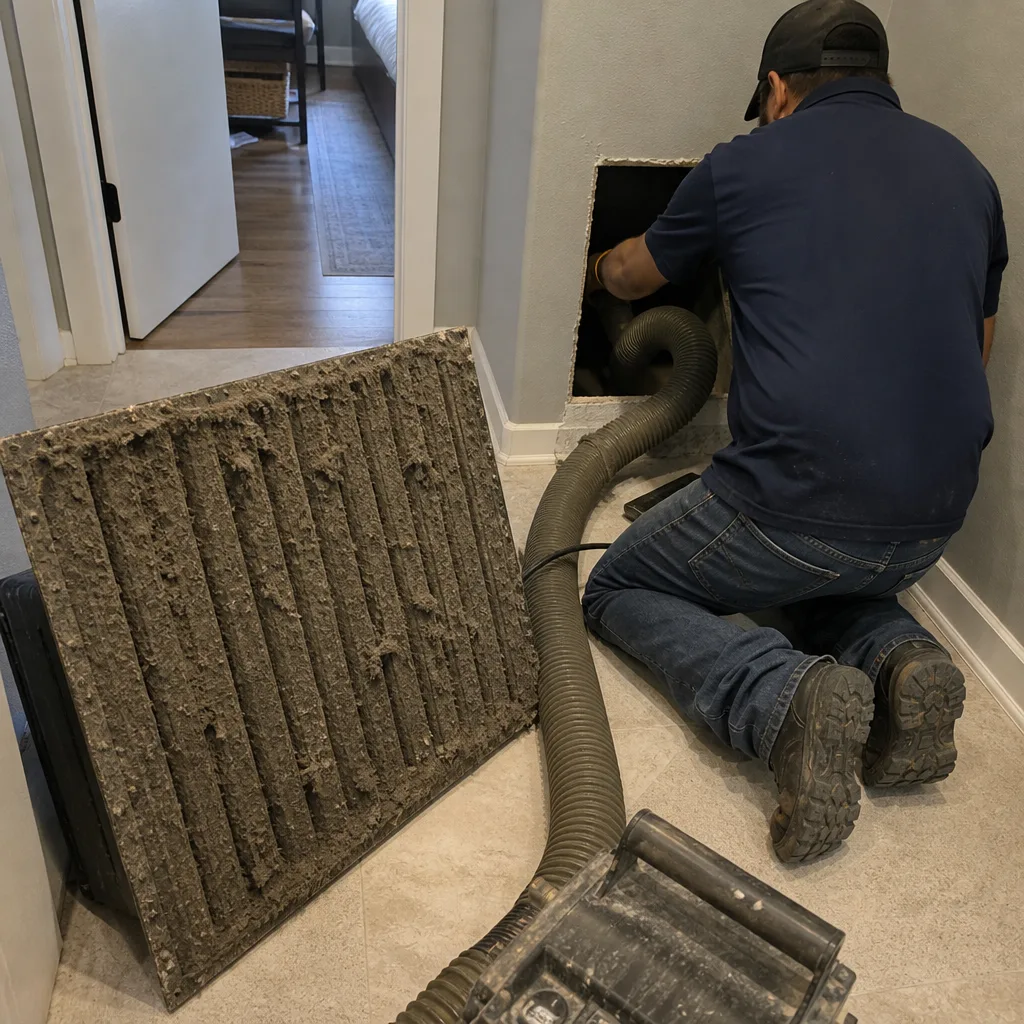 Before
 After
After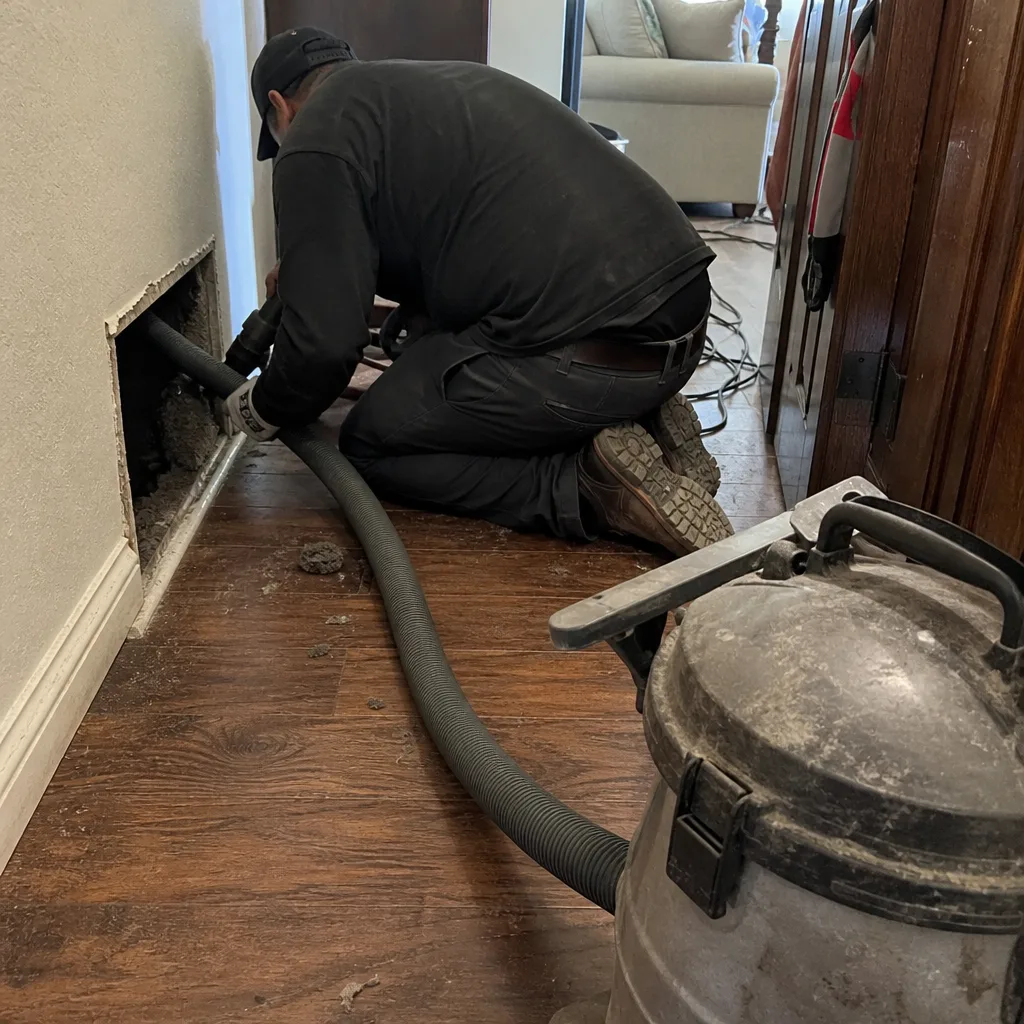 Before
 After
After