
Last updated October 15, 2026
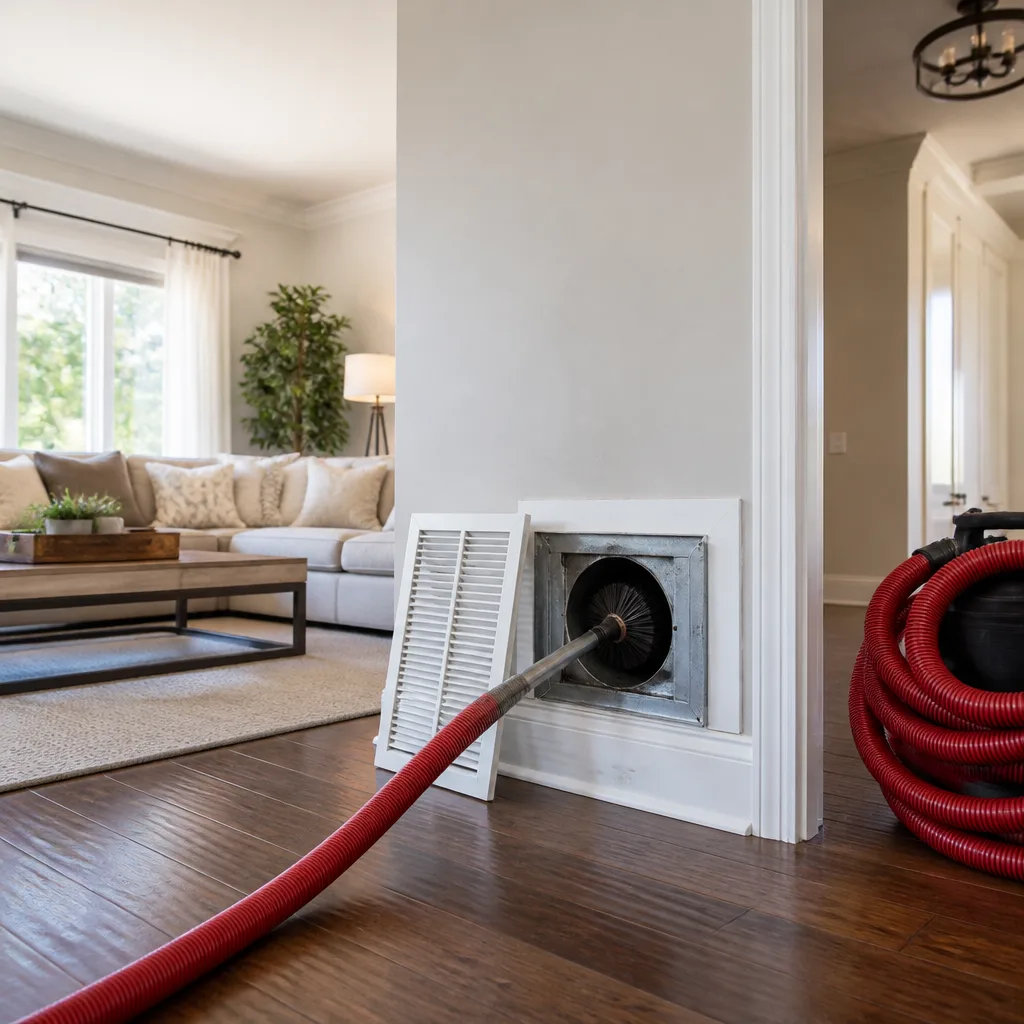 Whole-home duct cleaning
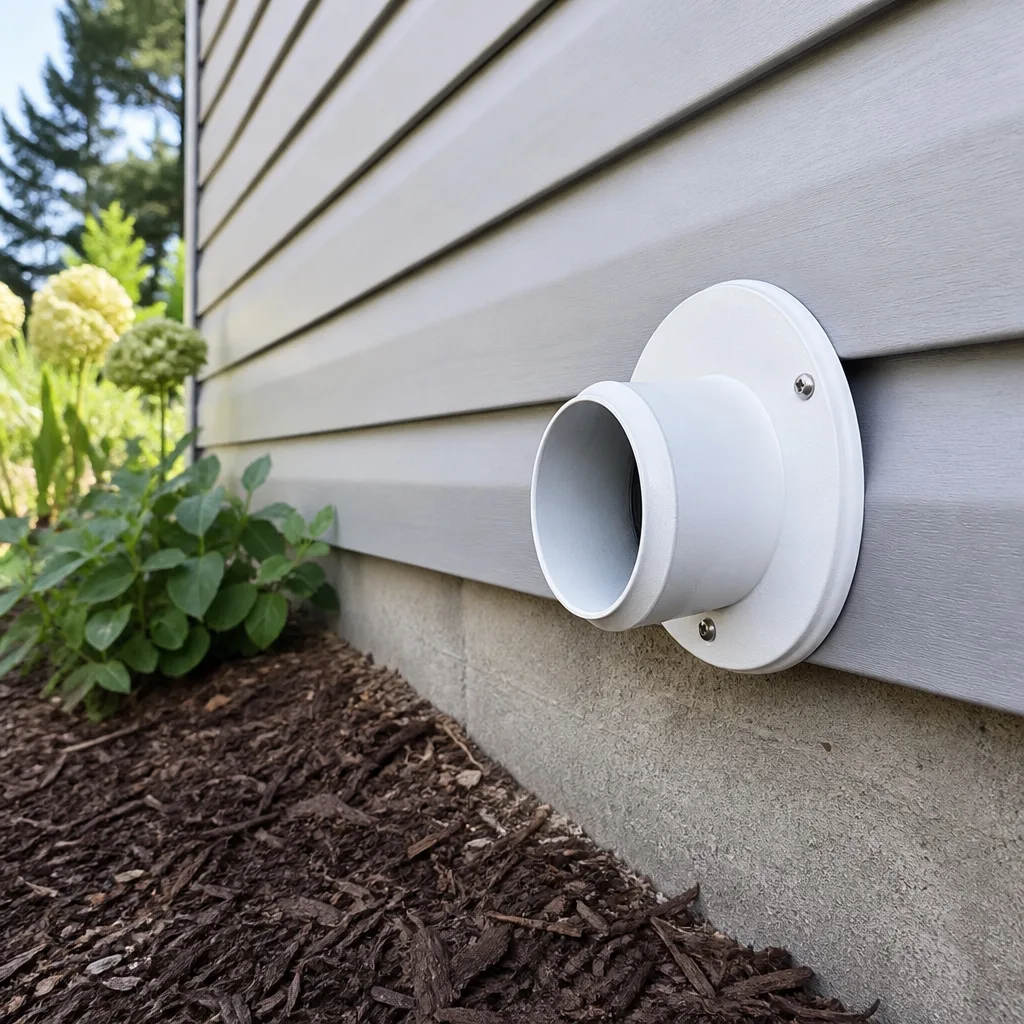 Dryer vent cleaning
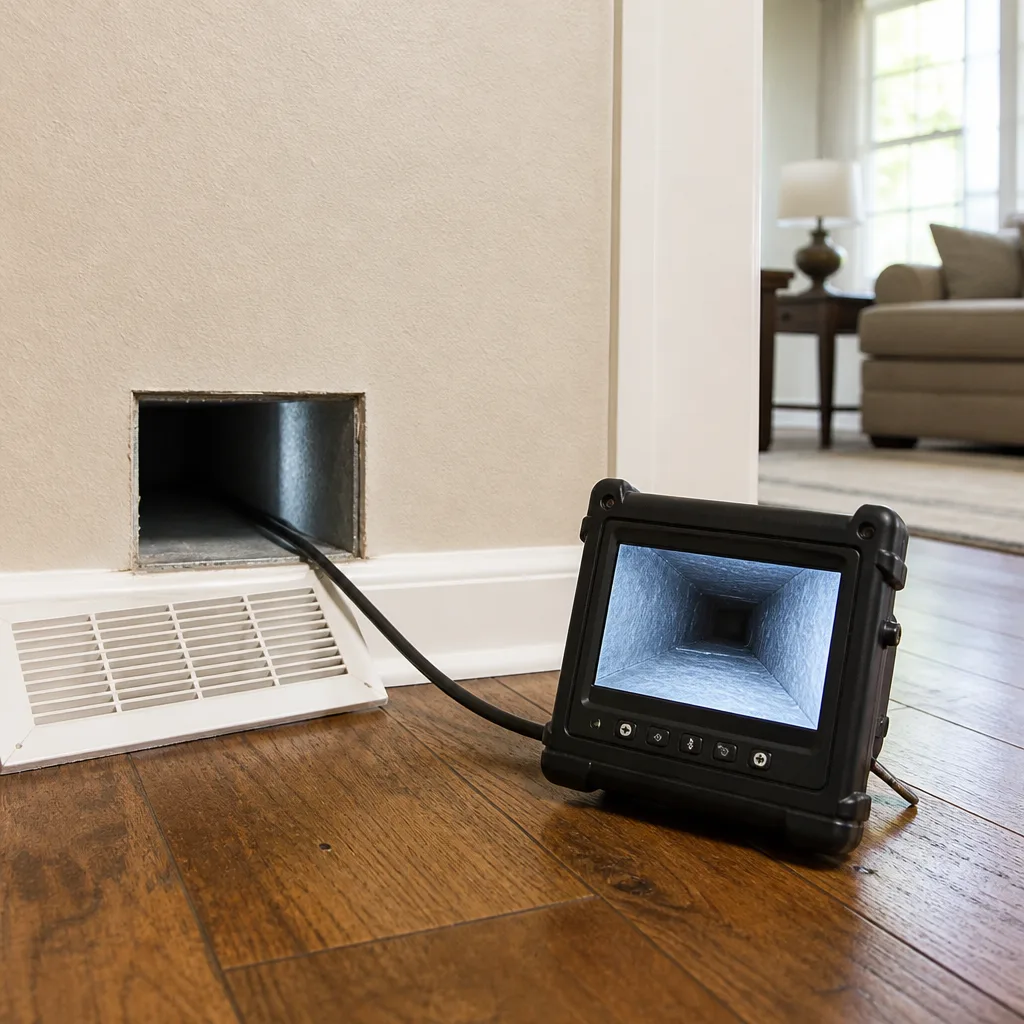 Camera inspection
 Sanitizing & deodorizing
Whole-system duct and dryer vent check with before-and-after photos - you see exactly what came out of your vents
That "$99 whole-house special" is a bait ad - the real number appears once they are in your hallway, or the "clean" is a shop-vac at the register. We photograph the inside of your ducts before and after instead.
The Complete Guide to Air Duct Cleaning in Austin
Austin ranks among the worst U.S. cities for seasonal allergies, yet most duct cleaning guides written for Austinites are copy-pasted from templates written for Seattle or Phoenix, cities with completely different humidity cycles and airborne allergen profiles. This Air Duct Cleaning guide treats Austin’s specific air quality calendar as the organizing principle, not an afterthought. By the time you finish reading, you’ll know exactly what a thorough duct cleaning should include in this city, what it should cost, how to verify the work was actually done, and how to time the service around cedar season and our brutal summer AC months. You’ll also know which questions to ask before anyone sets foot in your home.
Styles & brands we work with
Quick Answer
Air duct cleaning in Austin typically costs between $450 and $900 for a complete single-family home system, depending on square footage, the number of supply registers and returns, and how heavily the ducts are loaded with dust, pollen, and construction debris. A proper job covers supply ducts, return ducts, the return plenum, and the air handler cabinet using negative-pressure extraction, and it should include a written price before any work begins. In Austin’s climate, most homes benefit from a thorough cleaning every 3 to 5 years, with attention paid to the December through February cedar season and the long AC-dependent summer months.
Table of Contents
- Austin’s Air Quality Calendar: Why Timing Matters Here
- What “Complete” Actually Means on a Duct Cleaning Job Scope
- The Contaminants Austin Ducts Collect That Other Cities Don’t
- How Professional Duct Cleaning Works: The Process Step by Step
- How Much Duct Cleaning Costs in Austin (and Why Quotes Vary)
- How to Read Post-Cleaning Verification: Proof the Job Was Done
- One-Time Clean vs. Maintenance Interval: Austin’s 10 to 12 Months of HVAC Runtime
- Common Mistakes to Avoid
- When to Call a Professional
- Frequently Asked Questions
- The Bottom Line
Austin’s Air Quality Calendar: Why Timing Matters Here
Austin’s air quality follows a rhythm that most national duct cleaning guides never acknowledge. The city’s allergy season is famously relentless, starting with mountain cedar in December, continuing through oak and elm in the spring, and pushing through grass and ragweed season into the late fall. That means the air moving through your duct system carries a heavy pollen load for the majority of the year, and what gets pulled into the return registers settles inside the ductwork rather than circulating back out.
Cedar fever season, which runs from roughly mid-December through late February, is the most intense period for airborne particulates in the Austin area. Mountain cedar pollen counts in this city routinely spike into the thousands of grains per cubic meter, and some years they exceed 20,000. What that means for your ducts is straightforward: during those two to three months, the pollen pulled into your HVAC system accumulates at a rate that would take a full year to match in most other parts of the country. If you’ve lived in Austin during a heavy cedar winter, you know what we’re describing. The fine layer of yellow-green dust on window sills and outdoor furniture is also being drawn through your return air grilles.
Timing a duct cleaning relative to cedar season is a practical decision, not a marketing gimmick. If you clean in November, before the cedar count peaks, the system is cleared out and running clean during the worst months of allergen exposure. If you wait until March or April, you’re pulling out everything that accumulated over the winter, plus whatever the spring oaks are already adding. Neither timing is wrong, but the November option means you’re breathing cleaner air during the months when the outdoor air is at its worst. The March option means you’re clearing out a heavier deposit before the first big AC stretch of the year. We’ll come back to this tradeoff in the maintenance interval section, because it matters more than most guides admit.
The second factor specific to Austin is runtime. Your HVAC system in this city runs for cooling roughly 10 to 12 months of the year. The shoulder seasons are short, and even in October and April, it’s not unusual for the AC to kick on during warm afternoons. Every hour the blower runs, it pushes air across the evaporator coil and through the ductwork. The more hours, the more dust volume moves through the system, and the faster that dust settles onto duct interior surfaces. A duct system in Austin sees more cubic feet of air movement per year than the same system in Minneapolis or Denver sees in two years. That runtime factor, combined with the pollen calendar, is why duct cleaning in Austin is more than a once-a-decade curiosity. It’s a recurring maintenance item for homeowners who care about indoor air quality.
What “Complete” Actually Means on a Duct Cleaning Job Scope
Before you call anyone about air duct cleaning in Austin, you need to know what a complete job includes, because “complete” is where Austin quotes quietly diverge. When we talk about a complete duct cleaning at Linden Air Duct Austin, we mean the entire path air travels through: every supply register, every return grille, the return plenum, the supply trunk lines, and the air handler cabinet. But not every company in Austin defines it that way, and the difference shows up in the price and in the air you breathe afterward.
Here is what a complete job scope covers, item by item, using the trade’s real words and then explaining each in plain language:
- Supply ducts and supply registers: These are the ducts that carry conditioned air from the air handler out to each room. A complete cleaning accesses every supply run through each register opening, not just the easiest-to-reach ones in the main hallway.
- Return ducts and return grilles: These pull air from the rooms back to the air handler. Because return air is unfiltered at the point of entry, return ductwork typically collects more dust per linear foot than supply runs. Any job scope that skips return ducts is not a duct cleaning.
- Return plenum: This is the box-like chamber where multiple return ducts join before air enters the air handler. It’s the dirtiest single location in most Austin systems because it’s downstream of the return grilles but upstream of the main filter, meaning nothing catches the dust before it settles here.
- Air handler cabinet: The cabinet that houses the blower motor and, in most Austin homes, the evaporator coil. Dust that reaches this cabinet can cake onto the blower wheel, reducing airflow and forcing the system to work harder. Cleaning this cabinet requires a technician who knows how to open and access it safely, which is why it’s sometimes left off bargain quotes.
- Supply trunk lines: The large main ducts that branch off into individual supply runs. These are accessed either through the register openings or through small access points cut by the technician and properly sealed afterward.
What most Austin quotes quietly exclude is the air handler cabinet and sometimes the return plenum. The reason is simple: accessing those components takes more time, more care, and more technical knowledge than running a brush through a few register openings. A quote of $199 for “whole house duct cleaning” in the Austin market almost always means supply registers only, with the return system and air handler untouched. When you’re comparing quotes, consult our How to Hire a Air Duct Cleaning Contractor in Austin: A Step-by-Step Guide and ask directly: “Does this price include the air handler cabinet and the return plenum?” If the answer is vague, you’re not looking at a complete job.
Before any work begins, the scope should be written down. At Linden Air Duct Austin, every customer receives a written price that specifies exactly what’s included, before the technician starts. That’s not a promotional offer. It’s a standing commitment we’ve kept since 2004, as part of the Threshold Group family. If a company won’t put the scope in writing before starting, that’s the first sign that the invoice at the end might not match the estimate you were given over the phone.
The Contaminants Austin Ducts Collect That Other Cities Don’t
Every duct system collects the universal stuff: skin cells, pet dander, carpet fibers, and ordinary household dust. But Austin’s duct interiors hold a specific signature that you won’t find in a generic cleaning guide. Understanding what’s actually in your ducts helps you understand why cleaning matters here more than in many other parts of the country.
First, there’s mountain cedar pollen, which we covered in the air quality calendar section, but it deserves a second mention here because of its physical characteristics. Cedar pollen grains are small and waxy, designed by nature to ride the wind for long distances. That waxy coating makes them stick to duct interior surfaces more readily than many other pollen types. Once settled inside a duct run, cedar pollen can remain there for years, becoming airborne again whenever the blower kicks on and the air pressure inside the ducts changes. If someone in your home suffers from cedar allergies, a duct system carrying a decade of accumulated cedar pollen is quietly re-exposing them every time the AC runs.
Second, there’s caliche dust. If you’ve lived in Central Texas for more than a couple of seasons, you know caliche: the chalky, limestone-heavy soil that seems to get into everything when it’s dry. In growing neighborhoods like Manor, Pflugerville, Round Rock, and the eastern edges of Travis County, ongoing construction disturbs caliche soil, sending fine alkaline dust into the air. That dust is finer than typical household dust and finds its way through window seals, door frames, and every other gap in the building envelope. Inside the duct system, caliche dust behaves differently than organic dust. It’s heavier and more abrasive, and it settles densely in the bottom of horizontal duct runs. In our experience cleaning systems in Austin’s newer construction zones, we regularly see a half-inch layer of gray-white caliche dust in the return plenum of homes that are only five or six years old.
Third, there’s the humidity factor. Austin’s average relative humidity hovers in a range that, combined with the organic material already inside a dirty duct system, creates conditions where dust can cake and adhere to duct surfaces rather than remaining loose. Loose dust is easier to remove. Caked dust, which forms when moisture binds with dust and pollen, requires mechanical agitation to break free from the duct walls. This is one of the reasons we run professional-grade equipment from Rotobrush and Nikro rather than trying to clean with a vacuum and a prayer. The agitation tools on these systems are designed to dislodge caked-on debris without damaging the duct material itself.
Fourth, and this is one that surprises a lot of Austin homeowners, there’s the issue of pest presence. Austin’s warm climate supports a robust population of insects, particularly cockroaches and silverfish, and duct systems, especially the return plenum and air handler cabinet, offer the dark, warm, and occasionally humid environment these pests seek. What they leave behind contributes to the allergen load in your ductwork and can trigger respiratory irritation even in people without diagnosed allergies. A complete duct cleaning removes that residue, and in our experience, it’s one of the most underappreciated benefits of the service in this city.
How Professional Duct Cleaning Works: The Process Step by Step
Professional duct cleaning in Austin should follow a defined sequence. Understanding the process helps you evaluate whether a company is doing a legitimate job or a drive-by that leaves the worst of the contamination in place. Here’s what a complete cleaning looks like, step by step, the way we perform it at Linden Air Duct Austin.
Step 1: System inspection. Before any cleaning begins, the technician should walk the system with you, showing you the supply registers, return grilles, and air handler location, and explaining what they’re seeing. This is also when they should confirm the written scope of work and the flat price you agreed to. If a technician shows up and immediately starts pulling out equipment without walking you through the plan, that’s a red flag.
Step 2: Protection of the work area. Duct cleaning creates displacement. Dust that’s been sitting in your ducts has to go somewhere, and a professional setup routes it outside. The technician should lay down drop cloths or floor protection in the work areas and wear shoe covers, at minimum. At Linden Air Duct Austin, our technicians arrive in clean, marked uniforms and their name and photo are sent to you before the visit, so you know exactly who’s at the door before you open it.
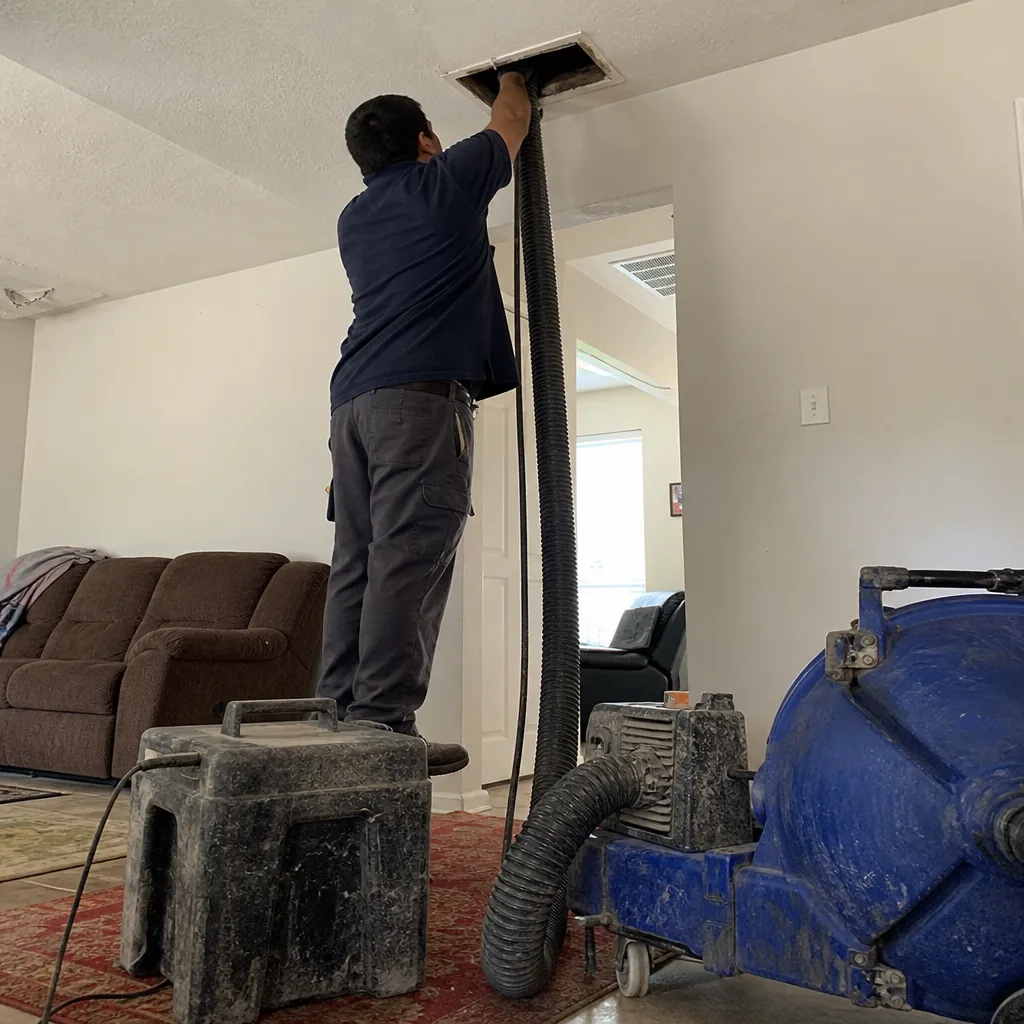
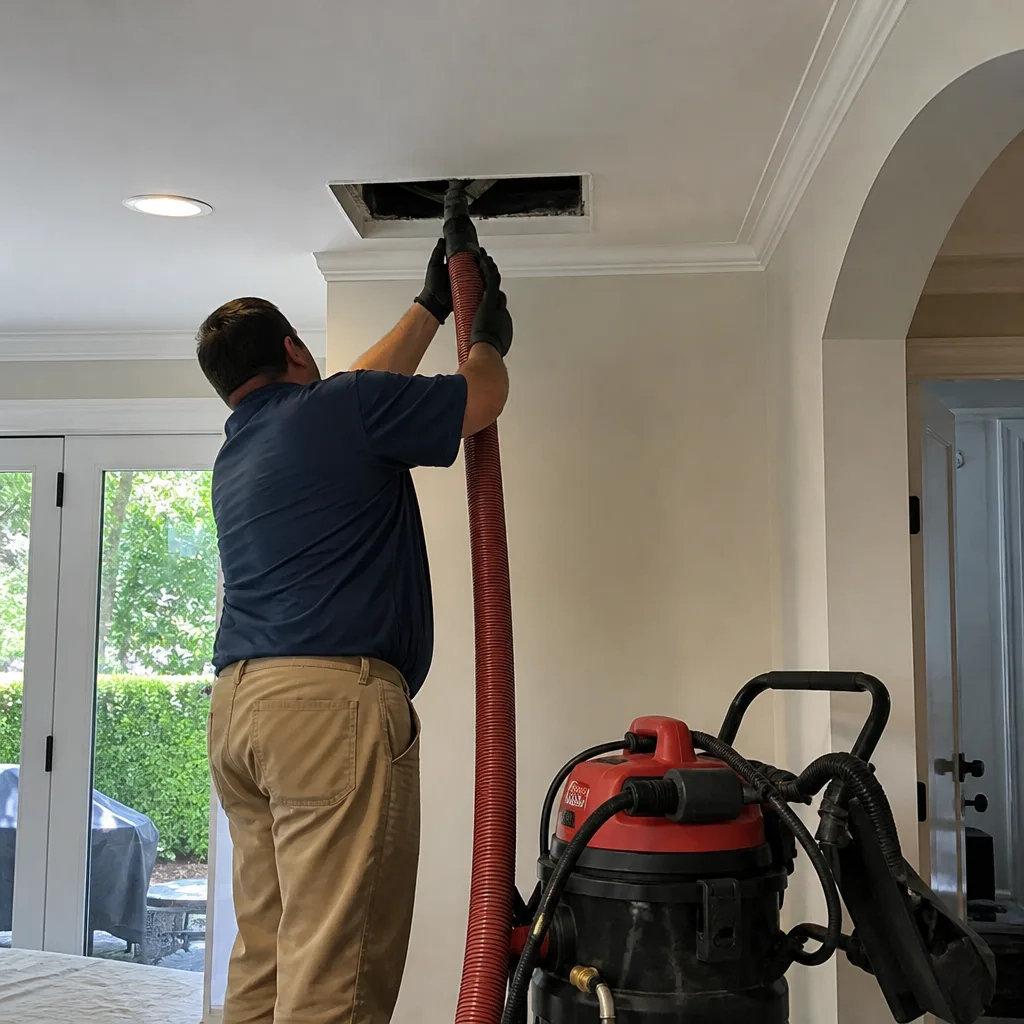
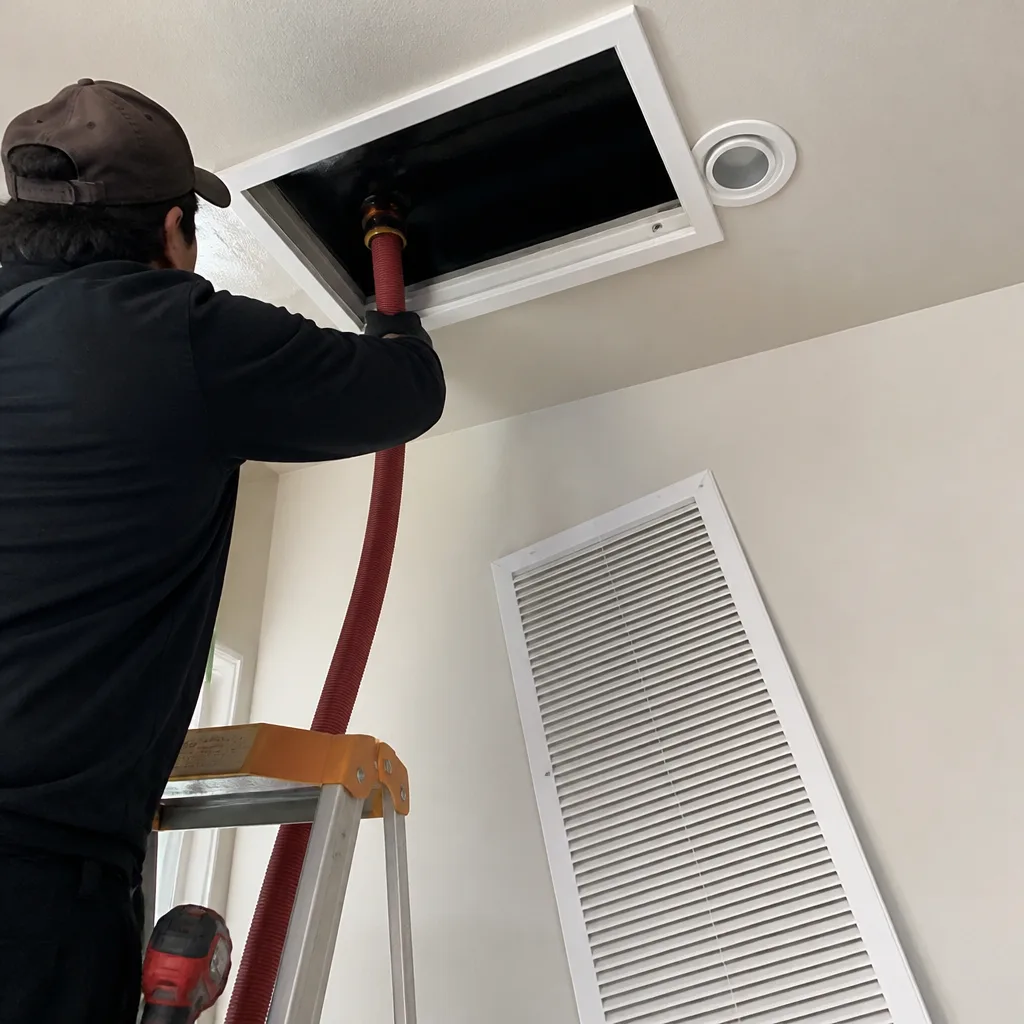
Step 3: Establishing negative pressure. The core of a proper duct cleaning is negative-pressure extraction. This means connecting a high-powered vacuum system to the ductwork, typically at a point near the air handler, so that the entire duct system is under negative pressure while the cleaning tools are at work. Any debris that gets dislodged is pulled toward the vacuum and out of the house, rather than being stirred up and blown back into the living space. This is the single most important technical element of the job, and it’s what separates a real duct cleaning from a leaf-blower-in-the-vent situation.
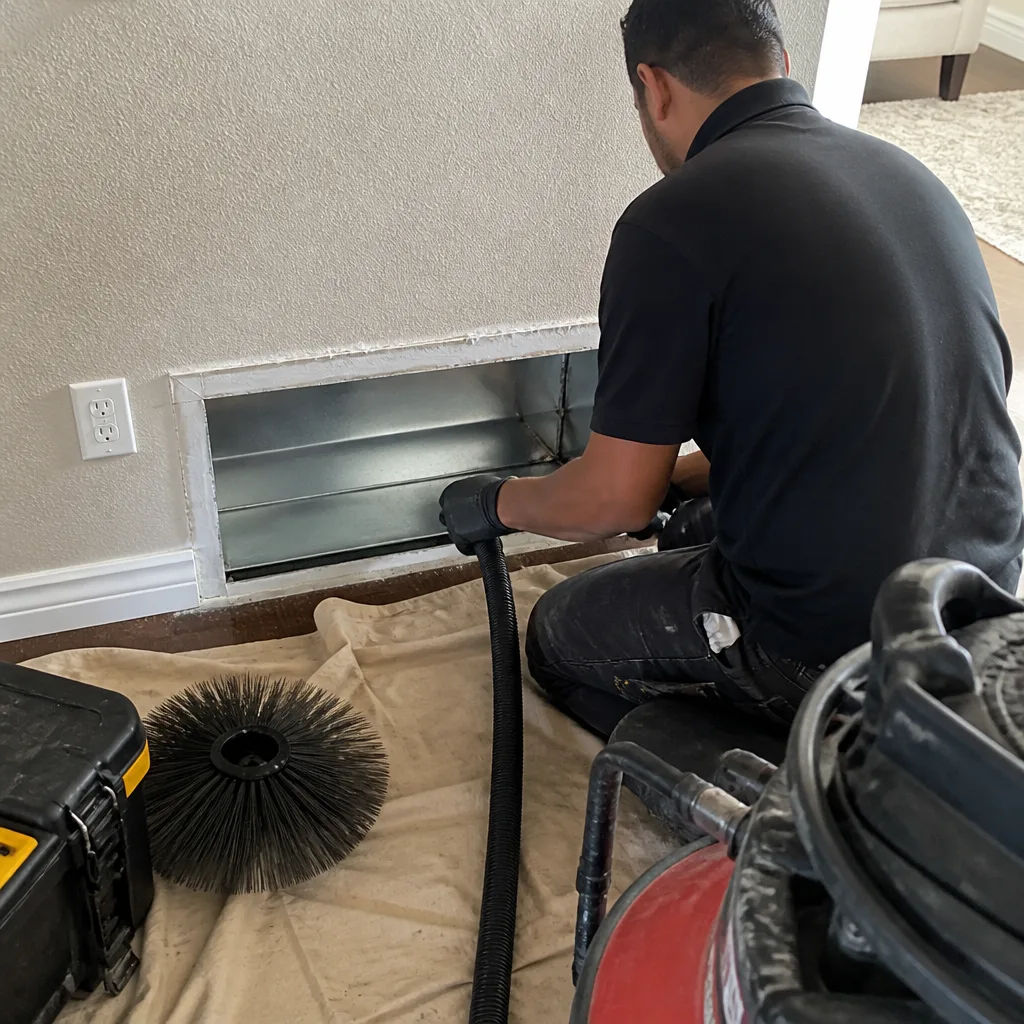
Step 4: Mechanical agitation. With the negative pressure running, the technician runs agitation tools through each duct run from the register openings. These tools physically knock the dust, pollen, and caked debris loose from the duct walls. Different duct types require different tooling. Flexible ducts, the most common type in Austin homes built in the last thirty years, need gentler agitation than rigid sheet metal, which can handle more aggressive brushing. A technician who knows the difference is less likely to damage your ducts.
Step 5: Air handler and plenum cleaning. Once the branch ducts are done, the technician moves to the return plenum and the air handler cabinet. Accessing these areas often requires opening a small panel or removing the blower access door. The interior of the air handler cabinet is cleaned by hand with HEPA-filtered tools, and the blower wheel and evaporator coil are inspected for dust accumulation and, if safe and accessible, cleaned as well. This is the step that bargain services skip, and it’s also the step where the majority of stubborn contamination lives in Austin systems.
Step 6: Final walkthrough and verification. After the cleaning is done, the technician should show you before-and-after access points, walk you through what was removed, and answer any questions. This is also when you should get your verification, a written or photographic record of the completed work. We cover exactly what that should look like in the verification section below.
How Much Duct Cleaning Costs in Austin (and Why Quotes Vary)
Duct cleaning prices in the Austin market range widely, from the $99 coupon deals that circulate on the edges of town to quotes exceeding $900 for larger homes. Understanding why the gap is so wide is the single most useful thing you can do before you start making calls, as explained in our DIY vs Professional Air Duct Cleaning: The Austin Homeowner’s Decision Guide, because the old rule holds true in this industry: if the price seems too good to be true in Austin, it almost certainly excludes the parts of the job that matter.
| Home Size | Typical Austin Price Range | What It Should Include |
|---|---|---|
| 1,500 – 2,000 sq ft | $450 – $600 | All supply registers, return grilles, trunk lines, return plenum, air handler cabinet |
| 2,000 – 3,000 sq ft | $550 – $750 | Same full scope, plus additional supply and return runs |
| 3,000+ sq ft or multiple systems | $700 – $900+ | Full scope across multiple systems or higher register counts |
These ranges reflect honest whole-system pricing, the kind we put in writing at Linden Air Duct Austin before any work begins. We publish them here because you deserve to know what to expect before you call, and because the duct cleaning industry has a reputation problem in this city, deserved or not, that comes from the bait-and-switch pattern. A low coupon price becomes a far larger invoice once the van is on the driveway. We don’t do that. The price we quote is the price we honor, written down, every time.
Why do quotes vary so much? The honest answer is scope. A $199 quote covers supply register access only, maybe a quick pass with a brush, and a sales pitch for “extras” that are actually essential. A $600 quote covers the full air path, equipment designed for the job, and the time it takes to do it correctly. There’s also the equipment factor. Running professional-grade systems like the Rotobrush and Nikro equipment we use costs real money in maintenance and technician training, and that’s reflected in the price. And there’s the accountability factor. A company that provides a written guarantee on repairs, as we do on every air duct repair in Austin, has priced the cost of standing behind the work into the job. A company that vanishes after the invoice is paid doesn’t have that line item.
How to Read Post-Cleaning Verification: Proof the Job Was Done
You wouldn’t accept a mechanic’s word that your brakes were replaced without seeing the car, and you shouldn’t accept a duct cleaner’s word without verification either. In Austin, where the duct cleaning market includes everything from legitimate specialists to fly-by-night operations, knowing what proof should look like is your best protection against paying for work that didn’t happen.
A proper post-cleaning verification package should include three things. First, before-and-after photography. The technician should photograph the interior of accessible duct runs, the return plenum, and the air handler cabinet before the work begins and after it’s finished. These photos should show a visible difference. The before photos of an Austin system that has never been cleaned will typically show the gray-brown coating we described earlier; the after photos should show bare duct material. If a company can’t or won’t provide before-and-after photos of the actual ducts in your home, that’s a problem.
Second, a debris report or at least a statement of what was removed. This doesn’t need to be a laboratory analysis. A simple written note from the technician describing what came out of the system, whether it was heavy pollen load, construction dust, pet hair, or pest residue, gives you a record of what you paid to have removed. In our experience cleaning systems across Austin, from the 1970s ranch houses of Crestview to the new builds of Manor and Pflugerville, the debris profile varies widely by neighborhood, and your report is part of the documentation you should keep with your home maintenance records.
Third, a written completion statement tied to the original scope. The written price you received before the job should match the written completion statement after, item for item. Every supply register, every return, the plenum, the cabinet, all of it listed as done and initialed by the technician. If the original quote said “supply ducts only” and that’s what you paid for, the completion statement should say exactly that. The problem in this industry isn’t just under-scoping; it’s also over-claiming. A written completion statement is your proof of what was actually performed.
At Linden Air Duct Austin, this is standard procedure on every job, part of the 365-Day Done Right Promise. If the work is not right, we make it right, and that’s backed in writing on every single job, not just on the ones where someone remembers to ask. That’s how verification stops being a favor and becomes a habit.
One-Time Clean vs. Maintenance Interval: Austin’s 10 to 12 Months of HVAC Runtime
The question we hear most often from Austin homeowners, after the price question, is how often the job really needs doing. The national guides and more guides & resources say every 3 to 5 years, somewhere in that range. That advice was written for places where the furnace runs for five months and the AC runs for four. Austin is not that place.
Let’s walk through the math in plain terms. Your HVAC system in Austin runs for cooling roughly 10 to 12 months of the year. That’s two to three times the annual runtime of a system in the Northeast or the Pacific Northwest. More runtime means more air movement, and more air movement means more dust volume passing through the ducts. On top of that, Austin’s pollen calendar means that a high percentage of that air is carrying a significant particle load for much of the year. Cedar in winter, oak in spring, grass in summer, ragweed in fall. There is no clean season in this city.
What that means in practice is that the low end of the national interval, three years, is a reasonable maintenance target for most Austin homes. If you have a household with pets, if you live in a high-construction area like Manor or Pflugerville where caliche dust is constantly in the air, or if anyone in the home has respiratory sensitivities or allergies, we’d suggest leaning toward the shorter side, closer to three years than five. If your home is newer, tightly sealed, and has a high-quality filtration system with filters changed regularly, you might comfortably stretch to five years. But we’d hesitate to go beyond that here, not because we want to sell more cleanings, but because the math of Austin’s air quality doesn’t support it.
There’s also the one-time clean versus recurring maintenance distinction. A one-time deep clean is the right call when you’ve just moved into a home, when you’ve completed a renovation that created drywall or flooring dust, or when you’ve noticed visible dust buildup at the registers and you suspect the system has never been cleaned. That first clean resets the clock. After that, maintenance cleanings, which are typically faster and less involved because the system hasn’t had years to accumulate, keep the system in a state where it’s not working against you. For most Austin homeowners, the sequence looks like this: one comprehensive clean when you settle into the home, then a maintenance clean every 3 to 5 years depending on the factors above.
One more timing note specific to Austin. If you can only clean once every few years and you have allergy sufferers in the home, schedule it in late October or early November, before cedar season peaks and before the winter months when the house is sealed up tight. That timing puts the cleanest possible air in your home during the worst months for outdoor allergens. It’s a small scheduling decision with a real impact on how you feel from December through March.
A Note on Dryer Vents: The Often-Overlooked Cousin
While we’re talking about air paths and the stuff that clogs them, let’s address the other duct system in your Austin home: the dryer vent. It runs a separate path from your HVAC ducts, but it’s governed by the same physical law. Airflow carries lint, lint accumulates, and accumulated lint in a vent line is a fire hazard. The Consumer Product Safety Commission has long flagged dryer fires as a persistent problem in U.S. homes, and the majority of those fires trace back to lint buildup in the venting system.
In Austin, the dryer vent conversation overlaps with the HVAC conversation in a few ways. Homes with laundry rooms located in interior spaces often have long dryer vent runs, 15, 20, even 30 feet from the dryer to the exterior vent termination. Lint that travels those distances partially deposits along the way, gradually choking the airflow. A dryer that takes two cycles to dry a load isn’t just annoying; it’s telling you the vent is restricted. And a restricted vent means the dryer runs hotter, which increases the strain on the appliance and the risk in the duct. We clean dryer vents in Austin as a core service, not as an add-on, because the same negative-pressure extraction approach we use on HVAC ducts works on dryer vents, and because a complete air quality picture includes both systems. If your duct cleaning company doesn’t also inspect the dryer vent, that’s a gap worth closing.
Here’s a practical tip for Austin homeowners with interior laundry rooms: after the dryer vent is cleaned, time a drying cycle with a standard load of towels. Write down the time. Six months later, time it again. When the drying time starts creeping up, that’s your early warning that lint is accumulating again. Most households can go two to three years between professional dryer vent cleanings, but long runs and heavy usage shorten that interval. Watch the dry times, not the calendar.
Common Mistakes to Avoid
- Hiring on price alone without checking scope. The $99 coupon in the Austin market buys you access, not cleaning. Before you book, ask the company to state in writing what the price includes: supply registers only, or the full air path including returns, plenum, and air handler?
- Assuming the air handler cabinet is included. This is the single most common exclusion we see in the field. If the quote doesn’t explicitly list the air handler or the evaporator coil area, assume it’s not included and ask directly.
- Cleaning the ducts but ignoring the dryer vent. Both systems move air, both collect debris, and only one of them represents a fire risk. If you’re investing in indoor air quality, finish the job by addressing the dryer vent in the same visit.
- Skipping before-and-after documentation. If the company doesn’t offer to show you before-and-after photos of the actual ducts in your home, you have no way to verify the work was performed. Insist on visual proof.
- Believing that duct cleaning eliminates the need for filter changes. A clean duct system is a one-time reset. Your filter is the ongoing defense. In Austin’s dusty climate, plan on checking your filter monthly and replacing it more often than the packaging suggests if you have pets or live near construction.
- Timing the service without regard to cedar season. Cleaning in October or early November means clean air during the worst allergen months. Cleaning in April means clearing the cedar load after the fact. Both are valid; just make the timing a deliberate choice, not an accident.
When to Call a Professional
Duct cleaning is a job for a trained technician with professional equipment, not a weekend project. If you can see dust accumulating around your supply registers within days of dusting, if the return grilles are coated with a gray film, if family members are experiencing allergy or respiratory symptoms that worsen inside the home, or if you’ve recently completed a renovation or moved into a new construction home in the Austin area, those are all signals that the duct system is carrying a load it shouldn’t be. If your home is in a high-construction zone like Manor or Pflugerville, or if it’s been more than five years since the system was last cleaned and the home has been through several cedar seasons, that’s another clear indicator. A professional inspection can tell you what’s actually in the ducts and whether cleaning is the right call. Linden Air Duct Austin offers free estimates in Austin – call (940) 461-7203 and we’ll walk you through what we’re seeing and what we’d recommend, with a written price before any work begins.
Frequently Asked Questions
Air duct cleaning in Austin typically costs between $450 and $900 for a complete single-family home system, depending on square footage, register count, and how heavily the ducts are loaded. A complete job includes all supply registers, return grilles, trunk lines, the return plenum, and the air handler cabinet. Call (940) 461-7203 for an exact quote – estimates are free and the price is put in writing before any work begins.
Cheaper quotes in Austin almost always reflect a narrower scope, typically supply registers only, with the return plenum, air handler cabinet, and sometimes even the return ducts left untouched. The technician then arrives with a price sheet for “essential add-ons” that bring the final invoice far above the advertised rate. A higher quote from a company that states the full scope in writing upfront is usually the more honest price, not the more expensive one.
You should receive before-and-after photos of the inside of your ducts, a written debris report describing what was removed, and a written completion statement that matches the original scope item for item. If a company can’t provide all three, the work hasn’t been properly verified. At Linden Air Duct Austin, this documentation is standard on every job and backed by the 365-Day Done Right Promise in writing.
Most Austin homes benefit from a thorough cleaning every 3 to 5 years, with the shorter interval appropriate for homes with pets, allergy sufferers, or location near active construction. Austin’s 10 to 12 months of annual HVAC runtime and its year-round pollen calendar mean the system moves significantly more particulate load than a comparable home in a cooler or shorter-season climate.
Duct cleaning removes accumulated cedar pollen from the duct interior surfaces, which can otherwise remain in the system for years and re-enter the living space whenever the blower runs. Cleaning before cedar season, in October or early November, means the system is running clear during the worst allergen months. It’s not a cure for cedar allergies, but it reduces one indoor exposure source that’s entirely within your control.
Yes, when performed by a trained technician using equipment designed for the job. The main risks come from using tools that are too aggressive for the duct material, particularly the flexible ducts common in Austin homes, or from opening the air handler cabinet without proper knowledge. That’s why the technician matters as much as the equipment, and at Linden Air Duct Austin every technician is background-checked, identity-verified, and introduced by name and photo before the visit. Call (940) 461-7203 to schedule a free estimate.
The Bottom Line
Air duct cleaning in Austin is a maintenance service with a specific local context. The city’s cedar season, its caliche-heavy construction dust, and its near-constant HVAC runtime create a contamination profile that generic national guides don’t address. A complete cleaning covers the full air path, from supply registers through the return plenum to the air handler cabinet, and it costs between $450 and $900 for most homes. Insist on a written price before work begins, before-and-after verification when it’s done, and a company that can show you who’s coming to your door before you open it. Those are the standards that separate a real service from a drive-by, and they’re the standards we’ve held at Linden Air Duct Austin since 2004. For a free estimate in Austin, call (940) 461-7203.
Written by Marcus Veale, Owner at Linden Air Duct Austin, serving Austin since 2004.
See the difference
 Before
 After
After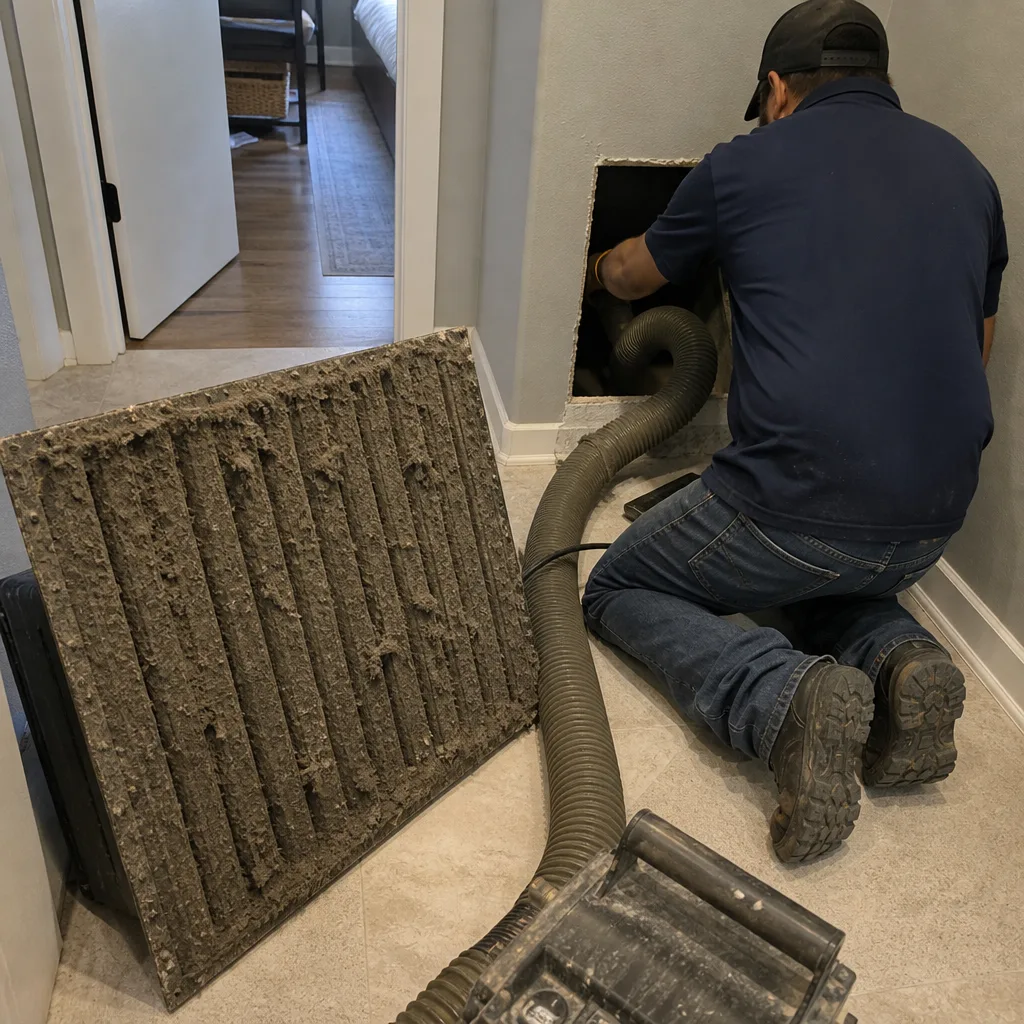 Before
 After
After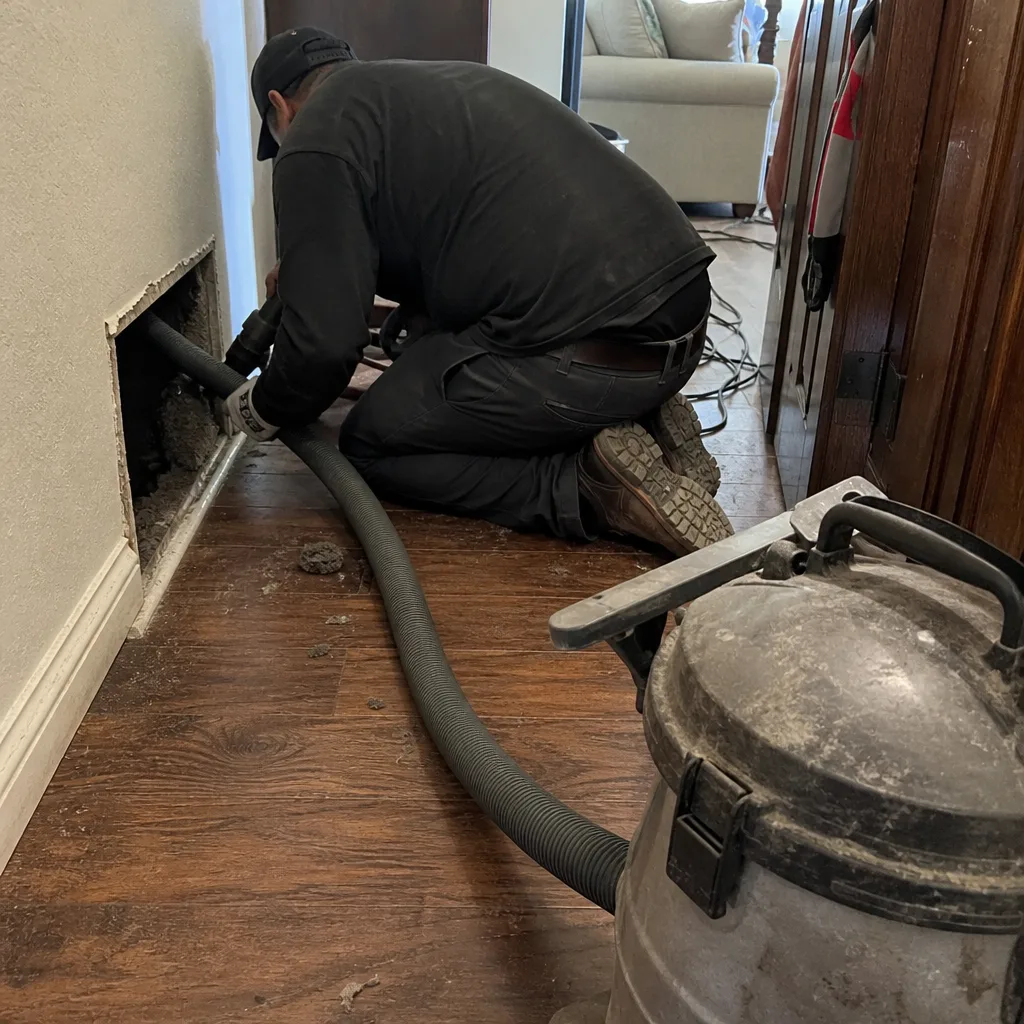 Before
 After
After