
Last updated October 15, 2026
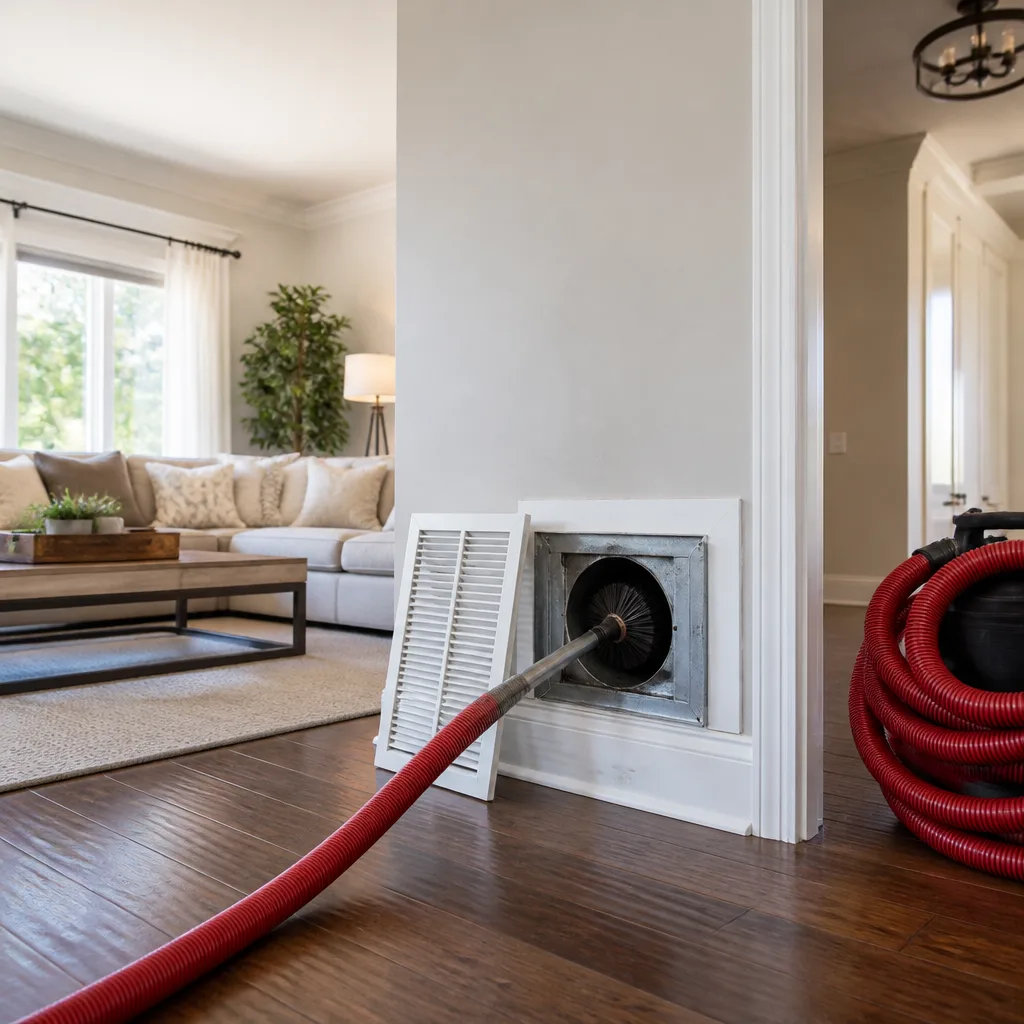 Whole-home duct cleaning
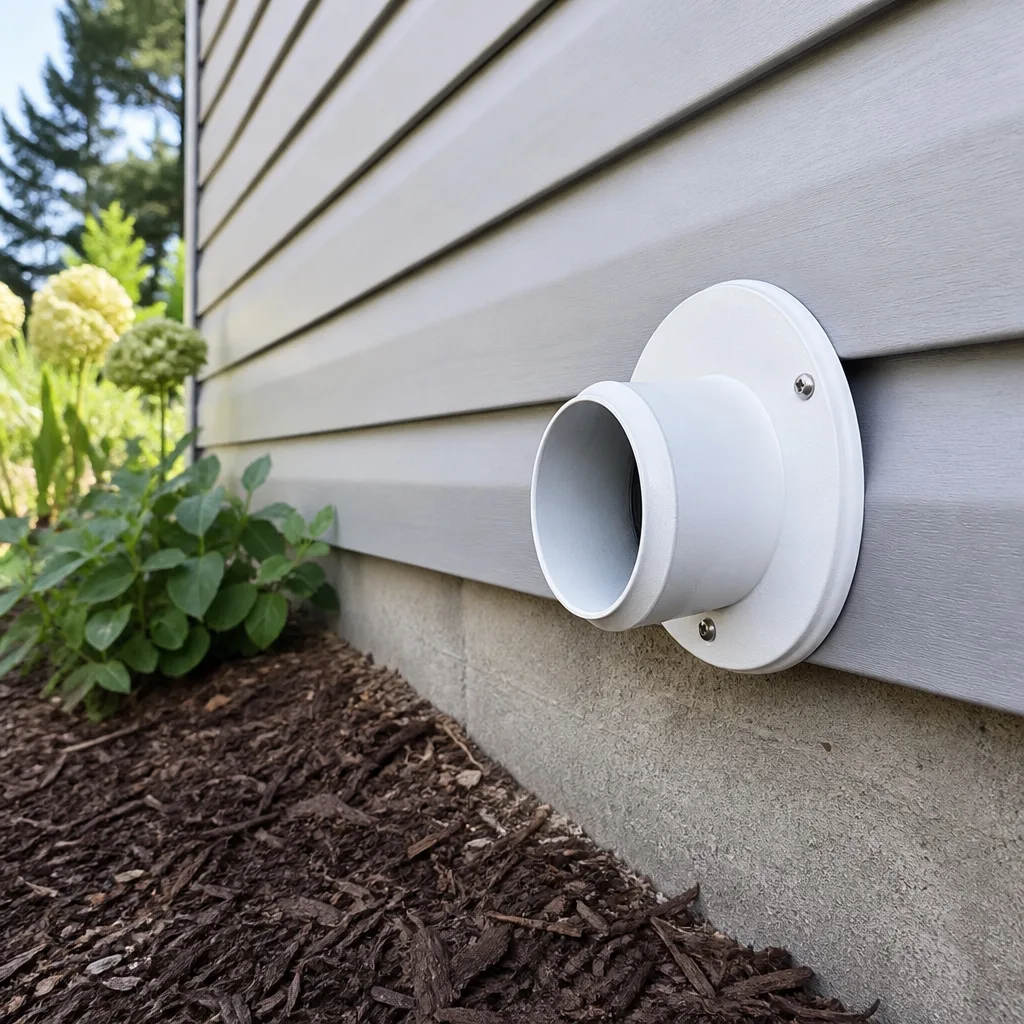 Dryer vent cleaning
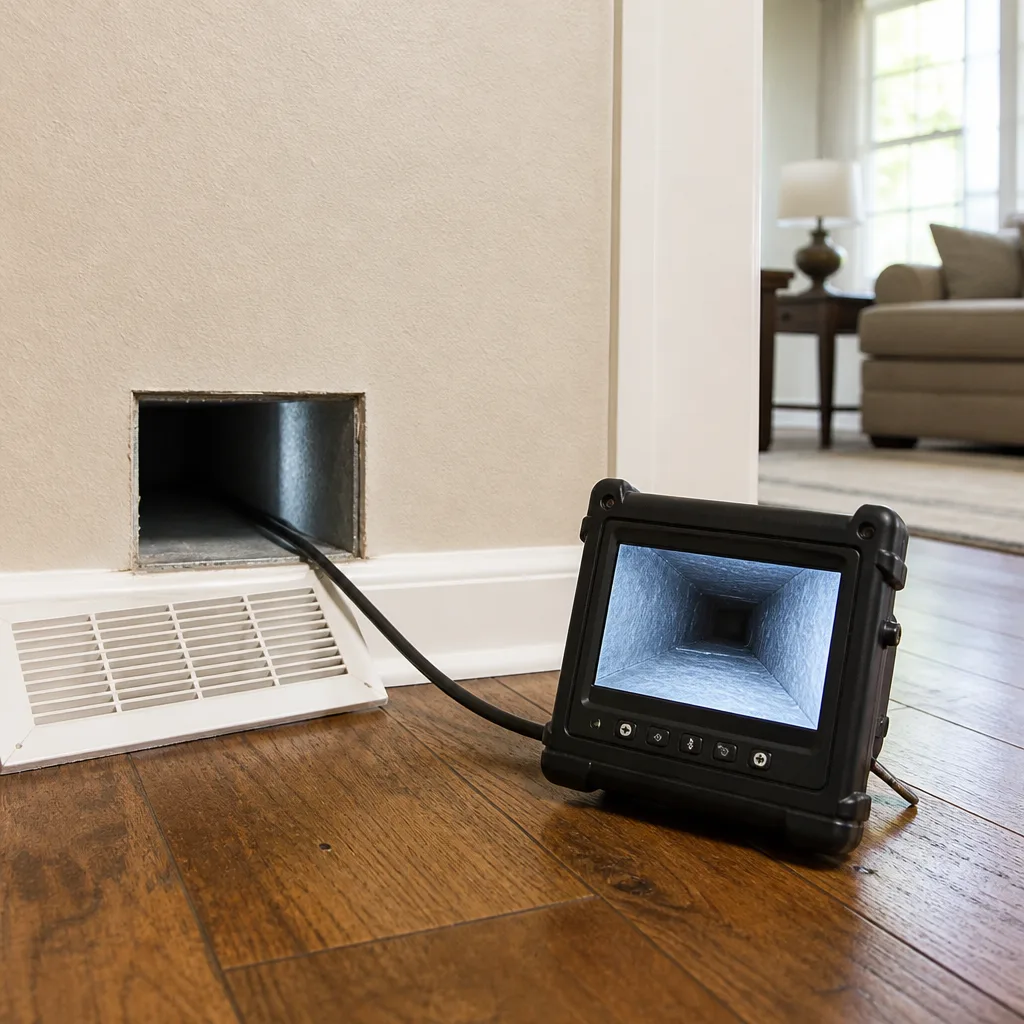 Camera inspection
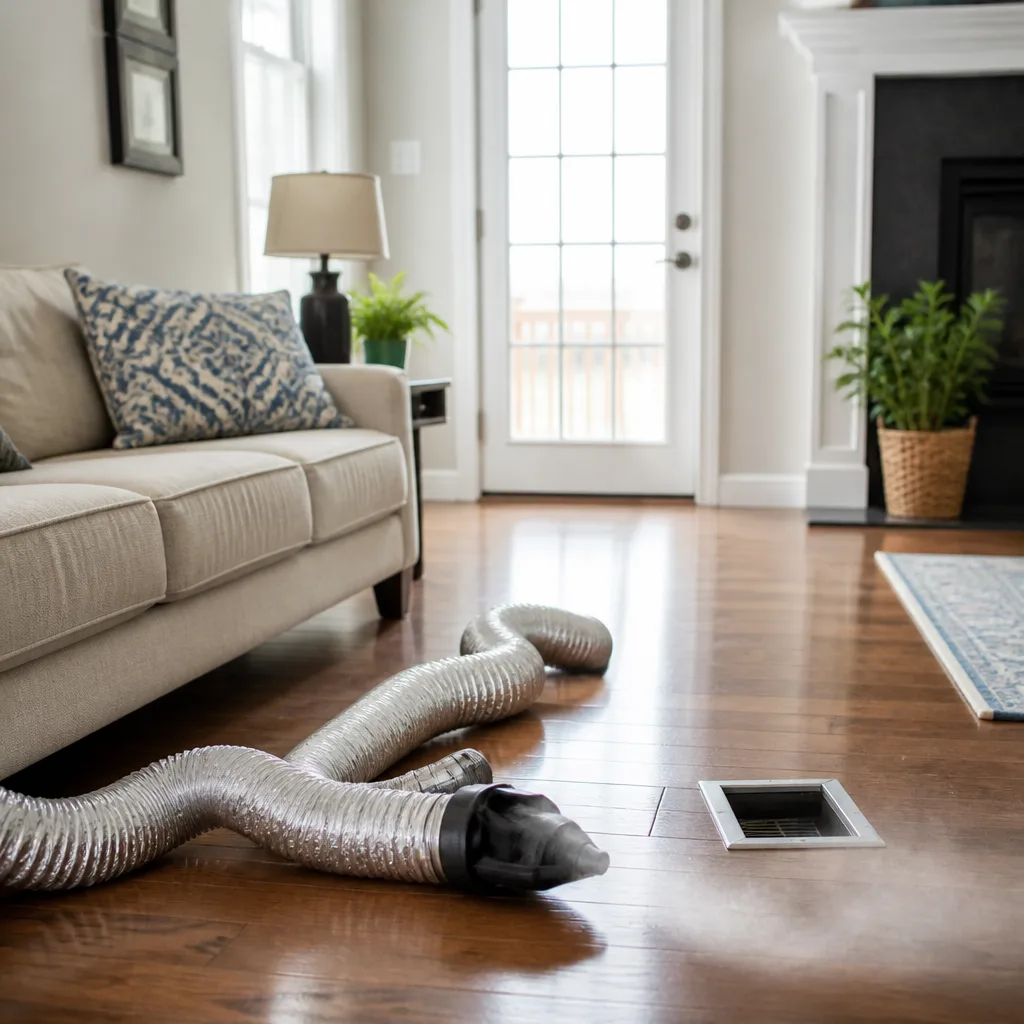 Sanitizing & deodorizing
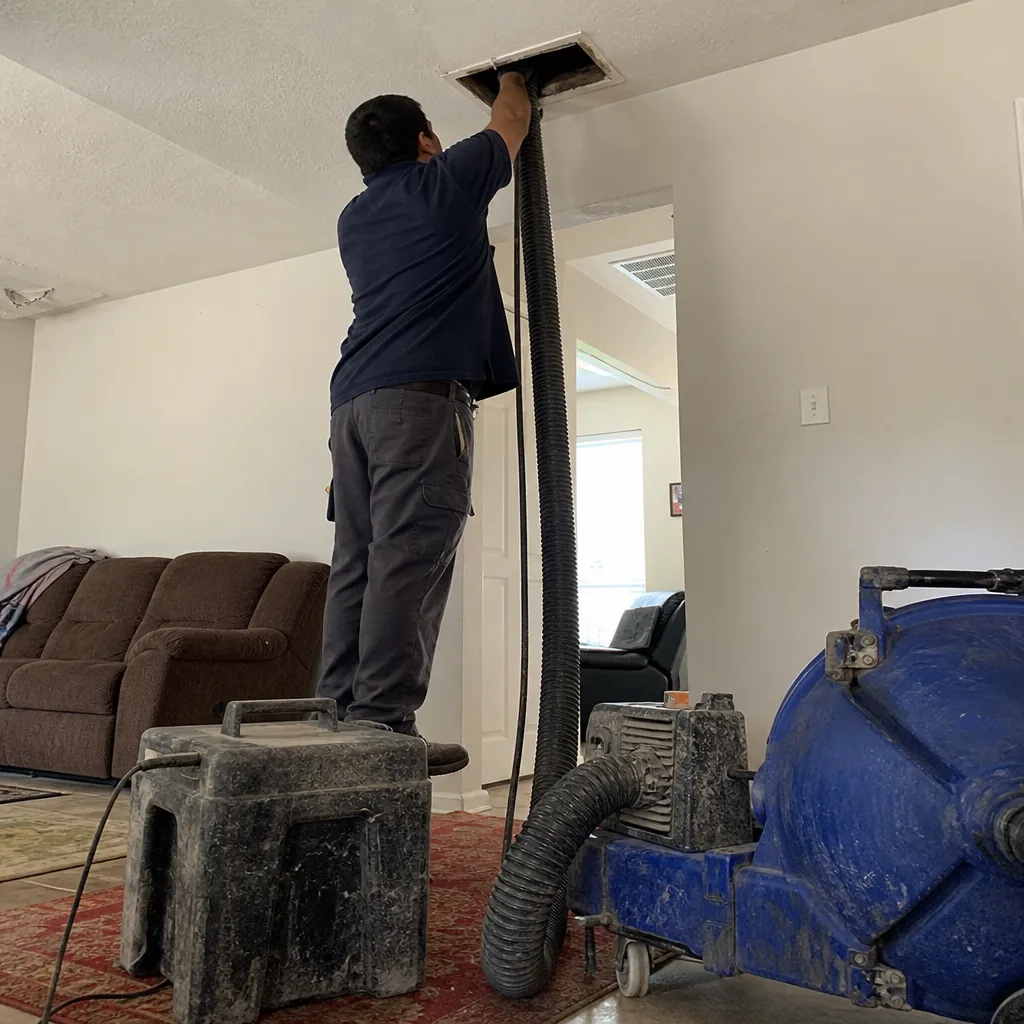
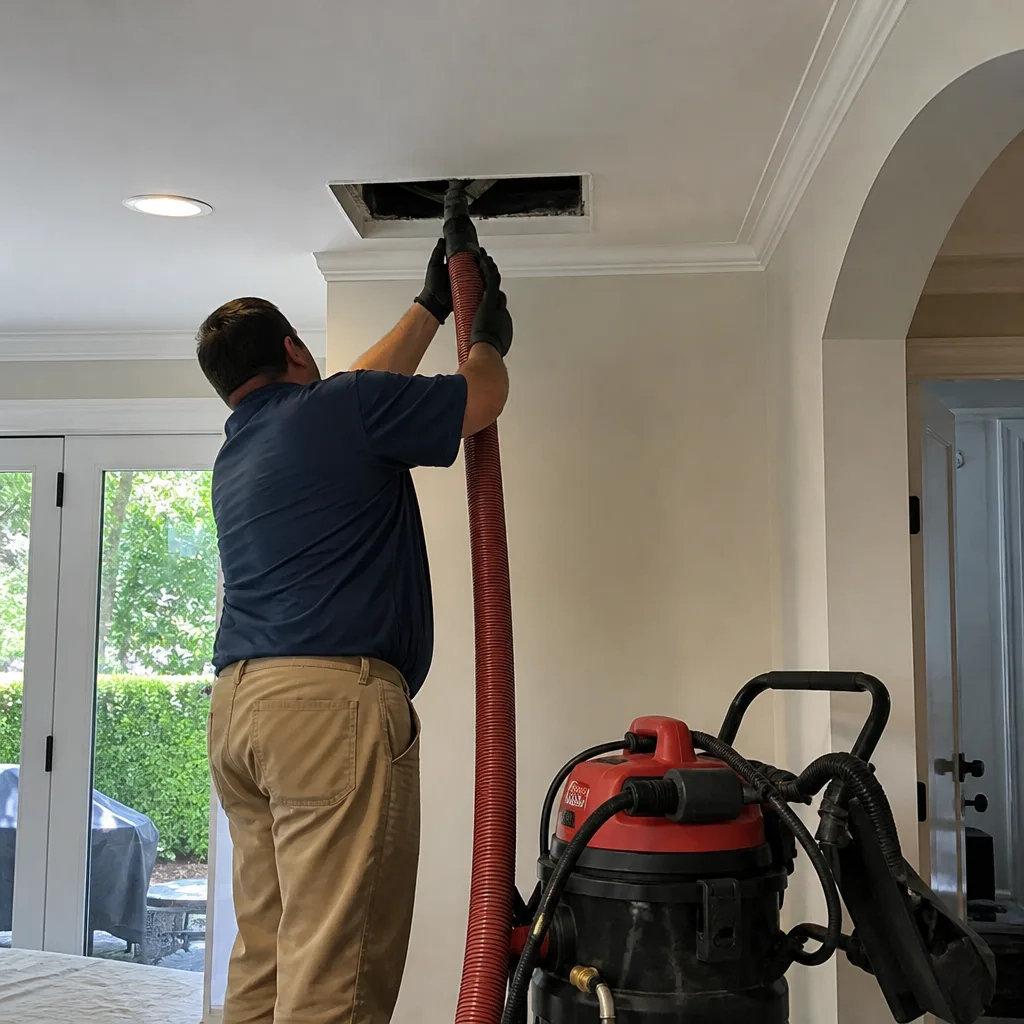
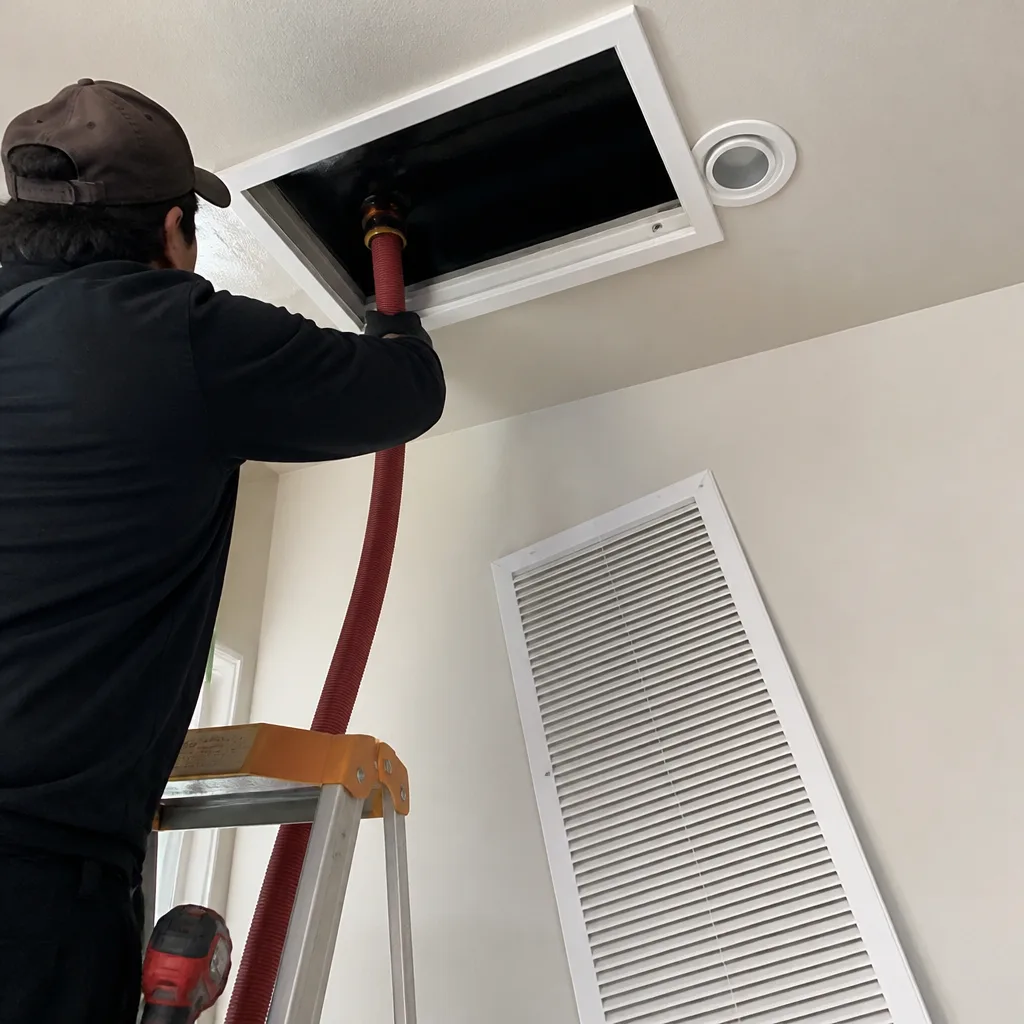
Whole-system duct and dryer vent check with before-and-after photos - you see exactly what came out of your vents
That "$99 whole-house special" is a bait ad - the real number appears once they are in your hallway, or the "clean" is a shop-vac at the register. We photograph the inside of your ducts before and after instead.
Air Duct Cleaning Maintenance Checklist for Austin Homeowners
Most air duct maintenance checklists floating around Austin are really just a polite reminder to change your filter. That’s not maintenance. That’s a three-minute task that leaves 90% of your system untouched. The ducts behind your walls in neighborhoods like Mueller, Tarrytown, and Circle C carry every particle that moves through your home’s air – and the maintenance that actually matters is knowing what a real cleaning should cover. This guide walks you through the 11 physical checkpoints a technician should complete in an Austin home, the 3 they most often skip, and the before-and-after documentation that separates a real job from a van, a vacuum, and a handshake.
Styles & brands we work with
Quick Answer
An Austin homeowner’s air duct maintenance checklist should include three phases: a room-by-room inspection you can do yourself before any service, a set of during-service checkpoints confirming negative-pressure extraction and full plenum access, and a post-service documentation review where you confirm photos, written pricing, and a dated maintenance log entry. Most Austin homes should be cleaned every 3 to 5 years, sooner after renovation, flood, or pest treatment. A proper cleaning covers all supply and return ducts, both plenums, the blower compartment, and the air handler – not just the visible registers.
Table of Contents
- The Pre-Service Checklist: What to Inspect Room by Room
- The During-Service Checklist: 11 Checkpoints a Technician Should Complete
- The 3 Checkpoints Most Often Skiipped in Austin Homes
- The Post-Service Sign-Off: What Paperwork and Photos Should You Receive
- Austin-Specific Maintenance Triggers Beyond the Calendar
- How to Log and Date Your Duct Maintenance History
- Common Mistakes to Avoid
- When to Call a Professional
- Frequently Asked Questions
- The Bottom Line
The Pre-Service Checklist: What to Inspect Room by Room
Before you ever pick up the phone, walk your Austin home and document what you see. This takes 20 minutes and gives you a baseline so you can verify the work afterward. It also tells you whether you actually need a cleaning or just a filter change. In our experience, about a third of Austin homeowners who call us for a full air duct cleaning in Austin really only need a targeted service – but the only way to know is to look first.
Start with a flashlight and your phone camera. Work through each room and check these four things at every supply register and return grille:
- Visible debris at the register. Remove the vent cover (most pop off by hand) and look inside. Gray dust, pet hair clumps, or visible construction debris means material is moving through the system. Take a photo with your camera’s flash on.
- Musty odor at the vent. Get close and smell. A damp, earthy smell that strengthens when the AC runs suggests microbial growth inside the ducts – common in Austin homes where humidity sits above 60% for weeks at a time. Musty at one vent only? Note which room.
- Filter condition and fit. Pull the filter at the return grille or air handler. Is it bowed, caked, or so loose that air bypasses it? A filter that doesn’t seal lets unfiltered Austin pollen and dust load the coil and ductwork directly.
- Renovation dust history. If you’ve sanded drywall, removed tile, or had any contractor work done in the past 12 months, note it. Fine drywall dust coats duct interiors and doesn’t come out with a standard filter change.
Also check the return plenum if you can access it – it’s usually a metal box near your air handler or furnace. If you see dust caked on the interior walls, that’s the same air your family breathes. In homes in older Austin neighborhoods like Hyde Park or Bouldin Creek, original ductwork from the 1960s and 70s often has never been opened, and the buildup there is thick enough to restrict airflow by 20% or more.
Write your findings down, room by room. That list becomes your verification tool after the cleaning.
The During-Service Checklist: 11 Checkpoints a Technician Should Complete
This is the section most maintenance guides skip entirely – what should actually happen while the technician is in your home. Here are the 11 physical checkpoints a thorough Air Duct Cleaning services technician in Austin should include. You don’t need to hover, but you should be able to confirm these happened before you sign anything.
- System shut down before work begins. The HVAC unit should be off at the thermostat and at the breaker or disconnect switch. Anyone working on live equipment is cutting corners.
- All supply registers counted and accessed. The tech should know how many supply vents your home has before starting, and should access every one – not just the ground-floor ones that are easy to reach.
- Return grilles removed and set aside. Returns pull the largest volume of air, so they carry the heaviest dust load. They must be removed and cleaned, not just vacuumed from the outside.
- Return plenum opened. This is the metal box on the return side of the system. If it isn’t opened, the technician cannot see or clean the main return trunk. This is one of the most common skipped steps in budget cleanings.
- Supply plenum opened or accessed via all branch runs. The supply side distributes conditioned air. A proper cleaning reaches the full trunk line, not just the first 12 inches behind each vent.
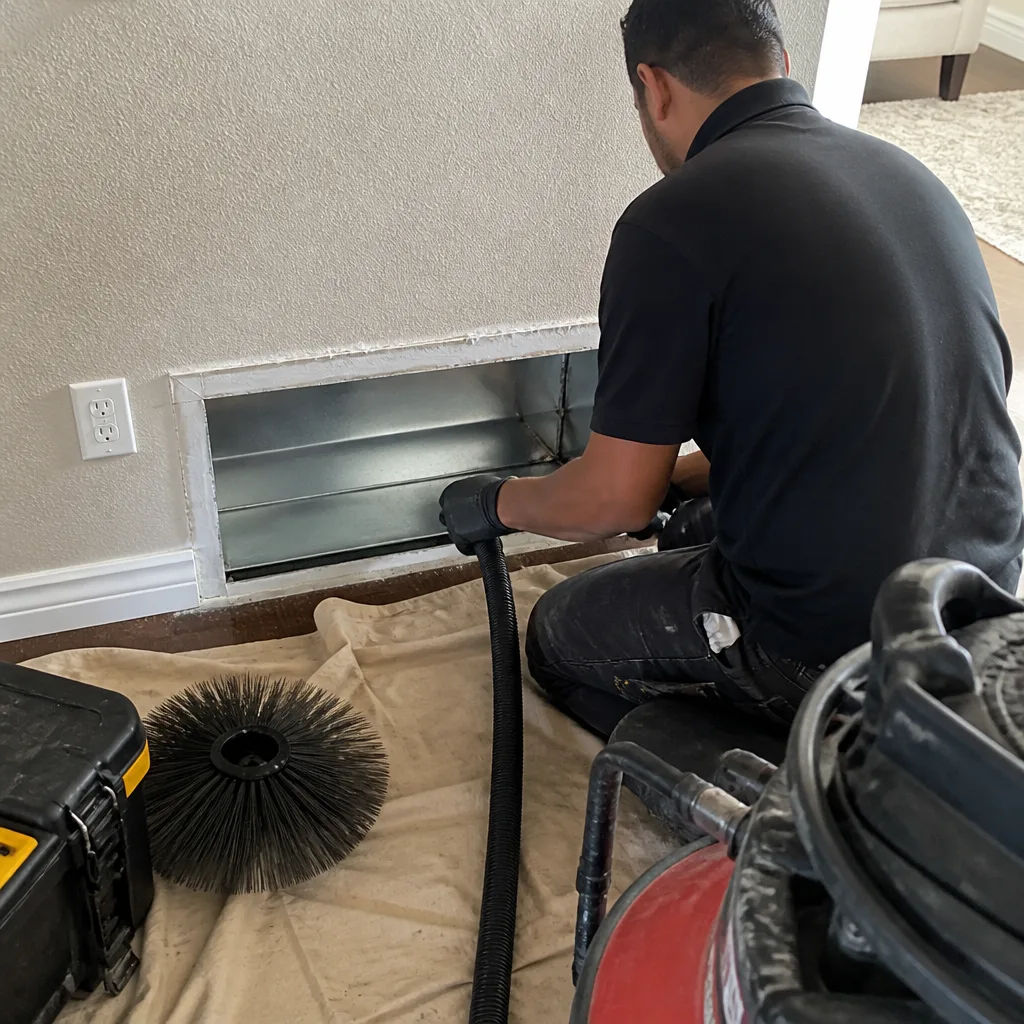
- Negative-pressure extraction confirmed. The cleaning should use a vacuum that pulls the ductwork under negative pressure while agitation tools dislodge debris. Without negative pressure, loosened dust just resettles deeper in the system. We use professional-grade Nikro and Rotobrush equipment for exactly this reason – the vacuum holds the system under suction while rotating brushes agitate the interior walls.
- Blower compartment cleaned. The blower wheel and housing collect a surprising amount of dust in Austin homes, especially during oak season. A dirty blower wheel reduces airflow and strains the motor.
- Evaporator coil inspected and reported. The coil should be checked. If it’s visibly matted with dust or has biological growth, you should be told – and given a photo – even if coil cleaning is a separate service.
- Air handler interior wiped down. The cabinet that houses the blower and coil should be wiped clean. Leaving the cabinet dirty means the system re-contaminates itself within weeks.
- All access panels properly resealed. Every panel removed should be put back with fasteners secured and any gaskets intact. Air leaks after cleaning waste energy and pull attic air into your home.
- Final filter install (yours or a new one). A cleaning ends with a clean filter installed. If the tech tells you to “just put a new one in later,” that’s a red flag.
You won’t see every step if you’re in another room, but you should receive confirmation of each point with before-and-after photos. At Linden Air Duct Austin, we photograph the plenums, the blower compartment, and a representative sample of supply runs on every job. If a company can’t show you photos of the work, ask why.
The 3 Checkpoints Most Often Skipped in Austin Homes
In our experience cleaning ducts across Austin – from Round Rock down to Buda and everywhere between – these are the three points that get skipped most often, usually by companies competing on price.
1. The Return Plenum Interior
The return plenum is the single dustiest box in most homes, because it sits upstream of the filter in many installations. If the filter is at the return grille in the ceiling, the plenum behind it is relatively clean. But in many Austin homes, especially those with the air handler in the garage or attic, the filter sits at the air handler – meaning the entire return trunk and return plenum are unfiltered and collect years of raw dust. Opening that plenum takes time and access. Skipping it means leaving the highest-concentration dust source in the home untouched. Ask specifically: “Was the return plenum opened?” If the answer is vague, the answer is no.
2. The Blower Wheel
A dirty blower wheel is an airflow problem and an efficiency problem. Dust buildup on the fan blades reduces how much air each rotation moves, which means your AC runs longer to hit the same temperature – and your Austin summer electric bill reflects it. Removing and cleaning a blower wheel is labor-intensive. Some techs wipe the visible front of the housing and call it done. A proper cleaning addresses the wheel itself, which often requires removing it from the motor shaft. We photograph the blower wheel before and after on every cleaning so you can see it was done.
3. The Full Length of Every Supply Run
Flex duct in Austin attics runs 15, 25, sometimes 40 feet from the main trunk to a far bedroom register. A budget cleaning often agitates the first few feet of each run and moves on. The far end, where dust settles and compacts over years, never gets touched. You’ll know this happened if the cleaning takes under two hours for a 2,000-square-foot home. A legitimate full-system cleaning of that size takes three to five hours. Time is not a guarantee of quality, but it’s a rough proxy for thoroughness.
The Post-Service Sign-Off: What Paperwork and Photos Should You Receive
After the technician packs up, the job isn’t finished until you have documentation. This is where a trustworthy Austin duct cleaning separates itself from everything else in the market. Here’s what you should receive – and what its absence signals.
What a Reputable Contractor Provides
- Before-and-after photos. Clear shots of the return plenum, blower compartment, and at least one representative supply run. Blurry or oddly angled photos don’t count.
- Written price confirmation. The price you agreed to before work began should match the invoice at the end, to the dollar. At Linden Air Duct Austin, the price is put in writing before any work starts on every single job – it’s not a surprise at the door, and it’s not padded at the end.
- A dated service record. The date, the services performed, the technician’s name, and any notes on system condition. This goes in your maintenance log.
- Written guarantee where applicable. Air duct repair work should come with a written guarantee. Ours covers every air duct repair in Austin for 365 days, and if a covered repair fails, we return at no charge. If a contractor won’t put their guarantee in writing, assume there isn’t one.
What Missing Documentation Signals
No photos means the technician either didn’t do the work they claimed, or doesn’t want a record of what the ducts looked like. No written price means you’re about to be invoiced for whatever the tech decides the job was worth. No dated service record means you have nothing to show a future buyer or your insurance company. This matters. A home inspection in Austin will not catch dirty ducts – they’re behind walls. Your maintenance log is the only proof the next owner has that the system was cared for.
Austin-Specific Maintenance Triggers Beyond the Calendar
The standard advice – “clean your ducts every 3 to 5 years” – is a starting point, not a rule. Austin’s climate and construction patterns create specific triggers that should move duct cleaning up your priority list, regardless of when you last had it done. Before scheduling, check Air Duct Cleaning Permits, Codes & Inspections in TX: What You Need to Know.
Post-Flood or Major Water Event
Austin gets flash floods along the Colorado River, Bull Creek, Shoal Creek, and Walnut Creek watersheds. If water enters your ductwork – even a few inches in a crawl space or a saturated return chase – microbial growth starts within 48 to 72 hours in our humidity. Cleaning after a flood is not the same as a routine cleaning. It requires drying, antimicrobial treatment where appropriate, and often duct replacement in the worst cases. We work with air duct cleaning products from Abatement Technologies for these situations, because flood contamination is a different problem than dust.
Post-Renovation
Central Austin is a constant remodel zone. Hyde Park kitchens, Zilker additions, Mueller townhome refreshes – drywall dust from any of them coats the inside of your ducts with a fine, alkaline powder that standard filters don’t remove. If you renovate, plan to clean your ducts within 30 days of the final paint touch-up. The dust settles quickly, and running your AC during a renovation pulls it deep into the system.
Post-Pest Treatment
If you’ve had rodents in your attic or walls – common in older Austin homes near greenbelts – their droppings and nesting material can enter your ductwork. Insecticide and rodenticide treatments also leave fine particulates that circulate. After any pest remediation, inspect your ducts and clean if you see any sign of intrusion. This is a health issue, not a maintenance preference.
After a New Roof or Attic Insulation
Roofing work and blown-in insulation both generate debris that falls through attic access points and can enter return ducts. If you replace your roof, check your returns and the area around your air handler within a week.
How to Log and Date Your Duct Maintenance History
A five-minute habit can protect your home’s resale value and your insurance documentation. Here’s how to keep a duct maintenance log that actually holds up.
What to Record
- Date of service
- Company name and technician name
- Services performed (cleaning, repair, coil cleaning, dryer vent cleaning)
- Filter size and type installed
- Notes on system condition (photos attached or filed)
- Price paid
- Guarantee or warranty terms, in writing
Where to Keep It
A digital folder works best. Create a folder called “HVAC and Ducts” in your cloud storage or on your home computer. File every invoice, every photo, every written guarantee. When you sell your home in Austin, you now have a documented history that answers a buyer’s “when was the last time the ducts were cleaned?” question with a date, a company name, and photos – not a shrug.
Insurance matters too. If you ever file a claim for mold remediation, water damage, or smoke damage, your log shows that you maintained the system – which can matter for coverage determinations. Documenting a post-flood cleaning with photos is the single strongest piece of evidence you can offer.
We provide a dated service record on every job, and we tell our Austin customers to file it the same day. The habit takes 90 seconds and builds a paper trail that pays off later.
Common Mistakes to Avoid
- Hiring on price alone. Austin duct cleaning quotes range from $99 to $600 for the same-size home. The $99 job almost always covers only the supply registers – not the plenums, not the blower, not the trunk lines. Know what’s included before you compare prices, because the low bid is comparing a different service.
- Accepting a quote without a written price. Any contractor who won’t put the price in writing before starting is planning to negotiate with you after the work is done. This is the single most common bait-and-switch in the duct industry. Get it in writing, every time.
- Changing only the filter and calling it maintenance. A filter catches particles before they enter the system. It does nothing for dust already inside the ducts, on the blower wheel, or caked in the return plenum. Replace the filter monthly and clean the system every 3 to 5 years.
- Ignoring musty smells. A musty vent in an Austin home is not normal. It signals moisture inside the duct system, which means potential microbial growth. Waiting doesn’t make it cheaper to fix.
- Not photographing the pre-service condition. If you don’t document what your registers looked like before the cleaning, you can’t verify the work afterward. A quick phone photo takes 10 seconds per vent.
- Hiring without checking who the technician will be. You’re letting a stranger into your home. At Linden Air Duct Austin, every technician is background-checked, identity-verified, and introduced to you by name and photo before arrival, with a photo ID badge shown at the door. If a company can’t tell you who’s coming, that’s a problem.
- Skipping the post-flood inspection. After any water event, the cheapest fix is the inspection. Waiting until you smell must or see visible mold means the problem has already spread.
When to Call a Professional
Some maintenance you can do yourself – changing filters, checking registers, keeping a log. But these situations warrant a call to a professional duct cleaner in Austin:
- Visible dust or debris inside supply registers that returns within weeks of cleaning
- Musty or damp odors from vents that persist after filter changes
- Reduced airflow from specific rooms despite clean filters and open registers
- Recently completed renovation, roofing, or insulation work
- Evidence of rodents or pests in the attic or ductwork
- A home purchase where the previous owner has no duct maintenance records
When you call, ask three questions: What exactly does the cleaning cover? Will the price be in writing before work begins? Who will be entering my home? A company that answers all three clearly is one you can trust. Linden Air Duct Austin offers free estimates in Austin – call (940) 461-7203 and we’ll walk through what your system needs.
Frequently Asked Questions
Every 3 to 5 years for most Austin homes, depending on pets, allergies, and home age. Homes with shedding pets, recent renovations, or residents with asthma or allergies may need cleaning every 2 to 3 years. Austin’s high pollen counts – especially live oak in spring and cedar in winter – load systems faster than drier climates. Call (940) 461-7203 for an honest assessment of your specific home.
Expect to pay between $300 and $600 for a legitimate full-system cleaning of a typical 2,000-square-foot Austin home. That range covers all supply and return ducts, both plenums, the blower compartment, and the air handler. Quotes under $150 almost always mean partial service. At Linden Air Duct Austin, we put the exact price in writing before any work begins, so you know the number before we start – call (940) 461-7203 for a free estimate.
Cheaper quotes usually cover less work – often just the supply registers, not the plenums, blower, or trunk lines. Some use a portable vacuum at the vent instead of true negative-pressure extraction, which loosens dust but doesn’t remove it. Others are loss leaders designed to generate upsell pressure at the door. Ask each company to list exactly what’s included in writing, then compare line items, not totals. The low quote is often for a different job entirely.
Ask for before-and-after photos of the return plenum, blower compartment, and at least one supply run before work begins, then confirm you receive them after. Legitimate companies photograph the work because it’s their proof of performance. At Linden Air Duct Austin, we document every major checkpoint with photos as standard practice – not as a special request. No photos? Ask why.
Yes. Ducts in Austin homes accumulate live oak pollen, cedar pollen, mold spores, and dust mite debris year-round. When the AC cycles, it redistributes whatever is in the system back into your living space. If you notice allergy symptoms that spike when the AC runs – even after changing filters – the ducts are a likely contributor. Cleaning removes the reservoir of allergens and gives your immune system less to react to.
Call and ask. A professional Austin duct cleaning company will tell you the technician’s name before the visit and verify their identity at the door. At Linden Air Duct Austin, every technician is background-checked, identity-verified, and introduced to you by name and photo before arrival – with a photo ID badge shown at the door every time. If a company can’t tell you who’s coming, don’t open the door. Get your air duct cleaning in Austin from a company that verifies its people.
The Bottom Line
An air duct maintenance checklist for Austin homeowners is only as good as the standard it holds your contractor to. Document your register condition before service, confirm the 11 checkpoints during the work, and require photos and written records afterward. Skip the $99 bait. The ducts behind your walls move every breath your family takes in this house – and in a city with Austin’s pollen, humidity, and renovation dust, a thorough cleaning at the right time is the difference between a system that circulates allergens and one that filters them. Keep a dated log, trust verified technicians, and explore our more guides & resources, or call (940) 461-7203 when you’re ready for an honest assessment.
Written by Marcus Veale, Owner at Linden Air Duct Austin, serving Austin since 2004.
See the difference
 Before
 After
After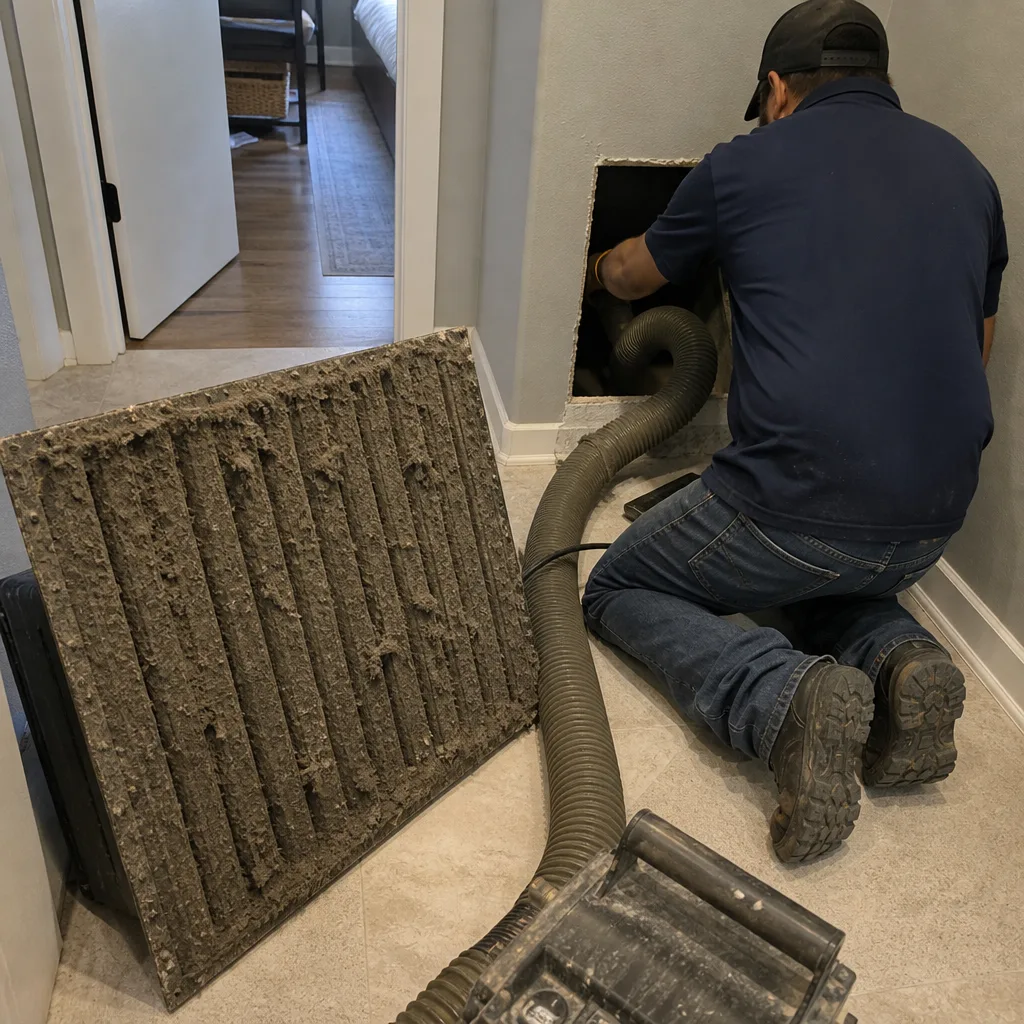 Before
 After
After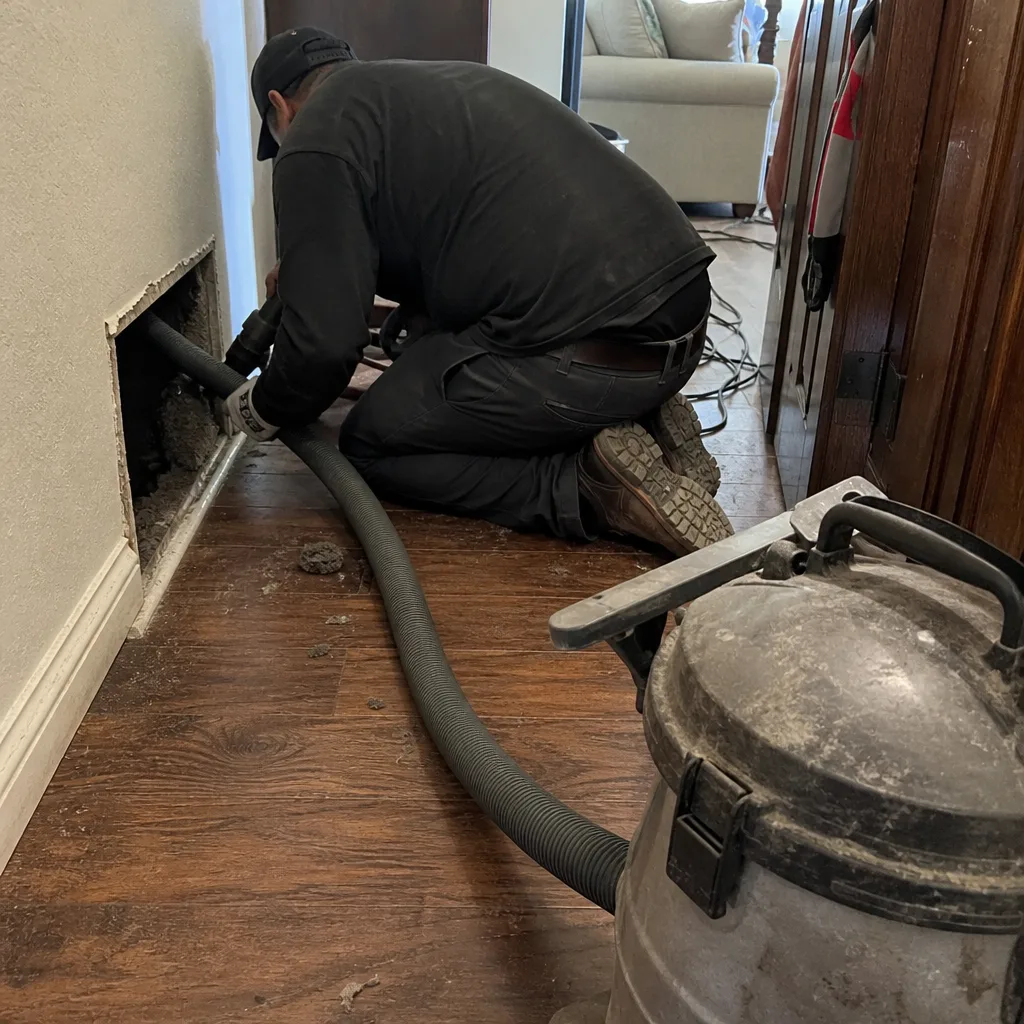 Before
 After
After