
Last updated October 15, 2026
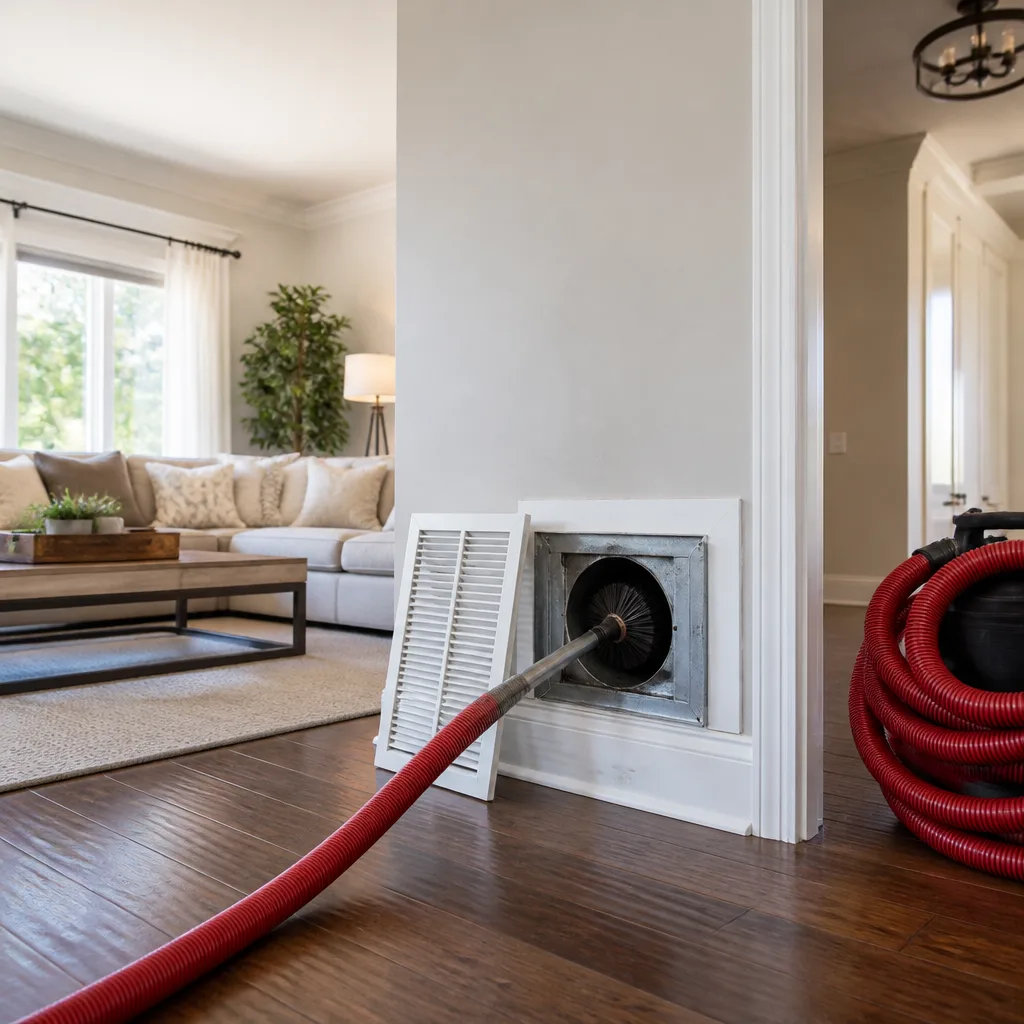 Whole-home duct cleaning
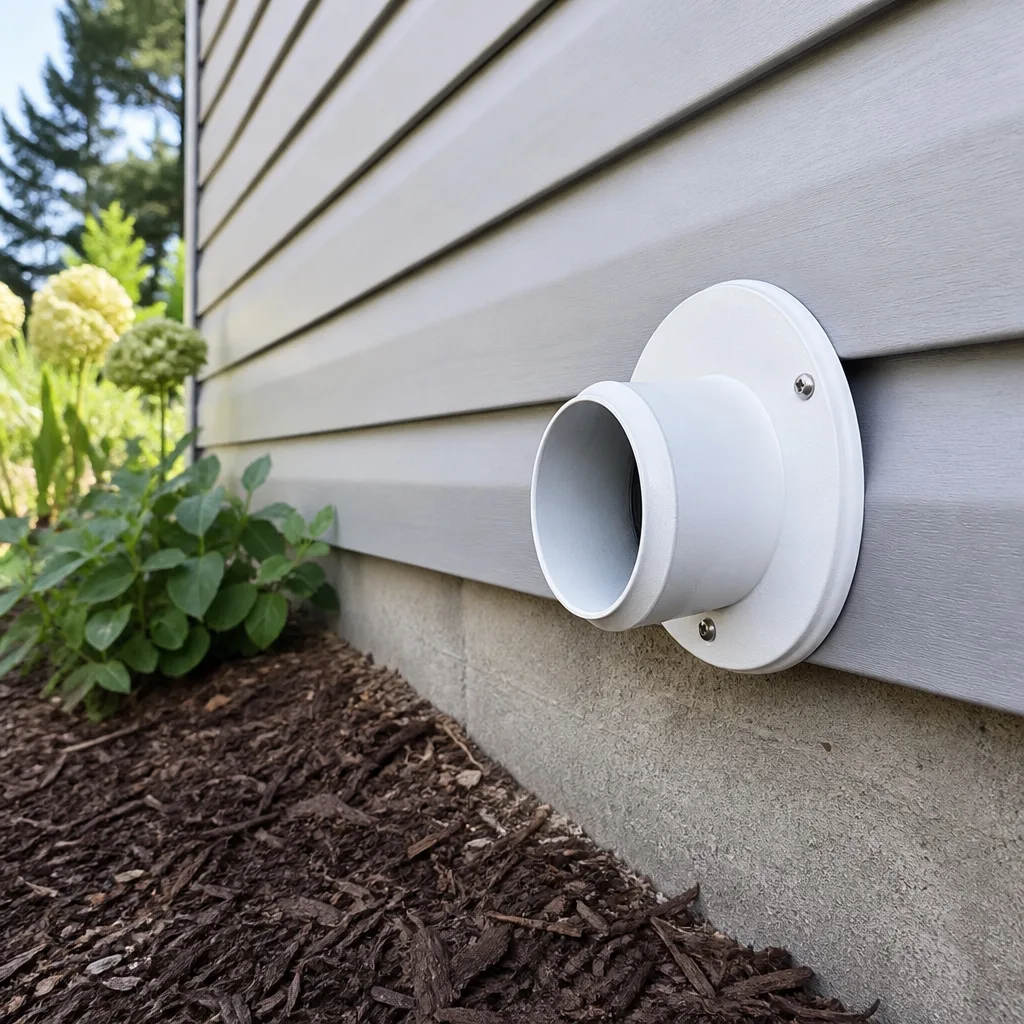 Dryer vent cleaning
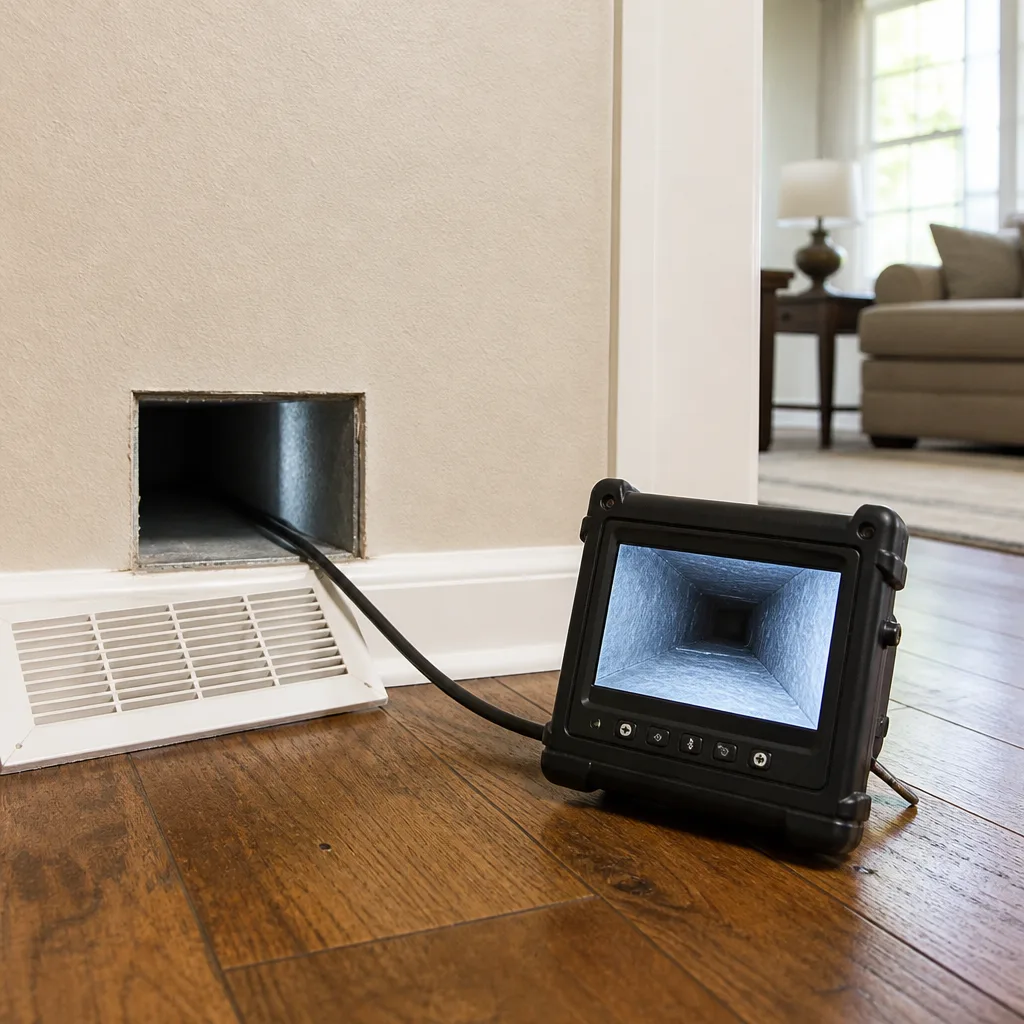 Camera inspection
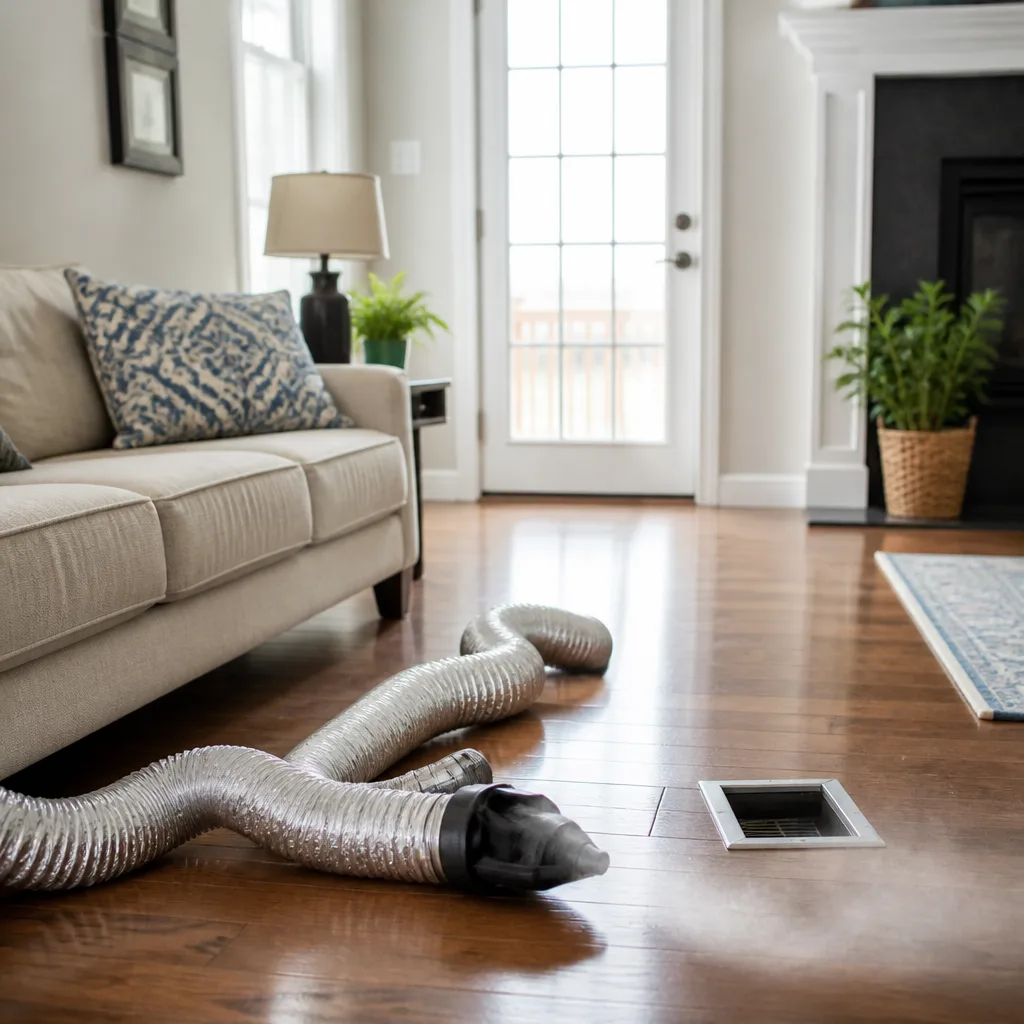 Sanitizing & deodorizing
Whole-system duct and dryer vent check with before-and-after photos - you see exactly what came out of your vents
That "$99 whole-house special" is a bait ad - the real number appears once they are in your hallway, or the "clean" is a shop-vac at the register. We photograph the inside of your ducts before and after instead.
Seasonal Air Duct Cleaning Care for Austin: Year-Round Homeowner’s Guide
In Minneapolis, a central air system might run four months out of the year. In Austin, it runs closer to ten. That’s not a local curiosity; it’s a math problem. Your ducts move air through the hottest, dustiest, and most allergen-heavy months with barely a pause, which means they accumulate two-and-a-half times the particulate load of a comparable home up north in the same calendar period. Yet the national “clean every 3 to 5 years” advice was written for a climate Austin doesn’t have. This guide and our Air Duct Cleaning Maintenance Checklist for Austin Homeowners give you a maintenance rhythm built around Austin’s actual seasons: oak season, cedar season, the summer blast, the fall dormancy wake-up, and the wet-dry swings of La Niña and drought years. By the end, you’ll know exactly when your ducts need attention, why that timing matters for your indoor air, and what a fair price looks like here in Austin.
Quick Answer
In Austin, the smartest schedule for air duct cleaning is twice a year if anyone in the home has allergies or respiratory issues, and at least once a year for everyone else. The two best windows are late spring (after oak and ash season ends in May, before the summer A/C blast starts) and early fall (before the heating system wakes up from months of dormancy). For a detailed look at pricing, see our Air Duct Cleaning Cost Breakdown: The Austin Homeowner’s Reference for 2026. A whole-system duct cleaning in Austin typically runs $350 to $650 for an average 2,000-square-foot home, and the job takes three to six hours with professional negative-pressure extraction equipment. If you’re only going to do it once, do it in late spring.
Styles & brands we work with
Table of Contents
- The Austin HVAC Load Calendar: Month by Month
- Why Austin Is Different: Run Time, Climate, and What That Does to Ducts
- Spring Allergy Season: What Oak, Ash, and Cedar Leave Inside Your Ducts
- The Summer Blast: Why July and August Are Your Ducts’ Hardest Months
- Fall Pre-Season Checks: Waking Up the Heater After Months of Dormancy
- Winter Cedar Season and the Drought vs. La Niña Wildcard
- A Seasonal Filter Strategy Built for Austin’s Air, Not Generic MERV Charts
- How Professional Duct Cleaning Actually Works on an Austin Home
The Austin HVAC Load Calendar: Month by Month
Austin’s HVAC system doesn’t have a true off-season. It has a cooling season that runs from roughly March through October, a brief shoulder in November, a heating season that runs December through February, and a second brief shoulder in early March. Here’s what that actually looks like on the ground, and what it means for the air moving through your ducts each month.
| Month | HVAC Load | What’s Moving Through Your Ducts | Maintenance Note |
|---|---|---|---|
| January | Heating, moderate | Cedar pollen (peak), furnace dust from first weeks of use | Check filter every 3 weeks during cedar peaks |
| February | Heating, moderate | Cedar pollen (late), dust from high indoor occupancy | Good month for a filter upgrade before spring |
| March | Cooling begins, light | Oak pollen starts, early mold spores during wet springs | Inspect return ducts for pollen buildup |
| April | Cooling, moderate | Oak and ash pollen (peak), fine dust | Highest indoor allergen load of the year for many homes |
| May | Cooling, heavy | Late oak, grass pollen, dust from open windows | Prime window for post-allergy duct cleaning |
| June | Cooling, heavy | Dust, pet dander, general particulate | A/C runs near-continuous; filter loads fast |
| July | Cooling, maximum | Dust, dander, possible mold spores in humid stretches | Peak duct stress month; highest dust deposition |
| August | Cooling, maximum | Same as July, plus trapped particles from peak A/C cycling | Second peak month; watch for reduced airflow |
| September | Cooling, heavy | Dust, dander, residual summer accumulation | Good month to schedule fall duct cleaning |
| October | Cooling, light | Dust, fall allergens (ragweed in Central Texas) | Best window: get ducts cleaned before heater fires up |
| November | Shoulder, light | Dust from first heating cycles, years-old furnace dust | First heating month after dormancy; expect that burnt-dust smell |
| December | Heating, moderate to heavy | Cedar pollen returns, furnace dust, dry-air particulates | Cedar fever begins; keep filters fresh |
The pattern is clear: two peak stress periods. The first is the April-May allergy load, when your return ducts become a pollen trap. The second is the July-August cooling blast, when the system runs near-continuously and deposits dust faster than any other stretch. If you schedule one cleaning a year, late spring addresses the first peak. If you schedule two, add early fall to clear the summer’s accumulation before the heater kicks on.
Why Austin Is Different: Run Time, Climate, and What That Does to Ducts
The national guideline of cleaning ducts every three to five years assumes a system that runs seasonally: heavy use for four or five months, then a true dormancy. Austin doesn’t work that way. The Climate Prediction Center’s degree-day data shows Austin averaging around 3,400 cooling degree days annually, which places it among the top five large U.S. metros for air-conditioning demand. Your blower fan is moving air through those ducts for thousands of hours a year, and every hour it runs, it pulls more of whatever is floating in your indoor air through the return grilles and into the ductwork.
What gets trapped in Austin ducts is different from what gets trapped in, say, Denver ducts. Denver’s dry, relatively pollen-light air deposits mostly fine dust. Austin’s air carries oak pollen, cedar pollen, mold spores from humid spring and fall periods, construction dust from a metro that has been building nonstop since the 1990s, and the fine clay dust that blows in from the Hill Country during dry spells. That mixture settles in layers, and some of it is sticky. Pollen grains are microscopic but heavy when clumped; combined with hair, skin cells, and pet dander, they form a coating on the interior of return ducts that’s hard to remove without mechanical agitation.
Then there’s the heat factor. Duct interiors in Austin attics regularly reach 130 to 150 degrees Fahrenheit in July and August. That heat bakes the accumulated organic material inside the ducts, breaking it down into finer particles that recirculate more easily into the living space. This is one reason homes with older duct systems often have a persistent dust film on furniture during late summer: the ducts aren’t just holding dust; they’re cooking it and releasing it back into the airflow.
In our experience cleaning ducts across Austin since 2004, the homes that need cleaning most frequently aren’t the ones with pets or kids, though those contribute. They’re the ones built with high-efficiency systems that run the fan continuously “for air quality,” not realizing that constant circulation means constant deposition inside the ductwork. A system that runs the fan 24/7 moves more air through the ducts than one that cycles, and it collects more material in a shorter time.
Spring Allergy Season: What Oak, Ash, and Cedar Leave Inside Your Ducts
Ask any Austin allergist and they’ll tell you the same thing: this city’s spring pollen load is among the most intense in the country. Oak season typically begins in late February and runs through April, with peak release in March and early April. Ash follows a similar window. The pollen counts during these peaks are routinely 5,000 to 10,000 grains per cubic meter on the high side, with the worst days exceeding that.
Here’s the part most homeowners miss: your HVAC system is actively pulling that pollen into your home whenever it runs. The return ducts, the ones that pull air back to the air handler, act like a vacuum intake. If you run the A/C during oak season, and in Austin you almost certainly do, you are pulling outdoor pollen through any leaks in the return path, plus recirculating pollen that gets inside when you open doors and windows. A portion of that pollen settles in the return ducts. Not all of it passes through the filter. It accumulates on the interior duct walls, especially in the first few feet past the return grille, and it stays there long after the trees stop blooming.
That’s the measurable case for post-allergy-season cleaning. In early May, once the oak and ash have finished, your ducts hold a spring’s worth of pollen that will keep recirculating into your living space all summer if you don’t remove it. If anyone in the house has seasonal allergies, the math is simple: every hour the A/C runs after allergy season, it’s blowing whatever’s in the ducts back past your nose. Cleaning in late May removes that pollen load before the hot summer months, when windows stay closed and you depend entirely on the HVAC system for indoor air.
One more spring-specific note: during wet springs, which Austin gets often in La Niña patterns, the combination of humidity and warm air makes the interior of return ducts an ideal environment for mold spore activation. Mold doesn’t need standing water to grow inside ducts; it needs humidity, organic material (pollen and skin cells work fine), and warmth. Austin provides all three in abundance from March through May.
The Summer Blast: Why July and August Are Your Ducts’ Hardest Months
If spring is when your ducts collect allergens, July and August are when they collect everything else. This is the period when Austin’s heat is most relentless, routinely posting 20 to 30 consecutive days above 100 degrees. Your A/C runs almost constantly, cycling on and off every 15 to 20 minutes through the afternoon and evening. That means the blower fan is moving air through the duct system for 18 to 20 hours a day.
Dust deposition is a function of air volume moved. Run twice as much air through the ducts, and you deposit twice as much dust on the interior surfaces. The July-August period in Austin effectively compresses a northern city’s entire summer of duct wear into about eight weeks. If your ducts had any residual dust, pollen, or debris before the summer started, that material gets pushed deeper into the system, compacted into corners and at joints, and baked by the attic heat.
Another factor specific to Austin summers: the clay dust. During dry years, the soil around Austin breaks down into a fine, red-tinted dust that finds its way into homes through every crack and seam. Homes built on limestone and clay soils, which means most of the city, track this dust into the living space and the HVAC system throughout July and August. It’s finer than regular house dust and settles deep into ductwork. A duct system that was cleaned in the spring will still show visible clay dust accumulation by Labor Day after a dry, hot summer.
This is why we recommend a second cleaning in late September or early October for Austin homeowners who have allergies, pets, or anyone in the home with asthma. You’ve just run the system through the hardest period of the year. Clearing that accumulated dust before the heater comes on in November means you don’t spend the winter breathing the residue of the summer.
Fall Pre-Season Checks: Waking Up the Heater After Months of Dormancy
For most of the year, Austin’s heating system is a machine in storage. From March through October, the furnace or heat pump sits idle while the A/C does all the work. That means the heating components, including the heat exchanger, the burner assembly, and the blower, collect dust and debris that gets baked on by the heat of the attic and the residual warmth from the A/C.
When that first real cold snap hits in November, and the heater fires up for the first time, you get the classic Austin experience: a burning-dust smell that lasts for a day or two, maybe longer. That’s a year’s worth of accumulated debris burning off the heat exchanger. For homes with significant buildup, the smell can linger for weeks, and in the worst cases, it’s not just a smell; it’s particles circulating into the living space.
Here’s a practical fall pre-season checklist for Austin homeowners, ideally scheduled in early October:
- Inspect your return grilles. Pull off one or two return grates and look inside with a flashlight. If you see a visible coating of gray or tan dust on the duct interior, that’s what your heater is about to cook.
- Replace the filter with one seasonally appropriate for the winter load. See the seasonal filter section below for specifics, but the short version: Austin’s winter air carries cedar pollen, and not all filters handle it well.
- Run the heater for a few minutes with windows open before you need it. Do this on a mild October afternoon. Burn off the loose dust in controlled conditions rather than discovering the smell on the first 40-degree night.
- Listen for rattles or whistles. Twelve months of thermal expansion and contraction in Austin attics can loosen duct connections. A whistle means a gap opened somewhere; a rattle means a support came loose.
- Schluter or seal any visible gaps at return boots. If you can see daylight or feel air moving around a boot connection, that’s unfiltered attic air being pulled into your system.
If the inspection turns up significant accumulation, schedule a full Air Duct Cleaning in Austin before the heating season starts. It’s the single best way to guarantee you won’t spend December breathing the dust of July.
Winter Cedar Season and the Drought vs. La Niña Wildcard
If you’ve lived in Austin for more than a winter, you know about cedar fever. Mountain cedar, actually Ashe juniper, releases its pollen from December through February, with peaks in late December and early January. The pollen counts during cedar season routinely hit levels that make spring oak season look mild. Tens of thousands of grains per cubic meter is normal; the worst days exceed that by an order of magnitude.
For your ducts, cedar season is a test of your filtration system. Cedar pollen is particularly small and light, which means it penetrates standard fiberglass filters that would catch coarser oak pollen. Homes that had a summer’s worth of dust and a fall without cleaning enter cedar season with loaded ducts, and the cedar pollen adds a fresh coating on top. This is why Austin homeowners with cedar allergies frequently report symptoms worsening indoors during peak season, even with windows closed. The pollen gets in, and the system recirculates it.
Then there’s the drought-versus-La-Niña variable. Central Texas alternates between drought years, when the soil dries out and produces more airborne dust, and wet La Niña years, when humidity stays elevated and mold spore counts climb. The two patterns produce different duct problems:
- Drought years: More clay dust in the system, lighter and finer than normal house dust. It coats duct interiors evenly and tends to break loose during high blower speeds. Homes on the western edge of Austin near the Hill Country see the worst of this.
- Wet La Niña years: Higher indoor humidity, which means dust in the ducts absorbs moisture and sticks to surfaces. This is when mold and mildew concerns inside ducts become more legitimate, and it’s why ducts cleaned during a wet year often release more visible material during cleaning than in dry years.
Neither pattern is a reason to panic, but both mean the accumulation rate in your ducts varies year to year. A system cleaned in a wet year might be noticeably dirtier after 12 months than one cleaned in a dry year. The reliable approach is to inspect rather than guess: pull a return grate twice a year, look inside, and let what you see decide whether it’s time to clean.
A Seasonal Filter Strategy Built for Austin’s Air, Not Generic MERV Charts
Most filter advice you’ll read online is generic: use MERV 8 or higher, change it every 90 days. That advice fails Austin homeowners because Austin’s airborne challenges change month to month. The filter you need in April, when oak pollen is coating every outdoor surface, is different from what you need in August, when clay dust dominates, and different again from December, when cedar pollen is at its worst.
Here’s a seasonal filter cadence tuned for Austin’s actual air, not a manufacturer’s standard chart:
- March to May (oak and ash season): Run a MERV 11 or MERV 13 filter. These catch a meaningful percentage of oak and ash pollen that would otherwise pass through a standard MERV 8. If anyone in the home has spring allergies, this is not a luxury. Change the filter at least every 30 days during peak oak season; pollen clogs filters fast, and a clogged filter forces your blower to work harder.
- June to September (summer dust season): Drop down to a MERV 8 pleated filter. Summer is about volume, not filtration fineness. A high-efficiency filter during peak cooling season restricts airflow, which reduces cooling capacity and increases energy use. MERV 8 catches most dust and dander without choking the system.
- October (transition): Fresh MERV 11. The heater is about to come on for the first time in months, and the fall air carries ragweed. A mid-grade filter balances filtration with the airflow the heater needs.
- November to February (cedar season): MERV 11 or 13, depending on the sensitivity of anyone in the home to cedar. This is the period when filter quality matters most for symptom control. Change every 30 to 45 days during peak cedar.
If you’re using a high-efficiency filter, a Honeywell or Aprilaire media filter cabinet makes replacement easier and seals tighter than a standard one-inch slot. Homes with those systems still need duct cleaning; the filter protects the furnace, but it doesn’t stop dust from depositing on duct interiors behind the filter. The Linden Air Duct Austin home page has more detail on the equipment we use to clean around and through these systems.
How Professional Duct Cleaning Actually Works on an Austin Home
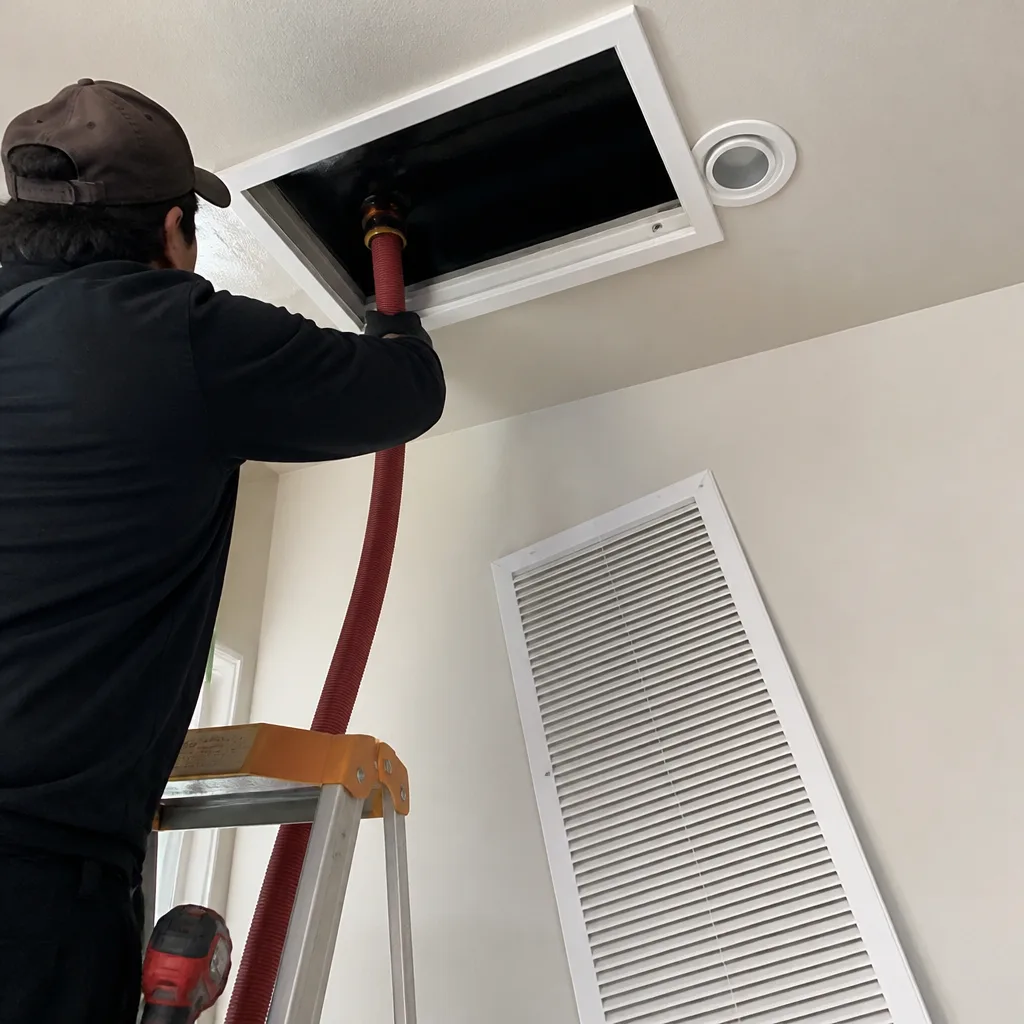
If you’ve never had your ducts cleaned, the process is less mysterious than you might think. The standard professional method is negative-pressure extraction, which means the technician connects a large vacuum unit to the duct system to create suction, then uses mechanical agitation tools to loosen the material stuck to the interior surfaces. The vacuum pulls the loosened debris out of the ducts and into the collection unit, not into your living room.
A proper job on an average Austin home looks like this:
- Setup (30-60 minutes): The technician seals off each supply register and the return grilles, then cuts a small access point in the supply and return plenums near the air handler. The vacuum hose connects to these access points.
- Agitation (2-4 hours): Using reach tools with rotating brushes or high-pressure air whips, the technician works through each run of duct, loosening the accumulated dust, pollen, clay, and debris. This is the step that separates a real cleaning from a marketing special. If the technician doesn’t agitate, the vacuum alone won’t remove material stuck to the duct walls.
- Dislodged debris extraction: The vacuum unit continuously pulls the loosened material out of the system. A properly sealed negative-pressure setup means almost nothing escapes into the living space.
- System check (30 minutes): After cleaning, the technician checks the blower, the evaporator coil if accessible, and the filter for remaining issues. This is also when loose duct connections get flagged.
- Documentation: You should see before and after photos of your ducts, especially the return side. If a company won’t show you what they did, you have no way to verify the work.
The equipment matters. Professional systems from Rotobrush and Nikro are standard in our trucks, and they’re built for the kind of sticky, pollen-heavy accumulation common in Central Texas. The tools don’t do the work by themselves, but they’re the difference between moving dust around and removing it.
Time-wise, expect three to six hours for a typical single-family home. Price-wise, a whole-system duct cleaning in the Austin market runs $350 to $650 depending on the size of the home, the number of runs, and the condition of the system. That’s the honest range. If a quote comes in far below that, ask what it actually includes. In our experience, the low-ball offers are often “blow and go” jobs that skip the agitation step entirely, which means the ducts look the same before and after. On the repair side, see Air Duct Repair in Austin for what’s fixable and what’s a candid conversation about replacing sections.
If your dryer vents go through the same system, it’s worth noting that dryer vent cleaning is a separate job with its own equipment and cadence. Clogged dryer vents are a fire hazard, full stop, and Austin’s humid summers make lint clogs worse because the lint absorbs moisture and sticks. See Dryer Vent Cleaning in Austin for the specifics on that service.
Common Mistakes to Avoid
- Following the national “every 3 to 5 years” guideline without adjustment. That interval assumes a system that runs seasonally. In Austin, your system runs nearly year-round, which compresses the accumulation timeline. If you have pets, allergies, or run the fan continuously, annual cleaning is more realistic.
- Cleaning only the supply ducts and ignoring the returns. The return side is where most of the material enters and deposits, especially pollen from spring allergy season. A technician who only agitates the supply runs cleaned half the system. Ask explicitly whether both sides are included at the quoted price.
- Scheduling duct cleaning without checking what “cleaning” actually includes. Some Austin-area companies quote a price that covers only a partial system or a “main trunk” cleaning that skips the branch runs to each register. The price should be written and itemized before work begins, covering every run in the system.
- Changing filters but skipping the duct behind the filter. The filter protects the equipment, not the ductwork. You can run top-tier MERV 13 filters year-round and still have dirty ducts because dust deposits behind the filter, on the blower, and along the duct walls. Filter changes and duct cleaning are complementary, not substitutes.
- Ignoring the fall heater wake-up until it’s cold enough to matter. Waiting until the first cold snap means discovering a burnt-dust smell and reduced airflow exactly when you need the heater. The October pre-season check is the cheapest maintenance you’ll do all year.
- Assuming a damp spring means mold is growing in the ducts. Some contractors use this line to scare homeowners into expensive “mold remediation” packages. Real mold growth inside ducts is relatively rare in Austin, even during wet years, because ducts dry out quickly during the heat. Visible dust buildup is normal; actual mold colonies need professional testing to confirm, not a scare pitch during a cleaning visit.
See the difference
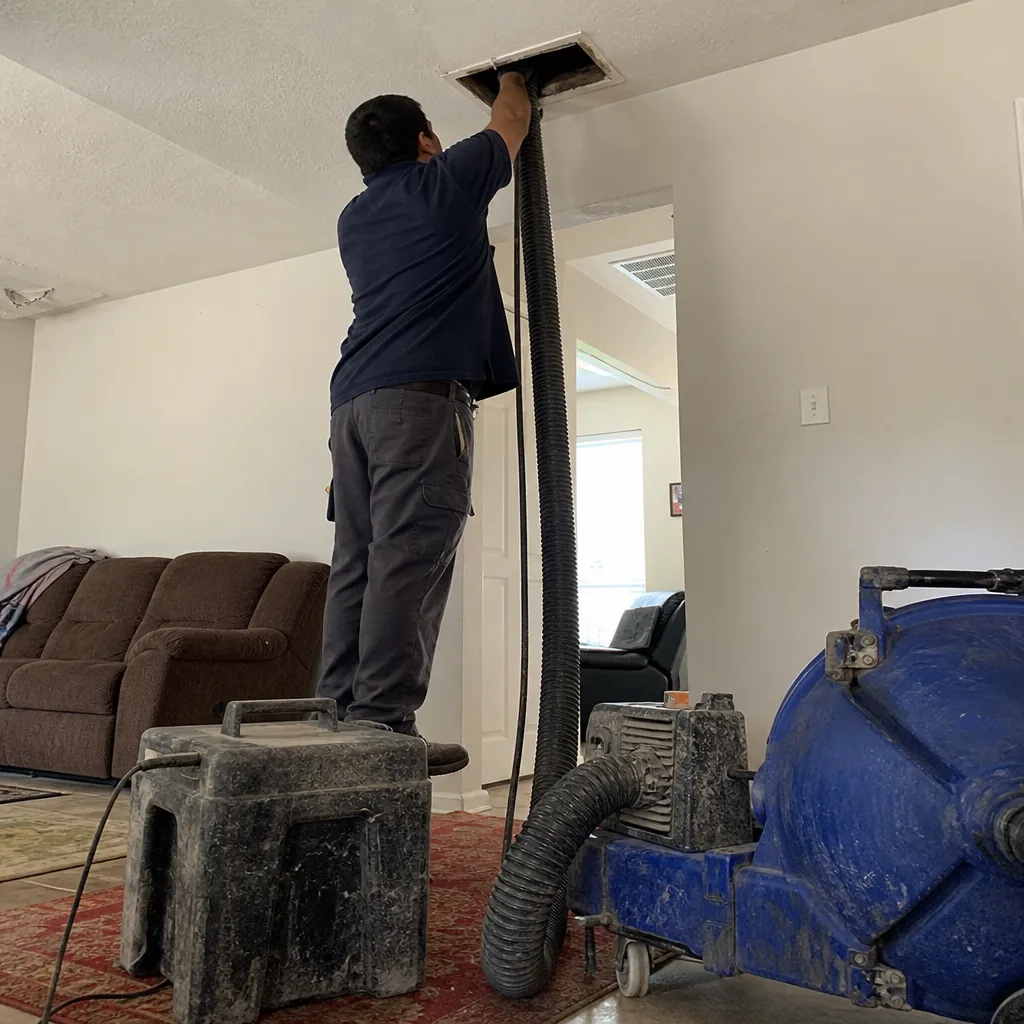 Before
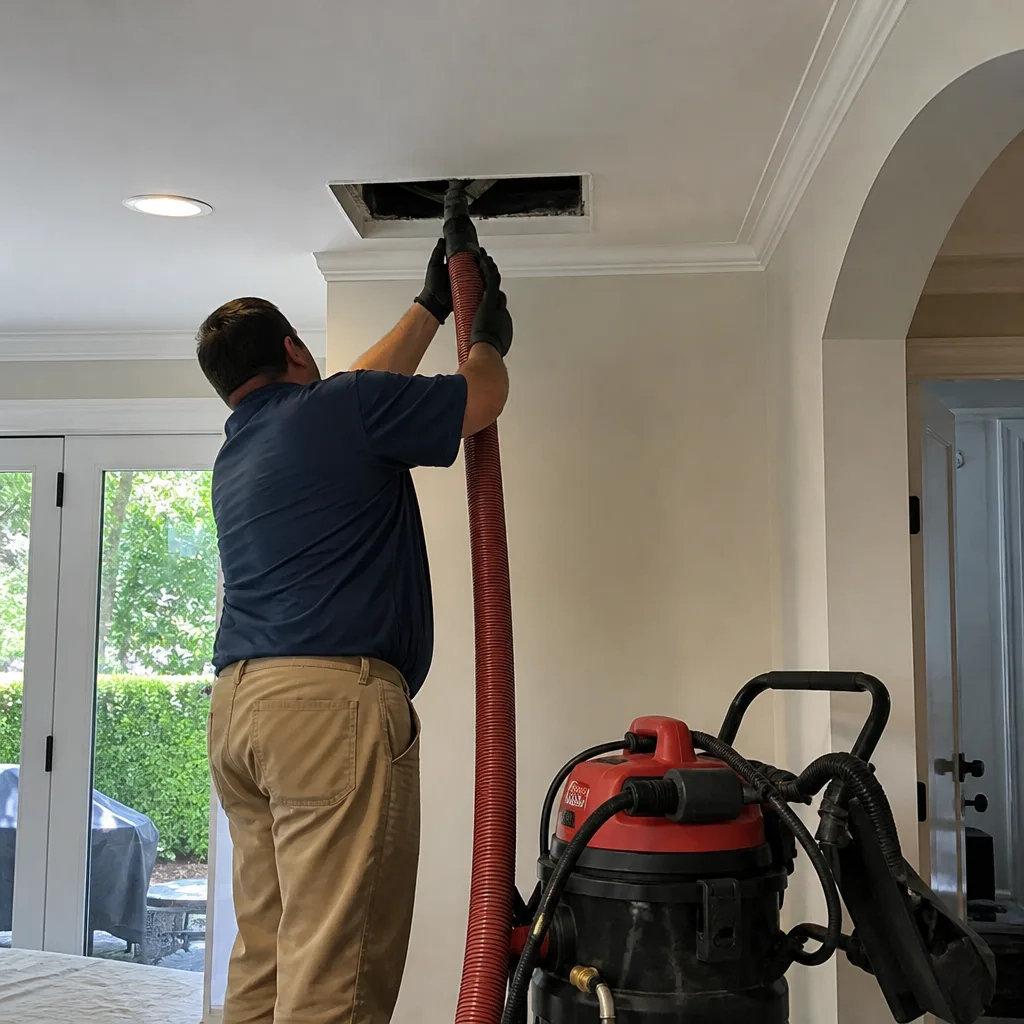 After
After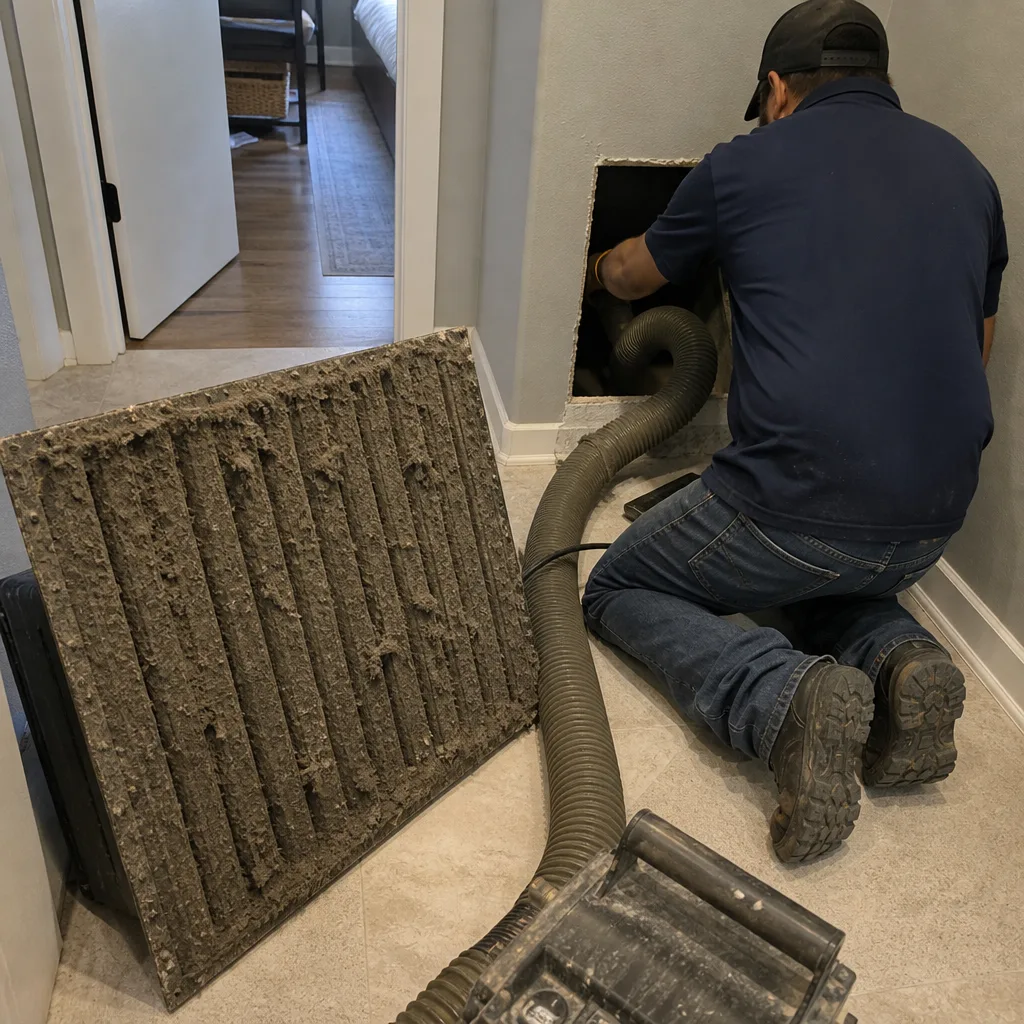 Before
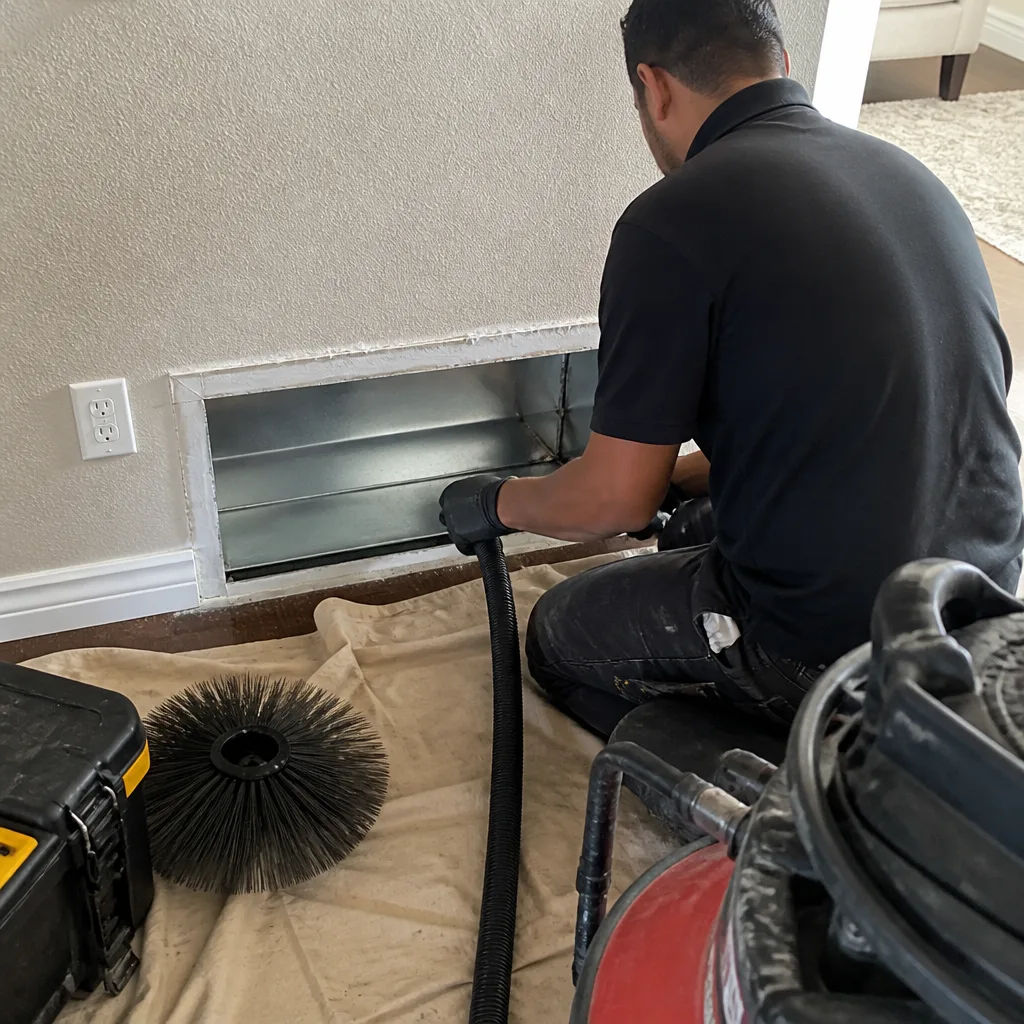 After
After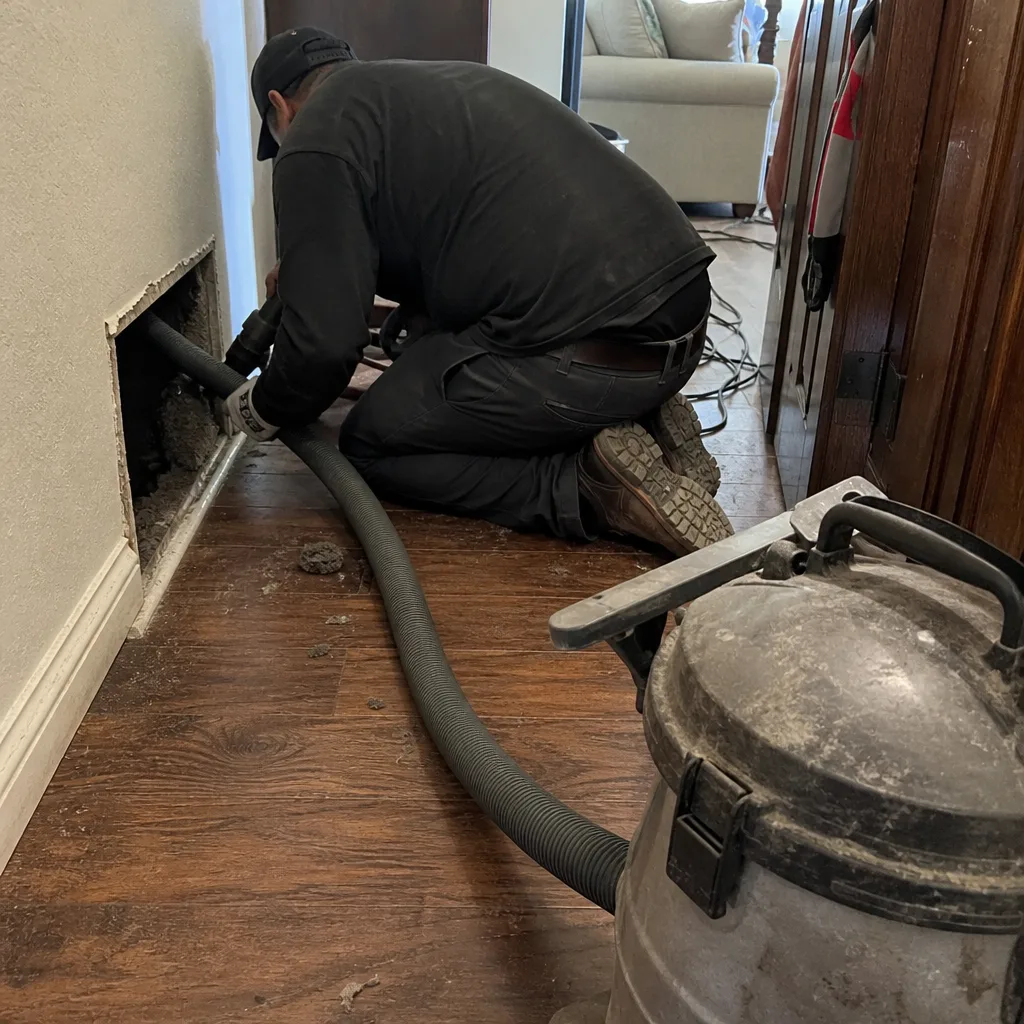 Before
 After
AfterWhen to Call a Professional
Some jobs are worth doing yourself, and some are worth paying for. Duct cleaning lands firmly in the second category. The reach tools, vacuum unit, and access-point cutting involved in a proper cleaning aren’t homeowner tools, and a DIY attempt with a shop vac will remove almost nothing from the interior of the ducts. Call a professional for Air Duct Cleaning services if you see visible dust coating on return duct interiors, if you’ve had a spring or summer with heavy allergen or dust load, if you smell a dusty odor from the registers when the system runs, if airflow from one or more rooms has dropped noticeably, or if anyone in the home has allergies that worsen indoors during oak or cedar season. Linden Air Duct Austin offers free estimates in Austin. Call (940) 461-7203, speak to a live person, and get a written price before any work begins.
Frequently Asked Questions
In Austin, most homes should have their air ducts cleaned once a year, and homes with allergy sufferers, pets, or constant fan operation benefit from twice a year. The national three-to-five-year guideline assumes seasonal HVAC use, but Austin’s system runs ten months out of the year and accumulates material roughly two and a half times faster. The best schedule is late spring after oak season and early fall before the heater wakes up. Call (940) 461-7203 to get an exact recommendation for your home based on its size and system type.
A whole-system air duct cleaning in Austin typically costs $350 to $650 for an average single-family home, depending on the square footage, the number of duct runs, and the condition of the system. That price should be written and itemized before work begins, covering every supply and return run. Quotes well below that range often skip the mechanical agitation step or clean only part of the system. Call (940) 461-7203 for a free estimate with the price put in writing before any work starts.
The difference comes down to what’s actually included. Low-ball quotes in Austin often cover only a main-trunk cleaning without the individual branch runs, or they skip the agitation step entirely, which means the vacuum pulls loose dust but leaves the material stuck to the duct walls. Some companies also quote per-vent pricing that sounds low but multiplies out to more than a flat-rate whole-system price. Ask for a written, itemized price covering the complete system before comparing quotes. Linden Air Duct Austin writes the full price before work begins, every time, with no per-vent surprises at the end.
You should receive before and after photos of your ducts, especially the return side where accumulation is worst. Look for visible change in the duct interior surfaces. A legitimate cleaner shows you the evidence because the work is verifiable. If a company won’t provide photos or makes excuses about the camera, treat that as a red flag. Linden Air Duct Austin documents every job with before and after photos so you can see exactly what was removed.
Duct cleaning removes the pollen and dust that has already settled inside your ductwork, which means it stops recirculating into your living space every time the system runs. A spring cleaning after oak season removes the oak and ash pollen load before summer. A fall cleaning before cedar season clears summer accumulation so the system starts the winter with clean ducts. Duct cleaning is not a cure for allergies, but it removes one indoor source of allergen exposure. Pair it with the seasonal filter strategy in this guide and our more guides & resources for the most meaningful symptom reduction. Call (940) 461-7203 to schedule a cleaning timed for your specific allergy profile.
Yes, Austin’s combination of year-round system operation, intense pollen seasons, fine clay dust from dry soil, high attic heat, and humid spring and fall periods creates one of the most demanding environments for residential ductwork of any major U.S. city. Attic temperatures routinely exceed 130 degrees in summer, which bakes accumulated material inside the ducts and breaks it into finer particles. The system never rests long enough for material to settle and dry out in place. That’s why Austin homes need a more frequent cleaning cadence than the national guidelines suggest.
The Bottom Line
Your Austin HVAC system is not like a system in Dallas, or Houston, or anywhere north of the Red River. It runs ten months a year, pulls in pollen from oaks and cedars that produce some of the highest counts in the country, inhales clay dust from the Hill Country during dry years, and bakes in attics hot enough to cook whatever it collects. The national advice to clean every three to five years doesn’t survive contact with Central Texas reality. Clean your ducts in late spring after the oak finishes, clean them again in early fall before the heater wakes up if you have allergies, pets, or run the fan continuously, and change your filter on a seasonal rhythm that matches Austin’s actual airborne events. The work is straightforward, the price range is $350 to $650, and a professional job with before and after photos is verifiable proof the job was done. If you’re in Austin and want a written price with the technician’s name and photo before the visit, call Linden Air Duct Austin at (940) 461-7203.
Written by Marcus Veale, Owner at Linden Air Duct Austin, serving Austin since 2004.