
Last updated October 15, 2026
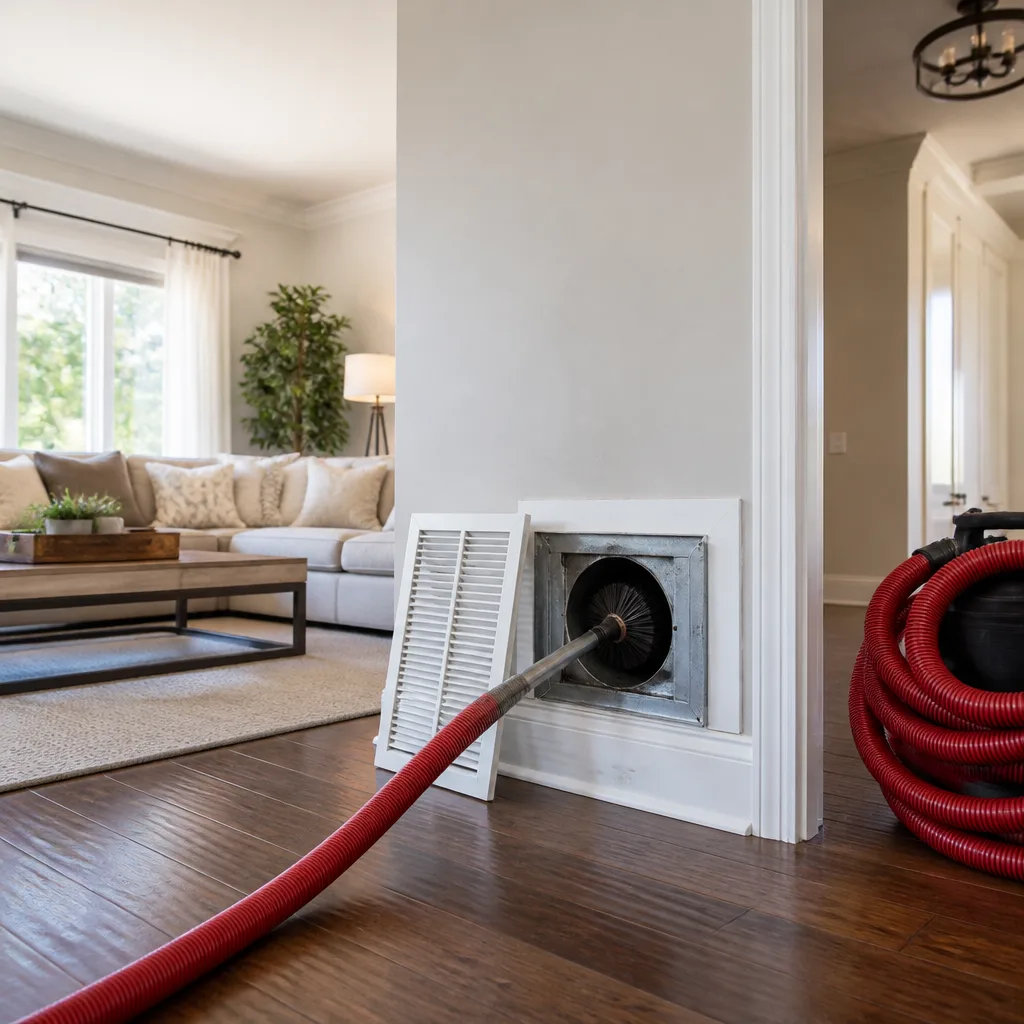 Whole-home duct cleaning
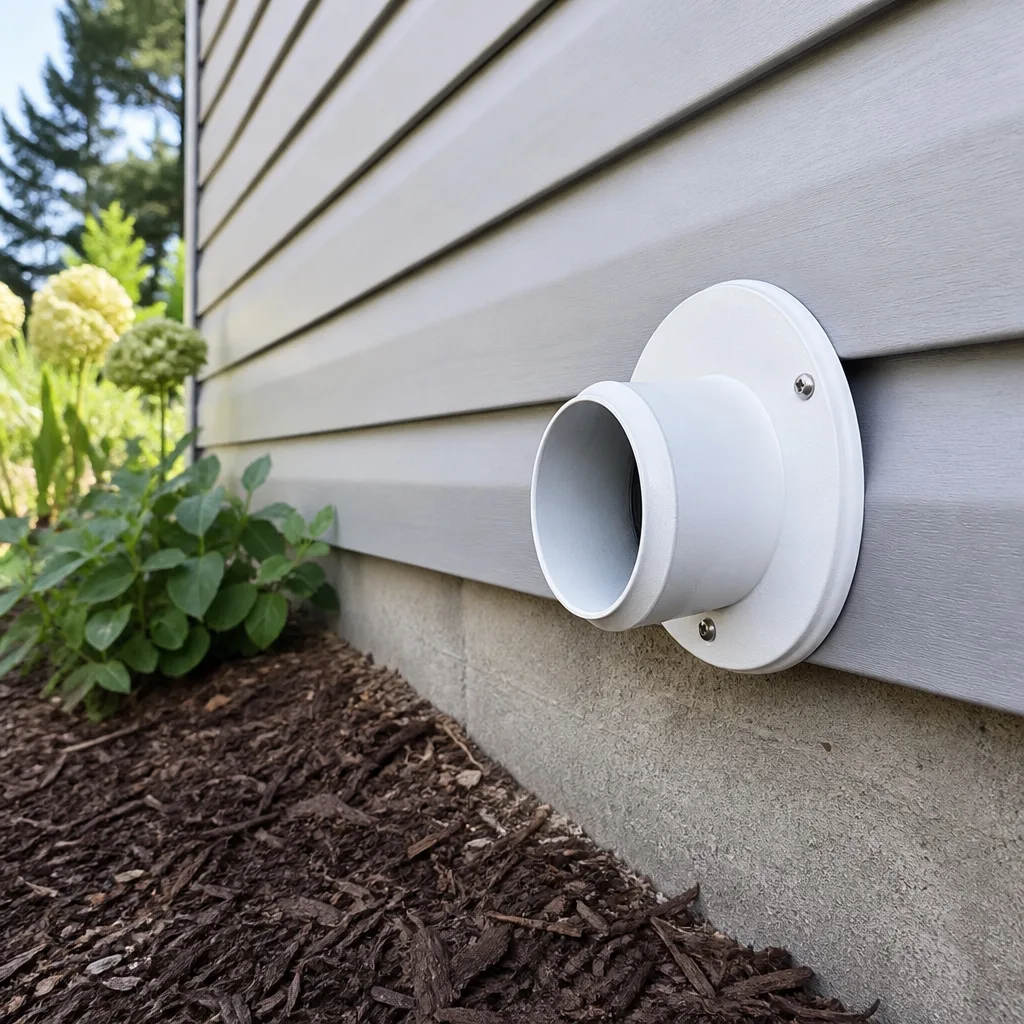 Dryer vent cleaning
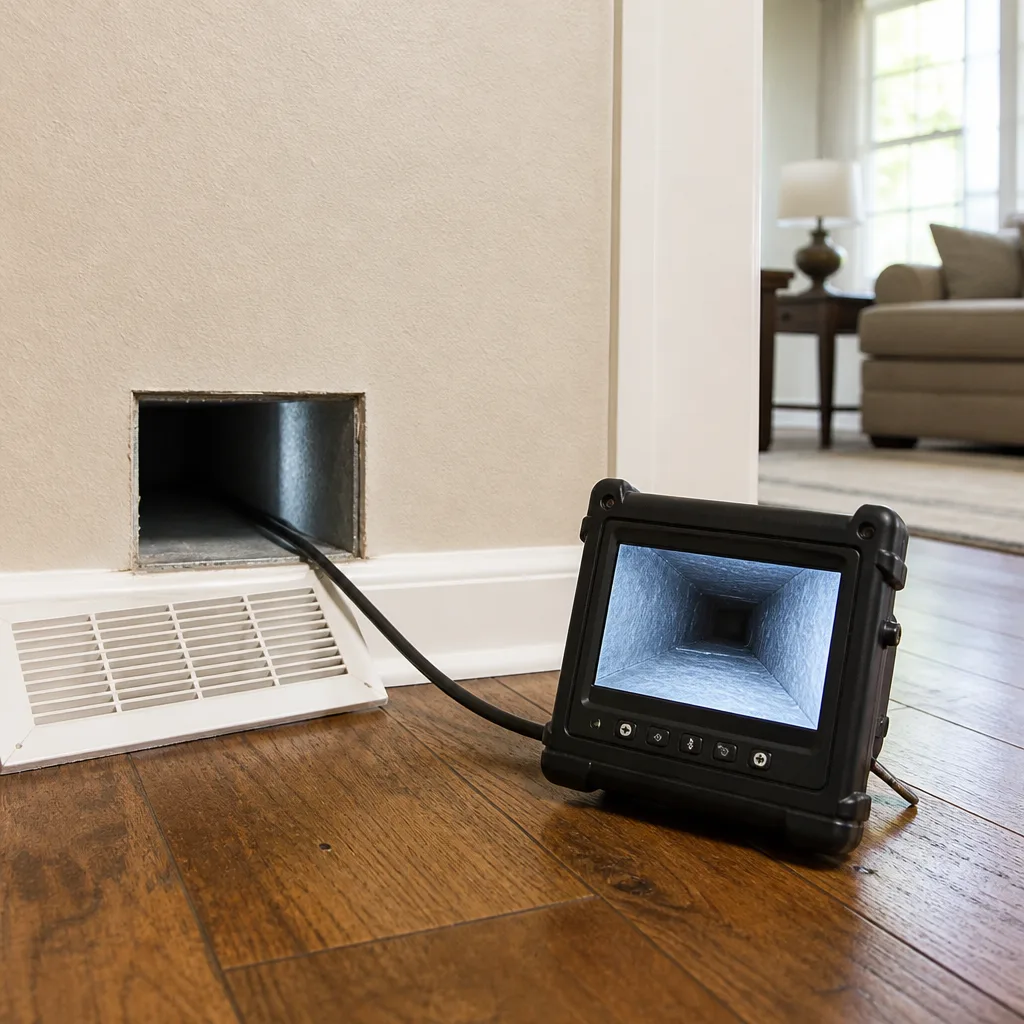 Camera inspection
 Sanitizing & deodorizing
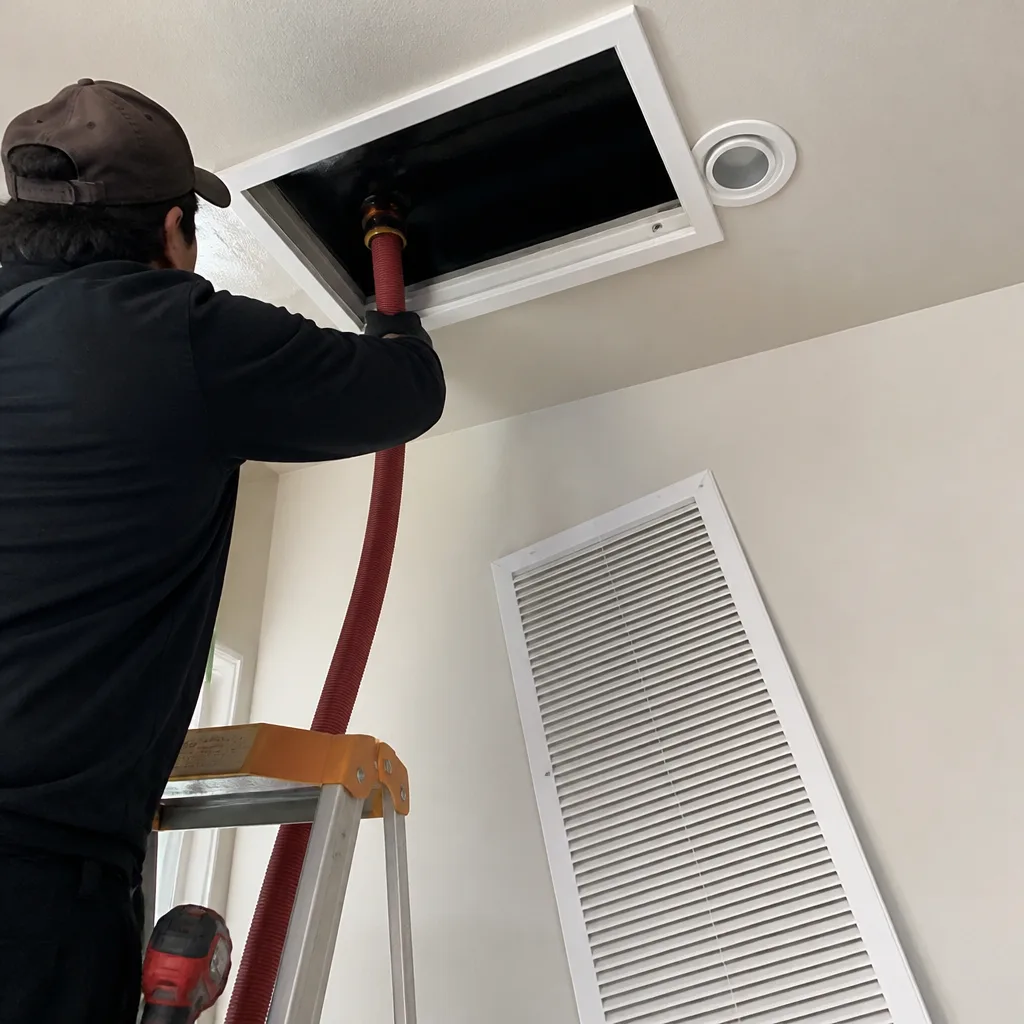
Whole-system duct and dryer vent check with before-and-after photos - you see exactly what came out of your vents
That "$99 whole-house special" is a bait ad - the real number appears once they are in your hallway, or the "clean" is a shop-vac at the register. We photograph the inside of your ducts before and after instead.
Air Duct Cleaning Cost Breakdown: The Austin Homeowner’s Reference for 2026
The $99 whole-house air duct cleaning special has circulated through Austin’s Craigslist boards, mailbox flyers, and Facebook Marketplace listings for over a decade. It’s a fixture of the local home services landscape, right up there with “$19 oil change” coupons and “free roof inspection” door hangers. The actual invoice almost never lands at $99. In fact, the final bill often lands between $450 and $900 once the crew arrives and the scope expands. Understanding the gap between the hook and the final number requires knowing what a legitimate job actually costs to perform in Austin’s specific housing stock, with its slab foundations, attic-mounted flex duct runs, and 30-year-old HVAC systems. This guide breaks down every line item, every upsell, and every legitimate variable so you can compare quotes on equal footing.
Quick Answer
Air duct cleaning in Austin, Texas typically costs between $350 and $650 for a standard single-family home under 2,500 square feet in 2026. Larger homes with multiple HVAC systems, extensive flex duct runs, or difficult attic access can run $700 to $1,200. The $99 specials you see advertised are almost always a per-vent teaser rate or an entry point for upselling; a legitimate whole-system cleaning performed with negative-pressure extraction equipment takes 3 to 6 hours and cannot be delivered profitably at double-digit pricing.
Styles & brands we work with
Table of Contents
- What a Legitimate Austin Duct Cleaning Job Costs to Deliver
- Square-Footage Pricing in Austin: 2026 Benchmarks
- Legitimate Cost Drivers: Home Size, Duct Type, and Access
- The Four Most Common Austin Upsells, Explained Honestly
- How to Compare Quotes That Aren’t Apples-to-Apples
- Why Austin Quotes Vary by $800 for the Same House
- The Bait-Pricing Playbook: What Happens After the $99 Call
- How Austin’s Housing Stock Affects Your Estimate
What a Legitimate Austin Duct Cleaning Job Costs to Deliver
Before you can evaluate any quote, you need to understand what the company is actually paying to show up at your door. A legitimate duct cleaning operation in Austin carries real costs that don’t disappear because someone quoted you $99.
Here’s the line-item breakdown for a standard 2,000-square-foot Austin home with one HVAC system and typical attic-mounted flex duct runs:
- Labor: $180 to $300. A proper negative-pressure extraction job takes two technicians 3 to 5 hours. At Austin’s 2026 prevailing wage for skilled HVAC-adjacent labor ($25 to $35 per hour per tech), that’s the single biggest line item. Companies paying cash under the table beat this on price; companies carrying workers’ comp, liability insurance, and background-checked W-2 employees cannot.
- Equipment depreciation: $60 to $120 per job. A professional Rotobrush or Nikro negative-air system costs $8,000 to $20,000 upfront. HEPA-filtered vacuums, air whips, compressor-driven brushes, and inspection cameras all have finite service lives. Every job wears them down.
- Fuel and vehicle costs: $25 to $50. Austin’s sprawl is real. A crew working a home in Steiner Ranch in the morning and Mueller in the afternoon is burning fuel, paying tolls on 183 and MoPac, and maintaining a service van.
- Filters, disposal, and consumables: $15 to $40. HEPA filters on extraction units require replacement. Debris collected from ducts, especially in homes with pets or recent renovations, must be disposed of properly.
- Insurance and licensing overhead: $40 to $80 per job. Liability coverage, bonding, and Texas contractor compliance costs get amortized across every job a company performs.
- Fair margin: $60 to $110. A company that can’t make a reasonable profit will either cut corners, upsell aggressively, or go out of business. None of those outcomes serve you.
Add those together and a legitimate job lands between $380 and $700 before any home-specific complications. That’s not a sales pitch. That’s arithmetic.
Square-Footage Pricing in Austin: 2026 Benchmarks
What should you realistically expect to pay for duct cleaning in Austin based on home size? Here are the ranges we see across the metro in 2026, from Pflugerville to Circle C:
- Under 1,200 sq ft (condo, small bungalow, Hyde Park cottage): $300 to $420. These homes typically have short duct runs and one return. The job is faster, but the fixed costs (equipment, fuel, insurance) don’t shrink proportionally, which is why the per-square-foot price is higher than larger homes.
- 1,200 to 2,000 sq ft (Mueller townhome, Allandale rancher, East Austin new build): $380 to $550. One HVAC system, 8 to 14 vents, 2 to 4 hours of work. This is the sweet spot for most Austin homes built between 1960 and 2010.
- 2,000 to 3,000 sq ft (Avery Ranch, Circle C, Steiner Ranch two-story): $500 to $750. Often two systems, cathedral ceilings requiring longer hose runs, and more vents. More time, more labor, more fuel.
- 3,000 to 5,000 sq ft (Westlake, Barton Creek, larger Lake Travis properties): $700 to $1,100. Multiple systems, long flex duct runs through expansive attics, and sometimes custom ductwork. These jobs can take a full day.
- Over 5,000 sq ft or commercial-scale residential (estate homes, multi-building properties): $1,000 to $1,800 or more. Custom quoting is standard. Anyone quoting a flat rate here is guessing.
These 2026 figures reflect a modest increase from the 2022 benchmarks of $300 to $450 for a standard home. Labor rates in Austin have climbed with the general cost of living, and commercial insurance premiums for trades have risen sharply since 2023. If you’re still seeing 2019-era pricing in an estimate, ask what changed or what was left out.
For a detailed breakdown of what a full service includes, see our guide to Air Duct Cleaning in Austin.
Legitimate Cost Drivers: Home Size, Duct Type, and Access
Not all Austin homes are built the same way, and your ductwork configuration genuinely affects what a fair price looks like. A company that quotes you $399 sight-unseen over the phone is either working from a price book that averages everything, or they plan to adjust once they see your attic.
Flex Duct vs. Sheet Metal
Homes built after roughly 1990 in Austin suburbs like Round Rock, Cedar Park, and Leander almost universally use flexible insulated ductwork. Flex duct is faster to clean with negative-pressure equipment but more susceptible to crushing, tears, and improper installation from the builder. Homes built before 1980, especially in central Austin neighborhoods like Tarrytown, Rosedale, and Travis Heights, often have rigid sheet metal ducts. Sheet metal withstands aggressive brushing better than flex and can often be cleaned more thoroughly, but it requires more time and care to access, especially when joints are sealed with old tape and mastic.
Attic-Mounted vs. Slab-Mounted Systems
This is a big one. Most Austin homes have attic-mounted HVAC systems with supply plenums distributing air through ceiling registers. That’s straightforward for a technician: the access is all from above, and the tools come through the attic hatch. But a significant portion of Austin’s mid-century housing stock has slab-mounted systems with ducts running through the concrete foundation. These homes, common in Crestview, Wooten, and North Shoal Creek, present a real access challenge. Floor registers must be pulled, and the technician may spend twice as long on the same square footage. If you have a slab system, expect your quote to run 20 to 40 percent higher than a comparable attic-mounted home, and be suspicious of any company that doesn’t ask which type you have before quoting.
Soffit Runs and Multi-Level Returns
Two-story homes in neighborhoods like Milwood and Great Hills often have duct runs through finished soffits, which means the technician is working through small access points rather than open attic space. Return air chases that run through wall cavities can also complicate the job. These legitimately add labor time, and any honest quote should mention them explicitly.
The Four Most Common Austin Upsells, Explained Honestly
The duct cleaning industry has a reputation problem, and it’s largely driven by what happens after the technician arrives. The initial quote gets you in the door. The upsells are where the job becomes profitable. Here’s what you’ll likely be offered, and when each is actually worth paying for.
- Sanitizer fogging: $75 to $250. After cleaning, the tech offers to fog the ducts with an antimicrobial product. When it’s warranted: if you’ve had visible mold growth, a rodent infestation, or persistent odors that cleaning didn’t eliminate. Products from brands like Abatement Technologies and Guardsman are legitimate and effective for these scenarios. When it’s margin padding: if your ducts were simply dusty and the tech leads with fear (“bacteria breeding in your air”) rather than evidence. Demand to see the issue first.
- Camera inspection: $99 to $200. A small camera is run through the ductwork to show before-and-after footage. When it’s warranted: if you suspect collapsed ductwork, disconnected runs, or you want visual proof the job was done. At Linden Air Duct Austin, we include before-and-after documentation as part of the job because our clients in Round Rock and Pflugerville consistently tell us it’s the single most valuable trust signal. When it’s margin padding: if the inspection is framed as a mandatory add-on to “determine the condition” of ducts that are obviously fine.
- Mold treatment: $300 to $1,200. If the tech finds what looks like mold, you’ll be quoted for remediation. When it’s warranted: genuine microbial growth in ductwork, which is rare in Austin’s climate but does occur in homes with consistent humidity issues or past water damage. When it’s a scare tactic: if the tech shows you a dark patch and calls it “toxic black mold” without lab testing. Dust accumulation in an attic duct often looks frightening to a homeowner but is completely benign. Get a second opinion before spending a thousand dollars.
- Duct sealing / Aeroseal: $800 to $1,500. This involves sealing leaks in the duct system to improve HVAC efficiency. When it’s warranted: if you have rooms that never reach the same temperature as the rest of the house, energy bills that spike in July and August, or ducts with visible gaps and disconnected joints in the attic. When it’s not: if it’s pitched as a mandatory companion to cleaning on a system that’s functioning fine. It’s a legitimate service, but it’s a different job with a different price point.
If you need actual duct repair rather than cleaning, see our guide on Air Duct Repair in Austin for what that service covers and what it costs.
How to Compare Quotes That Aren’t Apples-to-Apples
The single most common mistake Austin homeowners make is comparing a $299 quote from one company with a $499 quote from another and assuming the cheaper one is a better deal. They’re often not even quoting the same job. Here’s the checklist to use before you sign anything.
- Exactly how many vents, returns, and systems are included? Get the number in writing. “Whole home” means different things to different companies.
- Is the main trunk line included, or only the branch runs? Some cheap quotes cover visible vents but skip the main supply trunk, which is where most of the accumulated dust actually sits.
- Is the return side included? The return ducts are where the air enters the system before being conditioned. Skipping them means you’re cleaning half the system.
- What equipment is being used? Negative-pressure extraction with a truck-mounted or HEPA-filtered portable unit is the industry standard. “Just brushing” from the register down is not duct cleaning; it’s dust pushing.
- Is the blower motor and evaporator coil included in the scope? The coil sits downstream of the filter and collects dust that bypasses it. Cleaning the ducts without addressing the coil is like vacuuming the hallway and ignoring the room everyone actually uses.
- What’s the disposal protocol? Debris should be collected and removed, not blown into your living room.
- Who is the technician coming to your door? At Linden Air Duct Austin, you receive the tech’s name and photo before the visit, and they show a photo ID badge at the door. This is our Threshold Standard, and we’re not alone in Austin in following it. If a company can’t tell you who’s coming, that’s a scope gap too.
Why Austin Quotes Vary by $800 for the Same House
When three companies quote $299, $550, and $899 for the same 2,400-square-foot home in Anderson Mill, the difference is not one company being greedy and another being generous. The difference is structural.
The $299 company is almost certainly running a per-vent model in disguise: the quote covers “up to 8 vents,” and you have 14, or it covers “cleaning” but not sanitizing, not the coil, not the return drop. The technician’s real job is to find $500 worth of “recommended additional services” once they’re inside. The $899 company is likely running a high-overhead operation; possibly a franchise paying marketing costs and a call center, or a company that sub-contracts to independent crews and takes a cut. The $550 quote, from a company that does its own work with its own employees and equipment, is often the most accurate reflection of what the job actually costs to deliver.
In our experience cleaning ducts across Austin, the $550 “we do the work ourselves” company and the $899 “we’re a national brand” company often deliver an identical technical result. The difference is in the trust layer: who is coming, what happens if something goes wrong, and whether anyone will actually answer the phone if you call back.
The Bait-Pricing Playbook: What Happens After the $99 Call
Understanding how the $99 special works in practice will save you from the most common trap in this industry. Here’s the sequence, as reported by Austin homeowners over the past decade:
- You call or book online. The phone is answered quickly. The $99 rate is confirmed. A time window is set.
- The technician arrives with “a quick pre-inspection.” Within 15 minutes, you’re told your ducts are “heavily impacted,” your system “needs more than a standard cleaning,” or the job “can’t be completed properly at the advertised rate.”
- A new quote is produced: $600 to $900. The framing is that you can either proceed at the new price or pay a $49 to $89 “trip fee” and have them leave. Most homeowners, already having taken a half day off work, proceed.
- Optional add-ons appear. Sanitizing, mold treatment, air purifier installation, UV lights. Each is priced separately and urgently.
This playbook is not unique to Austin, but it flourishes here because the metro’s rapid growth means there’s always a new crop of first-time homeowners unfamiliar with the pattern. The defense is simple: insist on a written, itemized quote before you book, with every line item included and no “inspection-contingent” language.
We built our pricing model around the opposite approach at Linden Air Duct Austin. Every job receives a written price before any work begins, no exceptions. The price we quote is the price you pay. If additional issues are found during the job, we document them, show you the evidence, and provide a separate written quote before doing anything beyond the agreed scope.
How Austin’s Housing Stock Affects Your Estimate
Austin’s housing market has changed dramatically since 2020, and the homes being built and sold today have different ductwork needs than the city’s older stock. Understanding your home’s era helps you understand your estimate.
Pre-1980 Central Austin Homes
Neighborhoods like Hyde Park, Travis Heights, and Clarksville feature homes with a mix of retrofitted sheet metal ductwork, multiple additions with inconsistent sizing, and HVAC systems that have been patched and modified across decades. These homes almost always cost more to clean than their square footage suggests because the ductwork is rarely uniform. Access is often through small closets or crawl spaces.
1980 to 2005 Suburban Build-Out
This is the bulk of Austin’s housing stock: Milwood, Wells Branch, Jollyville, and the first wave of Round Rock and Pflugerville. These homes typically have attic-mounted flex duct systems that are now 20 to 40 years old. The flex duct in these homes is often at the end of its service life; it tears, crushes, and disconnects. Cleaning these systems is straightforward, but repair needs are common. We talk more about that in our Air Duct Repair in Austin guide.
2005 to Present: The Suburban Expansion
Master-planned communities in Leander, Buda, Kyle, and Georgetown built homes at a furious pace. These houses have flex duct systems that are newer but often installed to meet builder timelines rather than long-term performance standards. Poorly supported duct runs sag, and connections at the plenum are frequently loose. A cleaning on a 10-year-old home in these areas often reveals installation issues that the original builder warranty never covered.
No matter what era your home belongs to, if you haven’t had your dryer vent addressed separately, we recommend reading about Dryer Vent Cleaning in Austin. It’s a different service with different pricing and a different set of safety considerations. Lint accumulations in dryer vents are responsible for thousands of house fires annually, and Austin’s apartment-dense central core means vent runs are often long and convoluted.
Common Mistakes to Avoid
- Booking on the advertised price before asking what it includes. The $99 special is not a price; it’s an entry point. Always ask exactly what the quoted number covers before scheduling.
- Assuming “cleaning” includes the coil. The evaporator coil is downstream of your filter and collects dust that bypasses it. If the coil isn’t addressed, you’re solving half the problem. Ask explicitly.
- Choosing a company based on Facebook reviews alone. Austin’s home services review market is heavily gamed. Companies buy reviews, run review contests, and pressure happy customers while burying negative feedback. A company that’s been in the metro for decades and answers its own phone is a stronger signal.
- Paying for sanitizing without being shown evidence it’s needed. Sanitizing products like those from Abatement Technologies are effective when applied to a genuine microbial problem. They’re an expensive can of air freshener when applied to simple dust. Ask to see what you’re treating.
- Not clarifying who is actually doing the work. Some Austin companies are marketing agencies that sell your lead to an independent contractor. Ask who employs the technician, whether they’re background-checked, and what identification they’ll show at the door.
- Assuming the lowest price is the best value. A $299 quote that covers half your system and includes three upsell attempts is more expensive than a $550 quote that covers everything. Compare scope first, price second.
See the difference
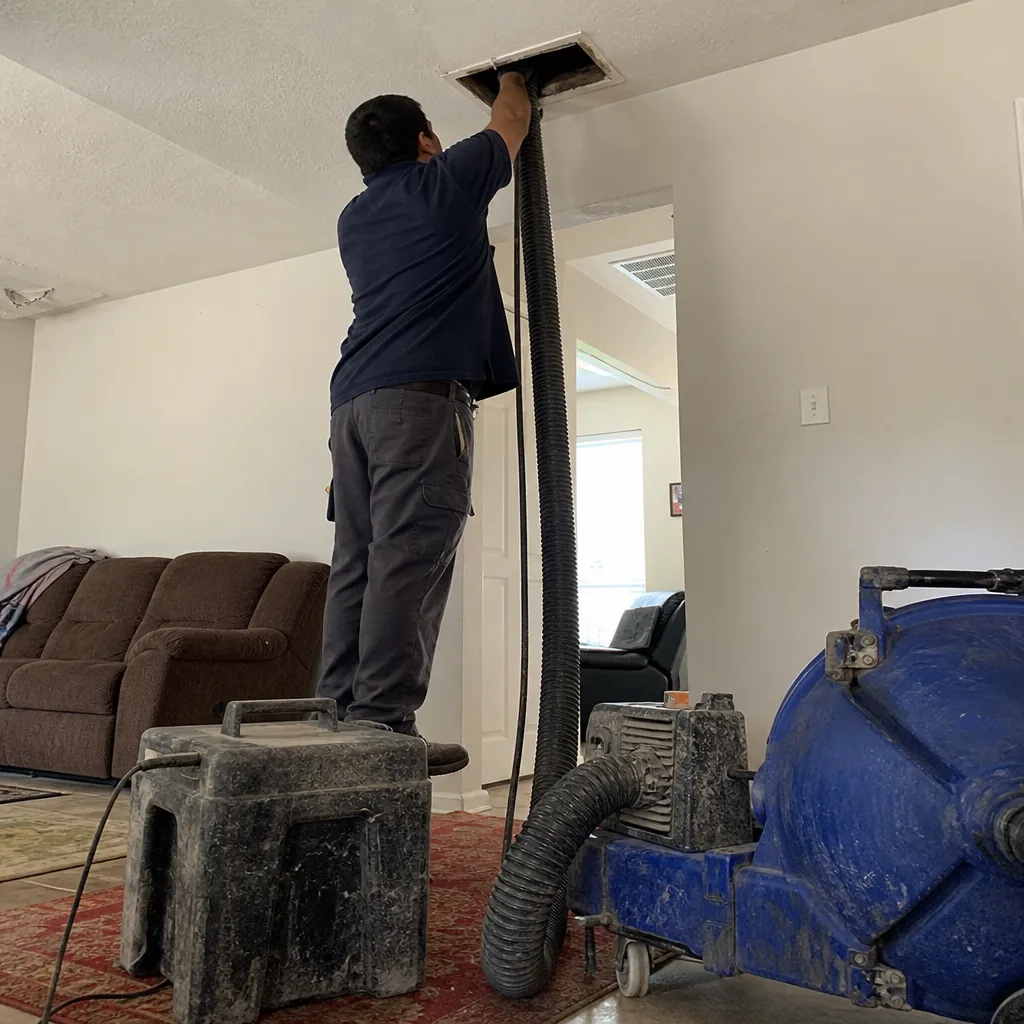 Before
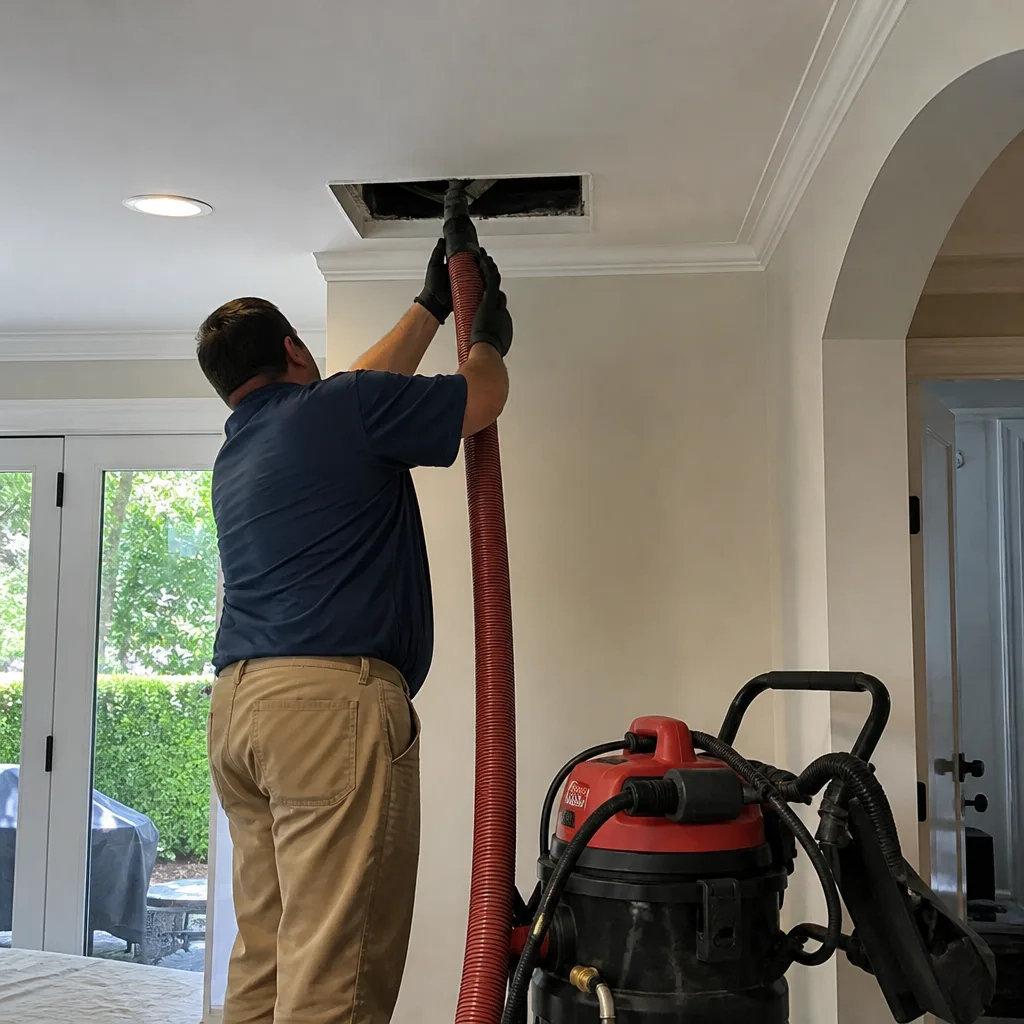 After
After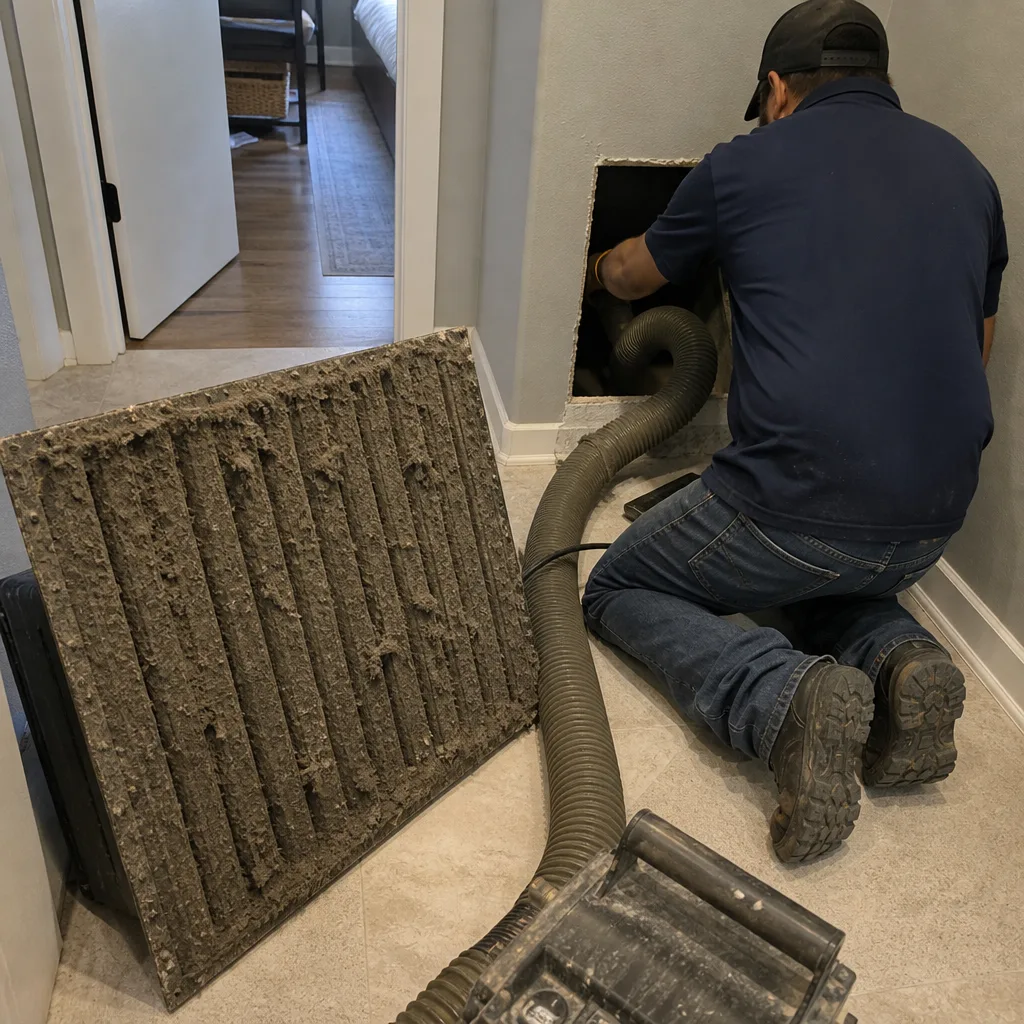 Before
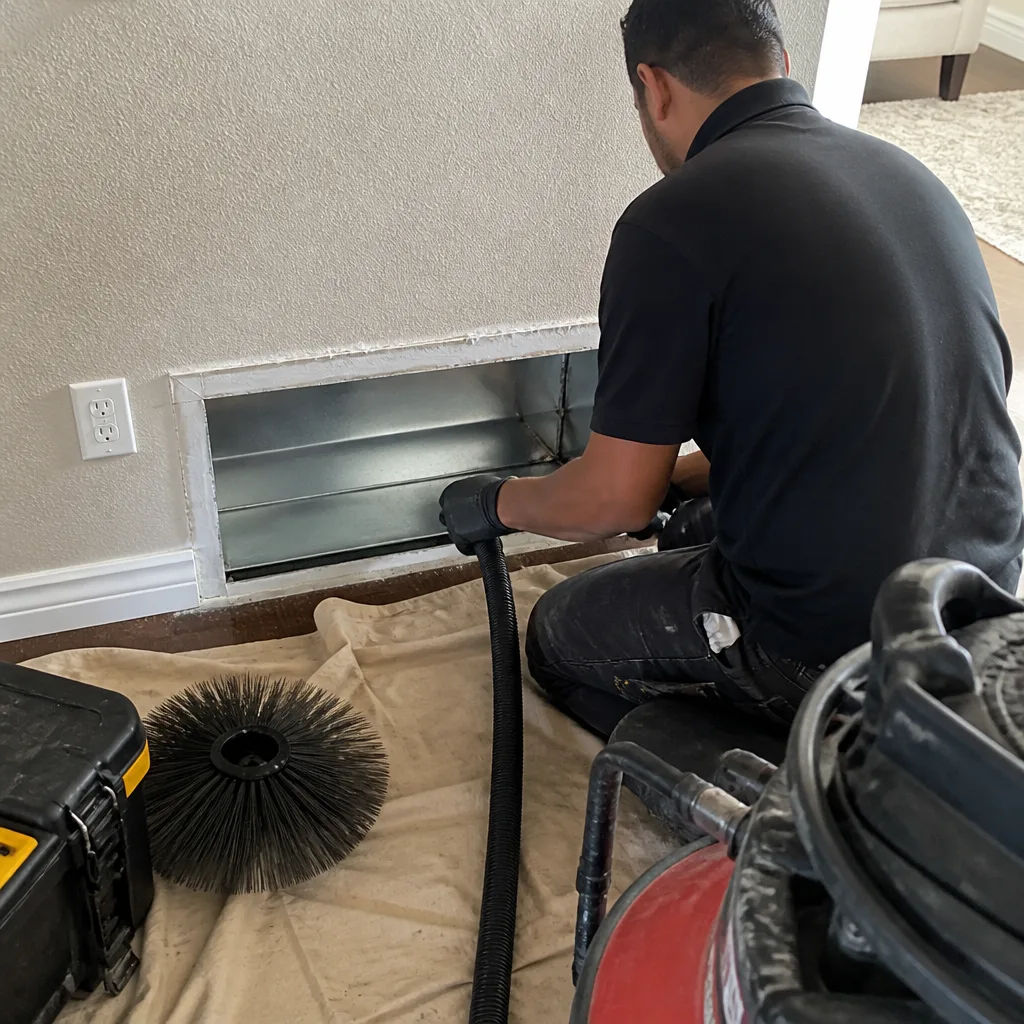 After
After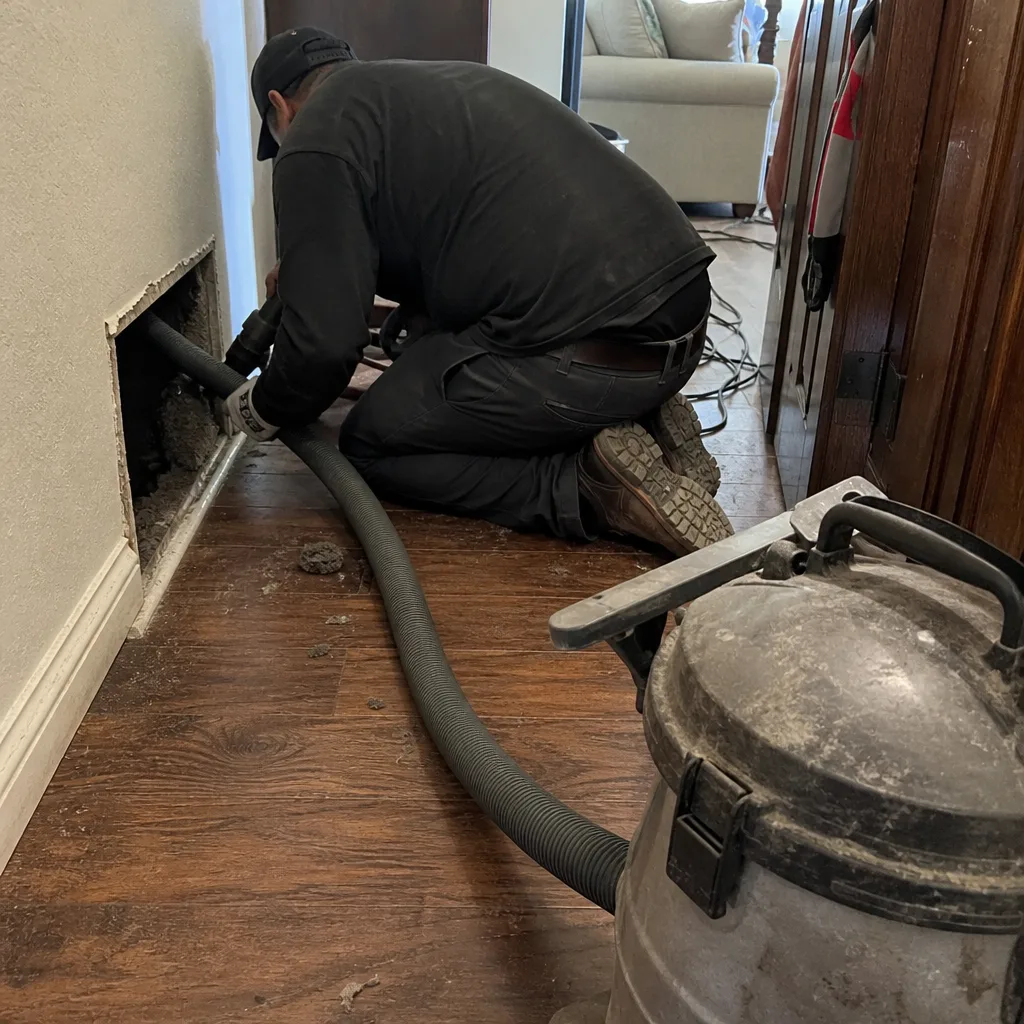 Before
 After
AfterWhen to Call a Professional
Duct cleaning is not a DIY job, and the equipment required for proper negative-pressure extraction isn’t something you rent at the Home Depot on Brodie Lane. Call a professional when you notice visible dust accumulation around supply registers, persistent musty odors from the system, unexplained allergy symptoms that improve when you leave home, or if you’ve recently completed a renovation that generated drywall dust or sawdust. If you’ve just bought a home in Austin and have no record of the ducts ever being cleaned, that’s also a reasonable trigger. Linden Air Duct Austin offers free estimates across the Austin metro, including Georgetown, Round Rock, Cedar Park, and Pflugerville. Call (940) 461-7203 and a live person will answer, 24 hours a day.
Frequently Asked Questions
In Austin, a legitimate whole-home air duct cleaning for a standard single-family house under 2,500 square feet runs between $350 and $650 in 2026. Homes with multiple HVAC systems, slab-mounted ductwork, or extensive flex runs can run $700 to $1,200. We recommend requesting a written, itemized quote from any company you’re considering and confirming exactly what’s included before booking. For an exact quote on your home, call (940) 461-7203.
Cheap Austin quotes usually come from a per-vent pricing model that only covers a portion of your system, or from a company that plans to find “additional necessary work” once the technician arrives. A $99 or $199 quote cannot cover the labor, equipment, insurance, and disposal costs of a legitimate negative-pressure extraction job, which is why the final invoice expands after arrival. Compare quotes by scope, not headline price.
Request before-and-after documentation of your ductwork. At Linden Air Duct Austin, we provide visual documentation as part of every job; you see the interior of your ducts before we start and after we finish. If a company won’t show you the work product, that’s a red flag, whether you’re in Austin proper or out in Leander. For guidance on what a thorough cleaning includes, see our page on Air Duct Cleaning in Austin.
In Austin’s climate, with its extended pollen season and the dust that blows in from the Hill Country during the dry months, most homes benefit from professional cleaning every 3 to 5 years. Homes with pets, smokers, recent renovations, or residents with allergies may need service every 2 to 3 years. If your home is over 4 years old and you’ve never had the ducts cleaned, you’re likely overdue.
New construction in Austin often leaves drywall dust, sawdust, and paint overspray inside the duct system. Builders don’t clean ducts before closing, and the first year of HVAC operation circulates that construction debris through your air. A cleaning on a new home is often more visibly productive than on an older one, simply because the amount of debris is so concentrated.
A standard single-system home in Austin takes 3 to 5 hours with two technicians running proper negative-pressure extraction equipment. Slab-mounted systems, homes with extensive soffit runs, and properties with multiple HVAC units can take a full day. Anyone promising to complete a whole-home cleaning in under 90 minutes is either skipping steps or not performing a legitimate service.
The Bottom Line
Air duct cleaning in Austin is a service where the advertised price and the real price rarely align, and the difference between the two has more to do with marketing tactics than with any actual variation in the work. A legitimate job on a standard Austin home costs between $350 and $650 to deliver in 2026, regardless of what the door hanger says. The best defense is a written, itemized quote that confirms scope before work begins, a technician whose identity you know before they arrive, and a company that stands behind the work in writing. At Linden Air Duct Austin, we’ve served Austin homeowners since 2004 with written pricing before every job, background-checked and photo-badged technicians, and a 365-Day Done Right Promise in writing. Call (940) 461-7203 or visit our Linden Air Duct Austin home page to get started.
Written by Marcus Veale, Owner at Linden Air Duct Austin, serving Austin since 2004.