
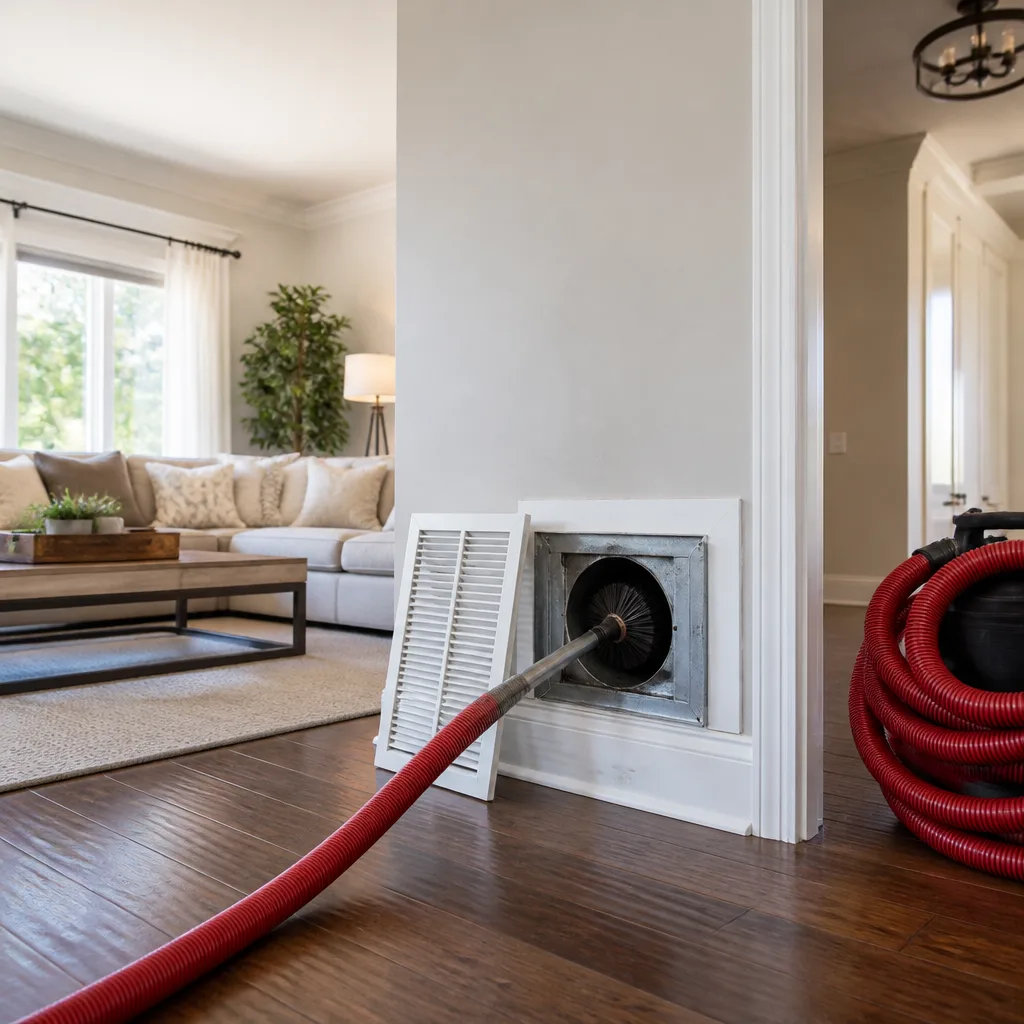
 Whole-home duct cleaning
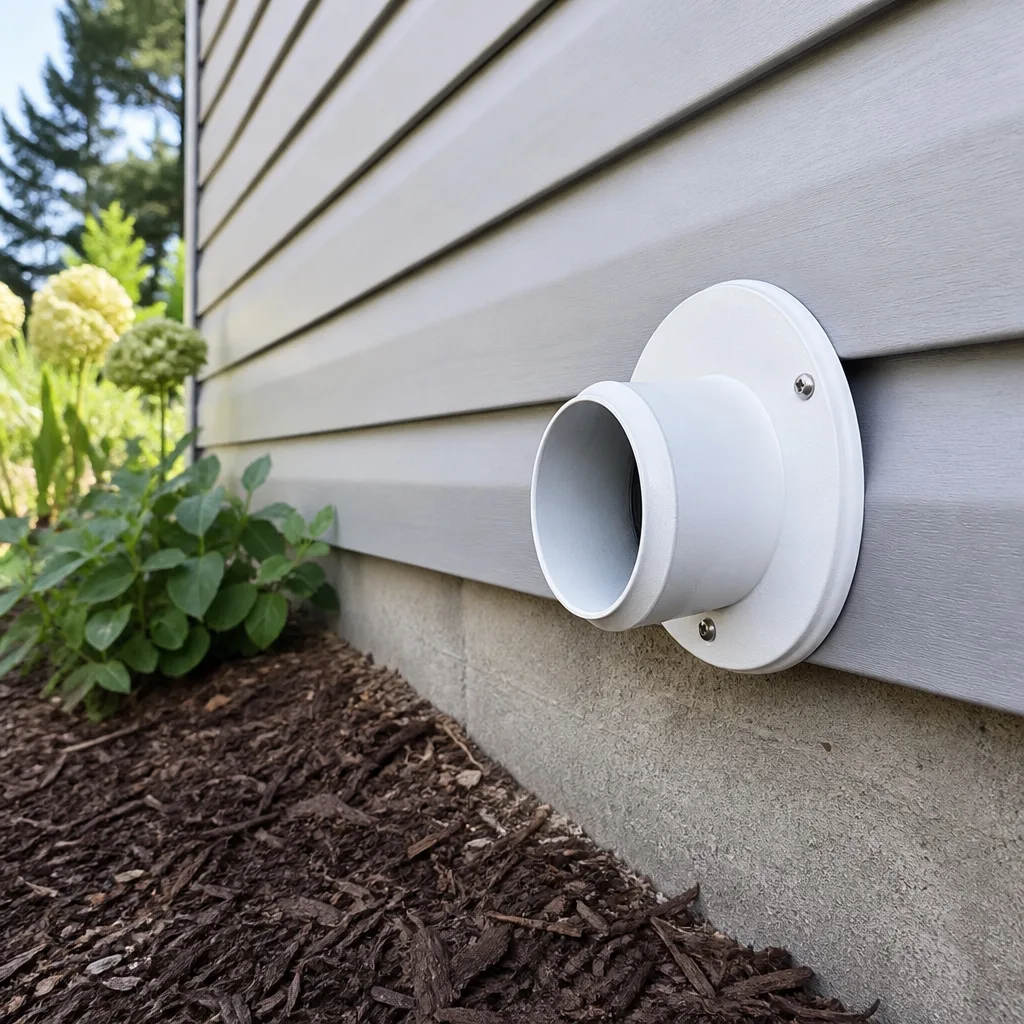 Dryer vent cleaning
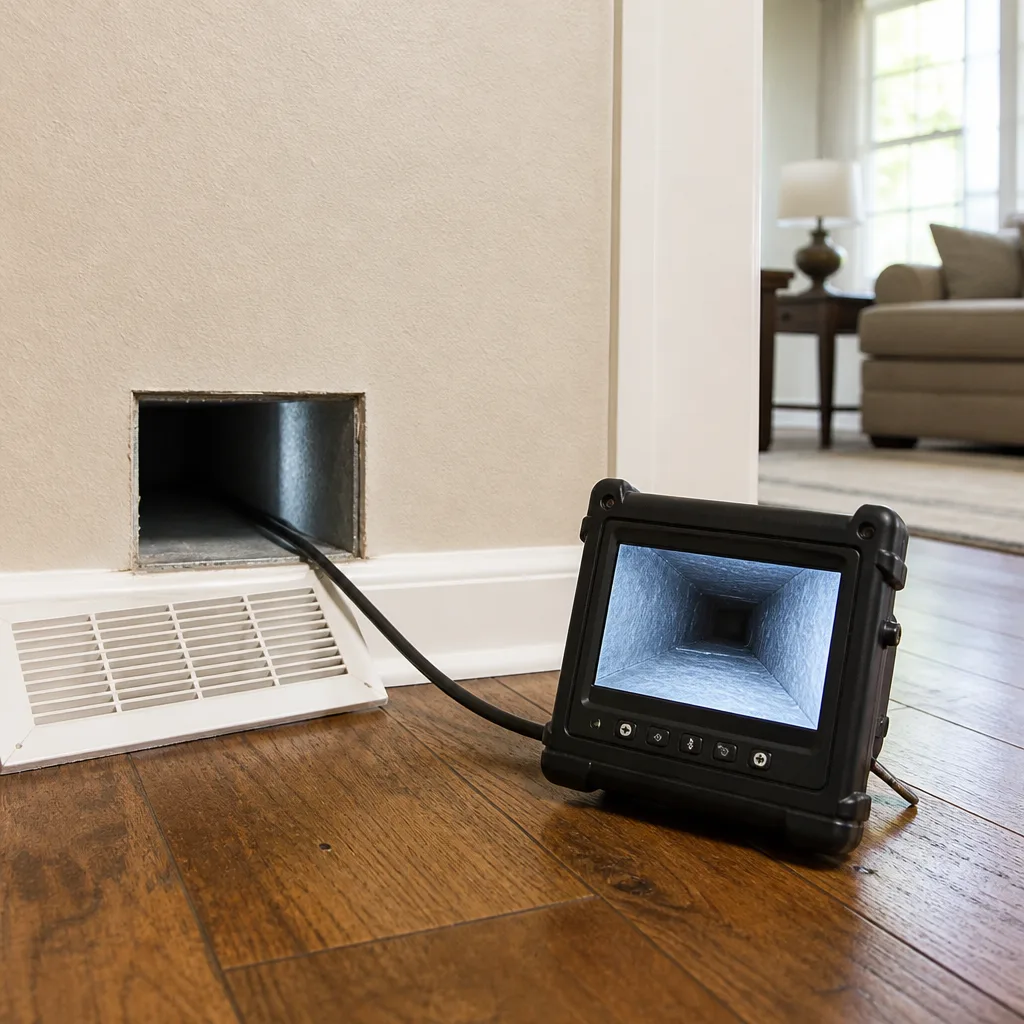 Camera inspection
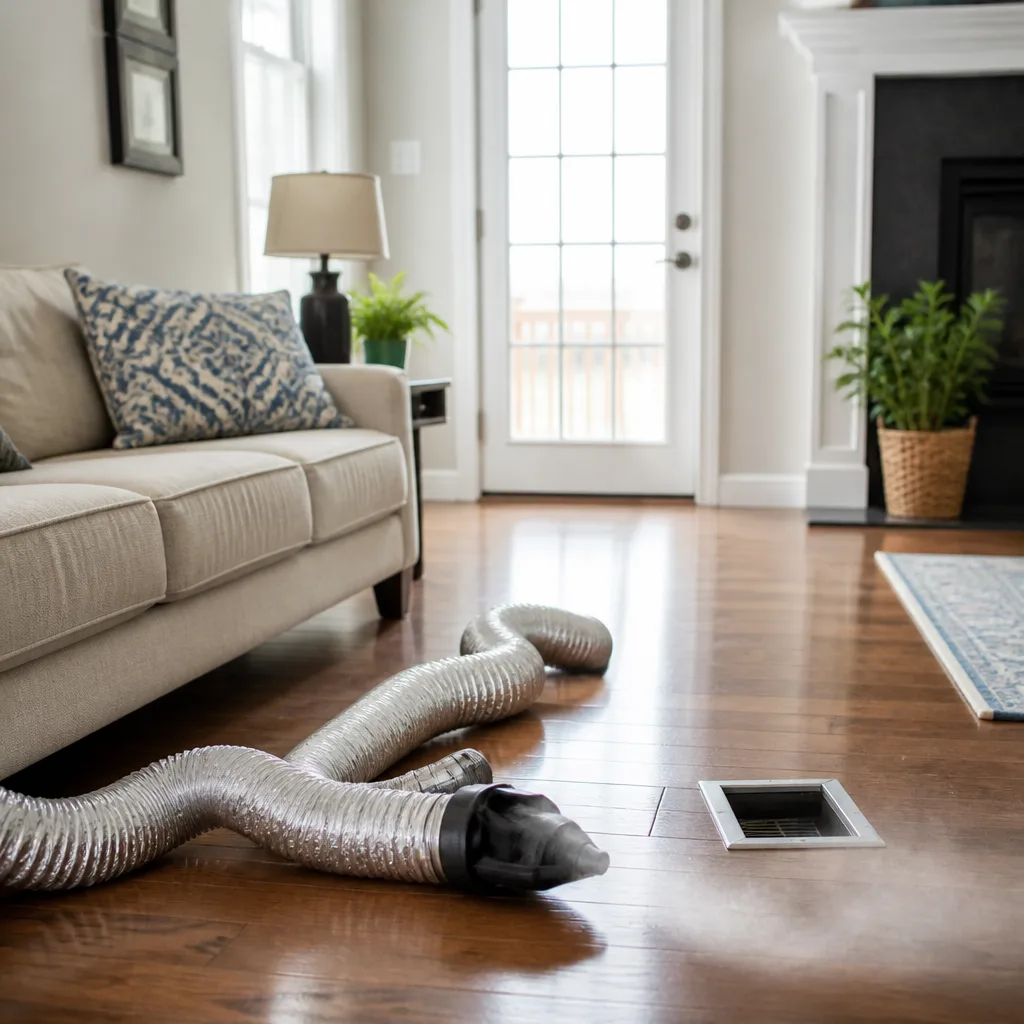 Sanitizing & deodorizing
Whole-system duct and dryer vent check with before-and-after photos - you see exactly what came out of your vents
That "$99 whole-house special" is a bait ad - the real number appears once they are in your hallway, or the "clean" is a shop-vac at the register. We photograph the inside of your ducts before and after instead.
Abatement Technologies Duct Sealing & Repair: The Austin Owner’s Guide
We stock and install Abatement Technologies-compatible duct sealing and repair components throughout Austin, with most installed jobs running between $275 and $650 depending on the series and how much of the run needs re-sealing. We carry the gaskets, access-panel seals, and duct collars on the truck, so a single visit usually gets the work done. The call usually starts the same way: you hear a whistle behind a wall, or you notice a utility closet dusting up faster than it used to, or your air handler is running long and the humidity in the house just won’t settle. Abatement Technologies residential duct runs are well built, but Austin’s heat-cycling breaks down sealant faster than the manufacturer’s coastal test conditions ever predicted.

Which Abatement Technologies Models This Applies To
We see two main lines in Austin homes: the older PR-series portable units, which use round 6-inch and 8-inch flexible duct with clamp-on collars, and the vintage HEPA-bypass filtration cabinets that some builders installed as whole-house air scrubbers in the early 2000s. The compatibility gotcha: Abatement Technologies used a non-standard 6.25-inch collar on some PR-series runs, not the 6-inch nominal boot that most aftermarket collars are stamped for. Measure across the collar opening before you order anything. If it reads 6.25 inches edge to edge on the collar lip, you need the OEM collar or a purpose-machined equivalent, not a generic 6-inch.
For OEM versus aftermarket, our honest take: gaskets and seal tape are fine from quality aftermarket brands, but collars and mounting brackets should stay OEM on Abatement Technologies units. The tolerances are tight enough that generic collars leak around the seam and you’re back to the same whistle in eight months. Tags on the unit will list the series and airflow rating (CFM) on a riveted plate; take a photo of it before you call so we can match parts before we arrive.
Styles & brands we work with
Signs Your Abatement Technologies Duct Sealing & Repair Is Failing
- Whistling or rushing-air sound you can’t localize at first. Seals degrade unevenly, so air escapes through a small channel, making a high-pitched sound that moves depending on static pressure. It’s usually worse when the system first kicks on.
- Reduced airflow at the farthest register. Duct leakage is a pressure loss problem. If your farthest room always feels stale now but didn’t two years ago, you may be losing 10-15% of your airflow into a wall cavity or plenum gap.
- Utility closet or attic space dusting up quickly. Air leaking from an unsealed collar carries whatever’s in the duct into the surrounding space. If you’re wiping down a closet shelf every week, the leak is probably within six feet of the unit.
- Humidity climbing even though the AC runs full-time. Leaky return-side duct pulls attic or wall-cavity air into your supply. In Austin summers, that means humid air loaded with fiberglass particles gets pushed through your whole system.
- Visible black streaking around register boots or collar joints. That’s condensed dust collecting where conditioned air escapes and cools the surface. It’s not mold necessarily, but it’s a clear sign the seal has let go.
See the difference
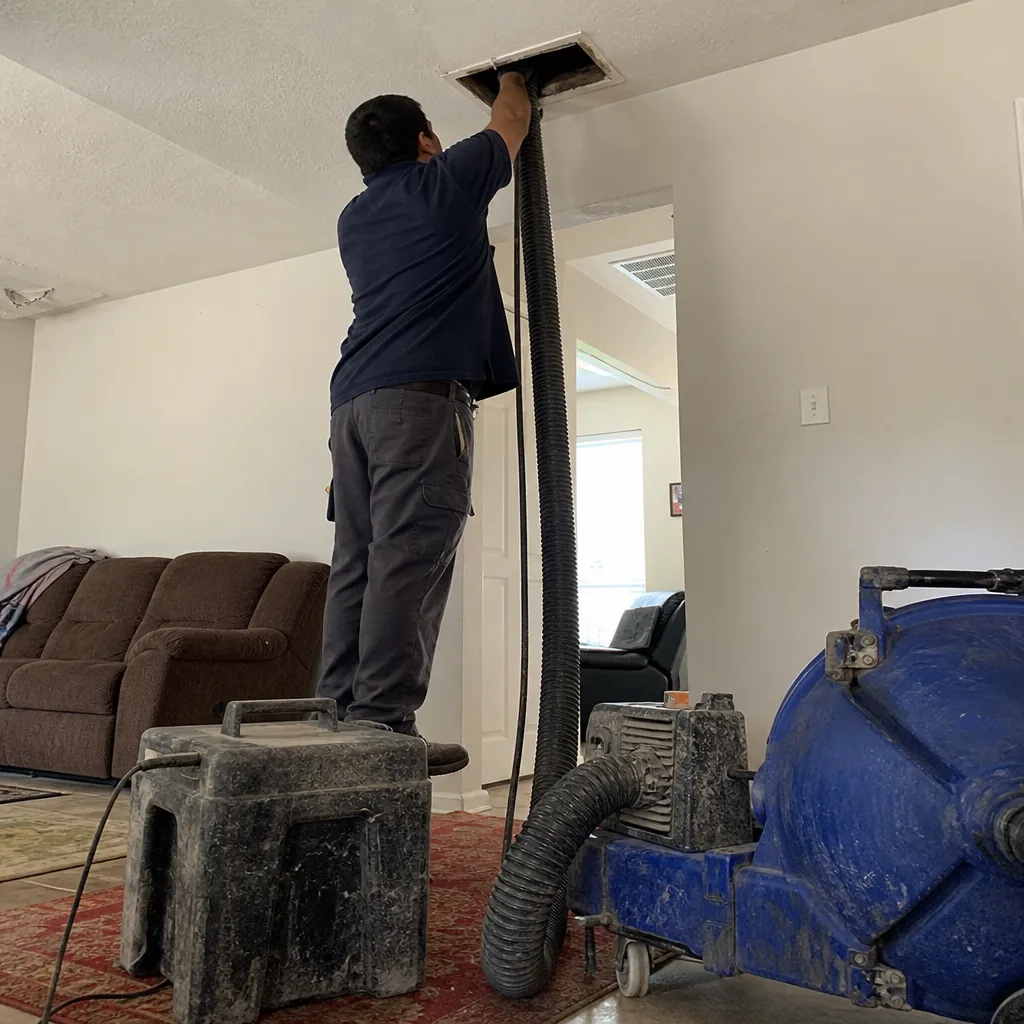 Before
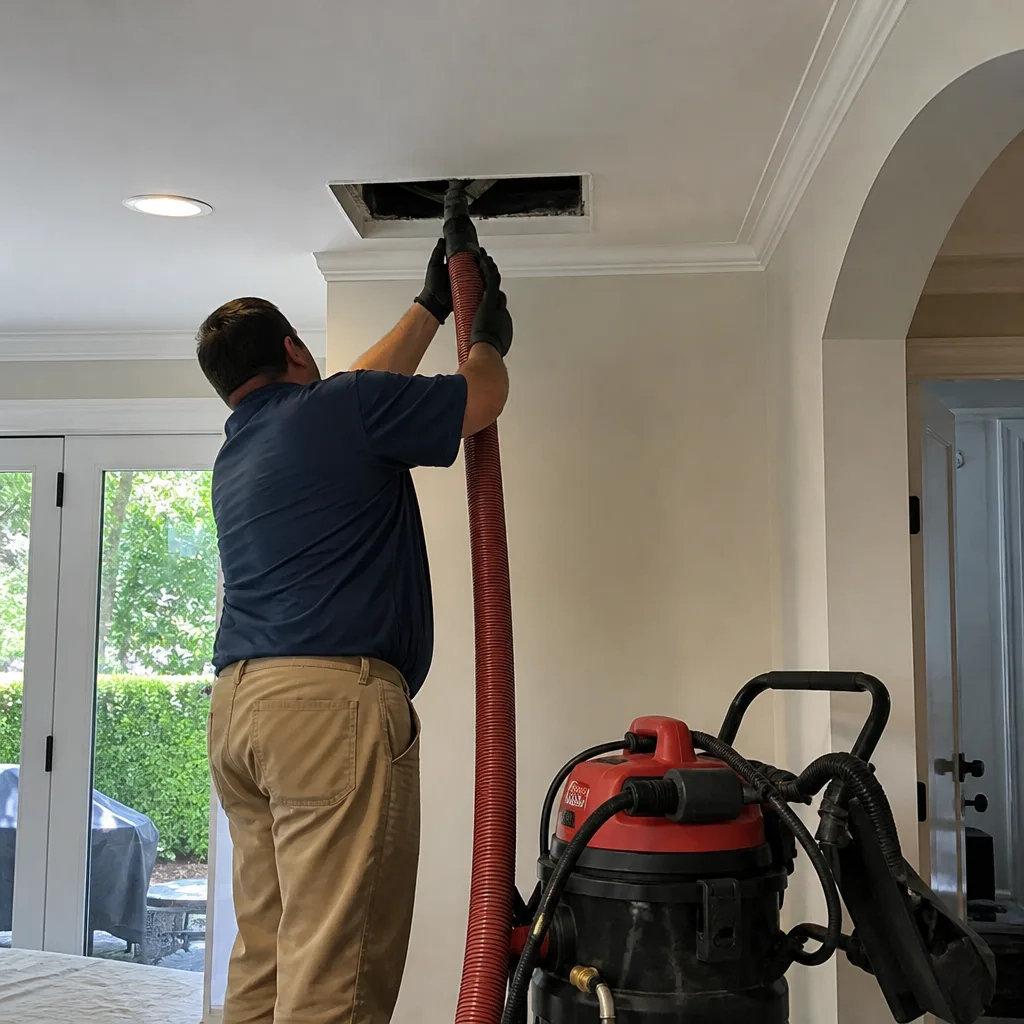 After
After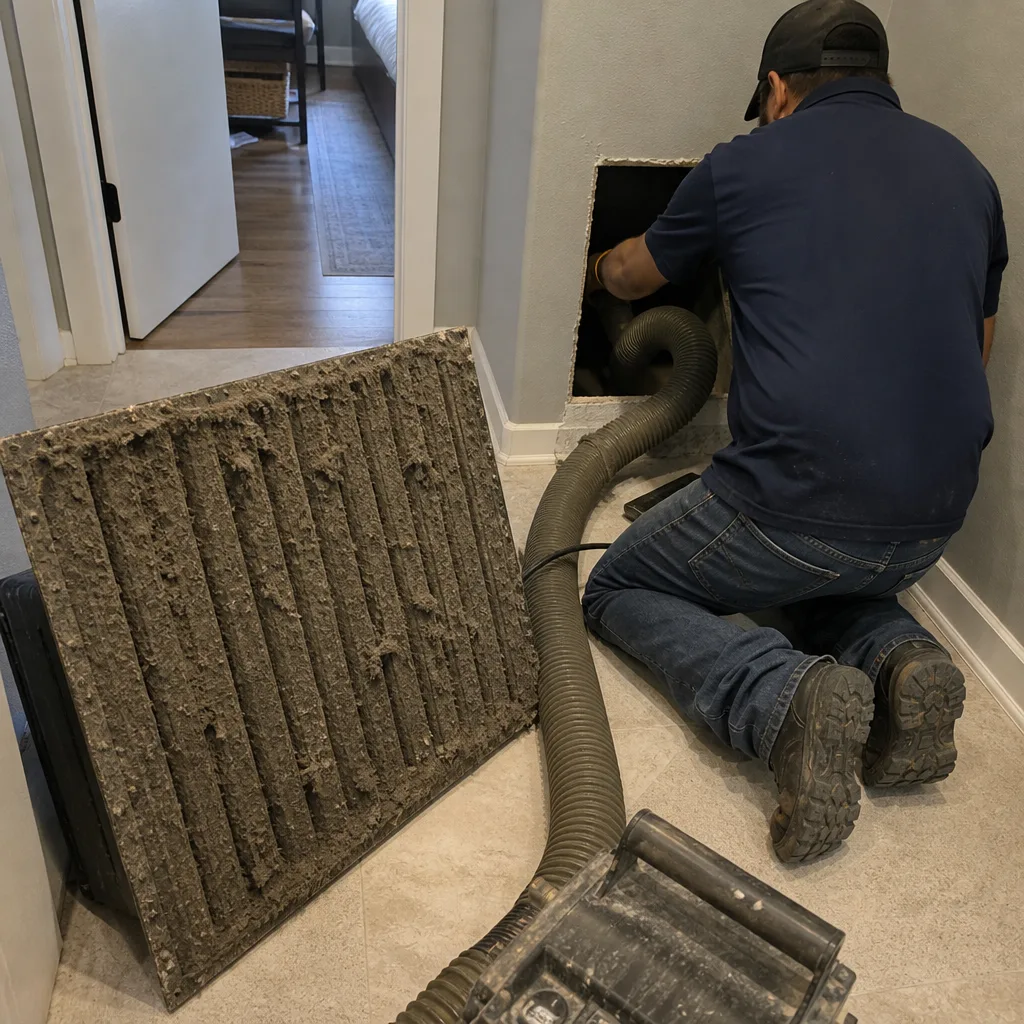 Before
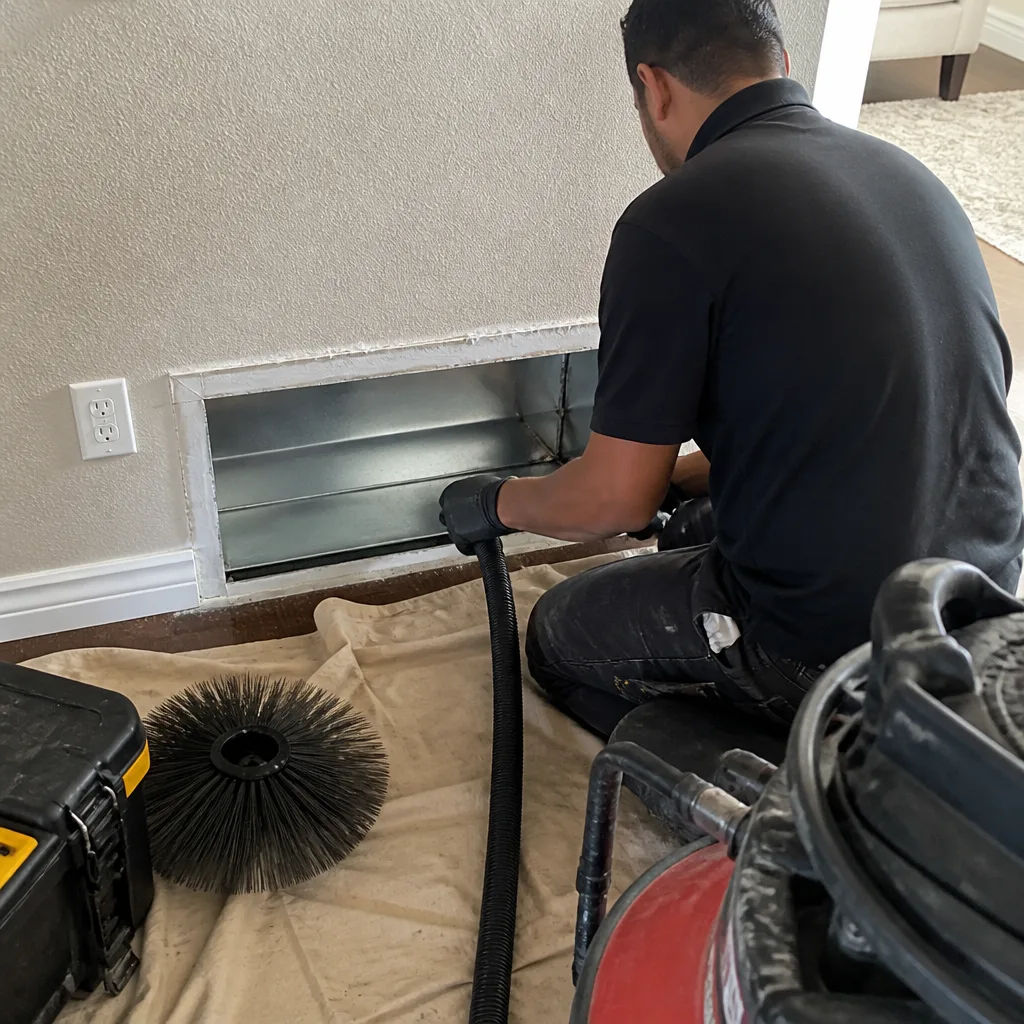 After
After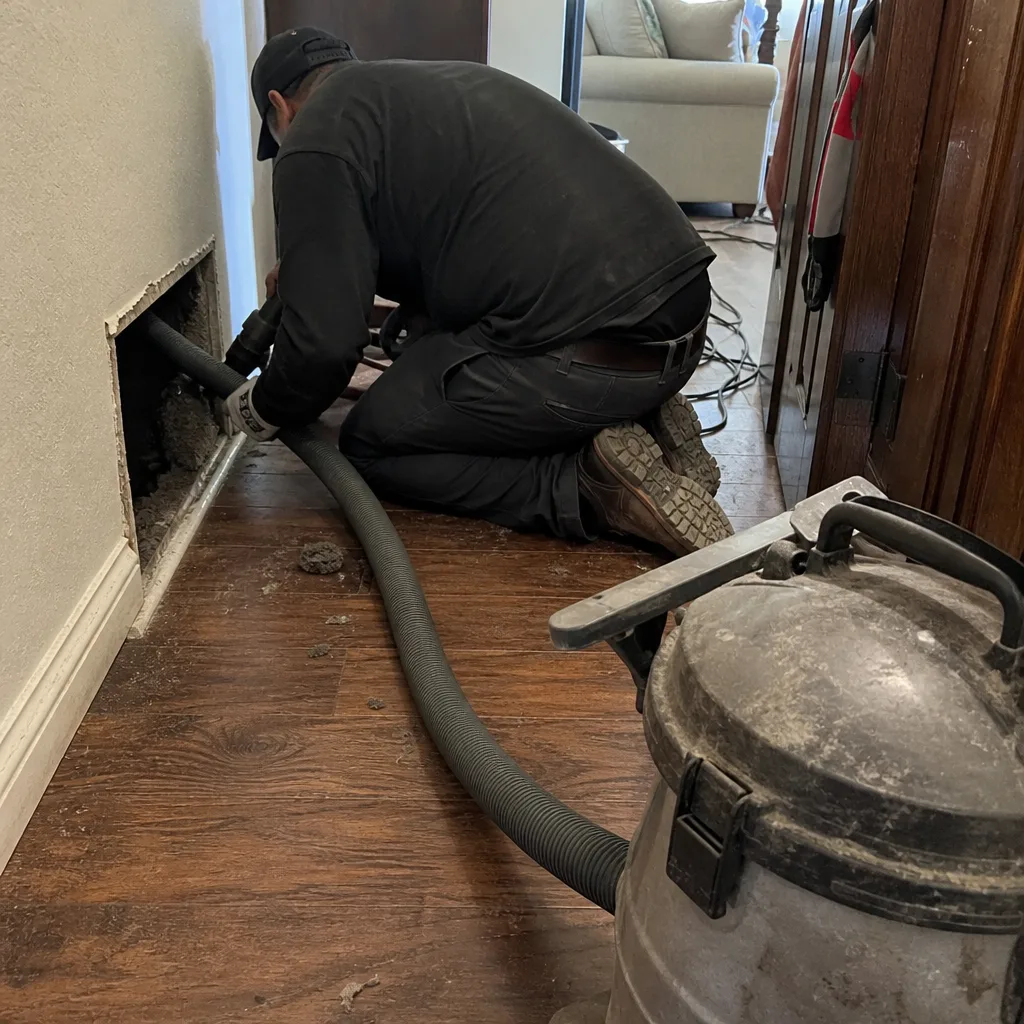 Before
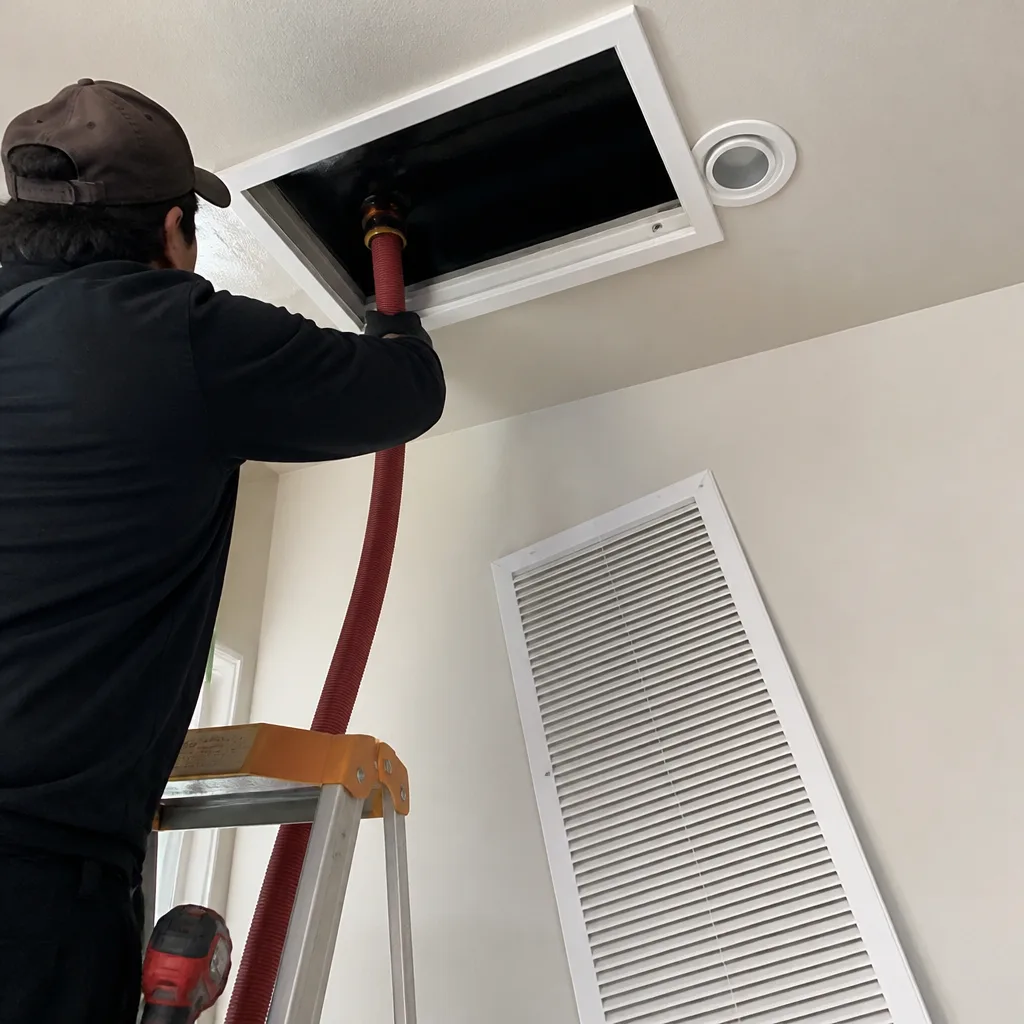 After
AfterReplacement Cost & What’s Included
Installed pricing in Austin for Abatement Technologies duct sealing and repair breaks down like this:
- Access-panel gasket replacement: $275 to $380 installed. Includes removing old gasket material, cleaning the mating surface, and installing a new OEM-spec gasket.
- Duct collar replacement (PR-series): $320 to $480 per collar. Includes the OEM-equivalent collar, sealant, new clamp, and pressure testing.
- Full run re-seal (up to 15 linear feet): $450 to $650. Includes accessing the run, re-sealing all joints and collars, replacing damaged hangers, and pressure testing the entire run.
Every quote is a written price before any work begins, and the repair is covered by our 365-Day Done Right Promise: if the seal fails within a year, we come back and fix it at no charge. That’s in writing, on every job. What drives the range is access: attic runs in July are slower work than a closet-mounted unit.
DIY or Call Us?
You can check a few things safely: look for visible gaps at register boots, run your hand along the collar joints while the system is off to feel for cracks in the seal material, and check the filter cabinet door gasket for flattening or tears. That’s where a homeowner’s inspection should end. Re-sealing under pressure is where DIY gets expensive: if you seal a return-side run with the wrong product, you can pull sealant into the blower. If you use an off-gassing sealant in a supply run, you’re now breathing whatever it cures into for the next six months. Abatement Technologies runs are specific enough that we’d rather you spend the phone call than the weekend on a ladder. Call (940) 461-7203 and we’ll get your system’s airflow where it should be.
FAQs
Residential duct seals last 5 to 8 years in Austin’s climate, though we see PR-series gaskets starting to fail around year 6, especially in attics where late-afternoon heat pushes surface temperatures past 130 degrees in August. If your system is older than that and you’re noticing airflow loss or dust in the utility room, it’s time to have the seals inspected. Call (940) 461-7203 for a free estimate.
Small gasket and collar leaks can sometimes be patched with a purpose-made sealing tape, but if the gasket material has flattened or cracked, patching just buys you a few months before the seal starts failing in a new spot. For clamp-on collars, the seal often fails at the clamp point itself, and there’s no honest way to patch that. We’ll quote you the repair only if it will actually hold, otherwise we tell you straight.
Most access-panel gasket swaps run about 60 to 90 minutes. A full re-seal of up to 15 linear feet usually takes 2 to 3 hours, including setup, cleanup, and pressure testing to confirm airflow where it should be. We give you the tech’s name and photo before they arrive, and they’ll show a photo ID badge at the door before setting up.
We stock the common gaskets, collars, and sealers for Abatement Technologies residential units on our service vehicles. If you need a less common part for a legacy PR-series unit or a whole-house cabinet, we can have it in hand within a couple of business days and schedule your repair after that. We’re an independent service provider and not affiliated with Abatement Technologies, but we can source OEM components for their residential lines. We also work on duct systems paired with Lennox, Trane, and Carrier equipment.
Written by Marcus Veale, Owner, Linden Air Duct Austin at Linden Air Duct Austin, serving Austin and nearby areas.