
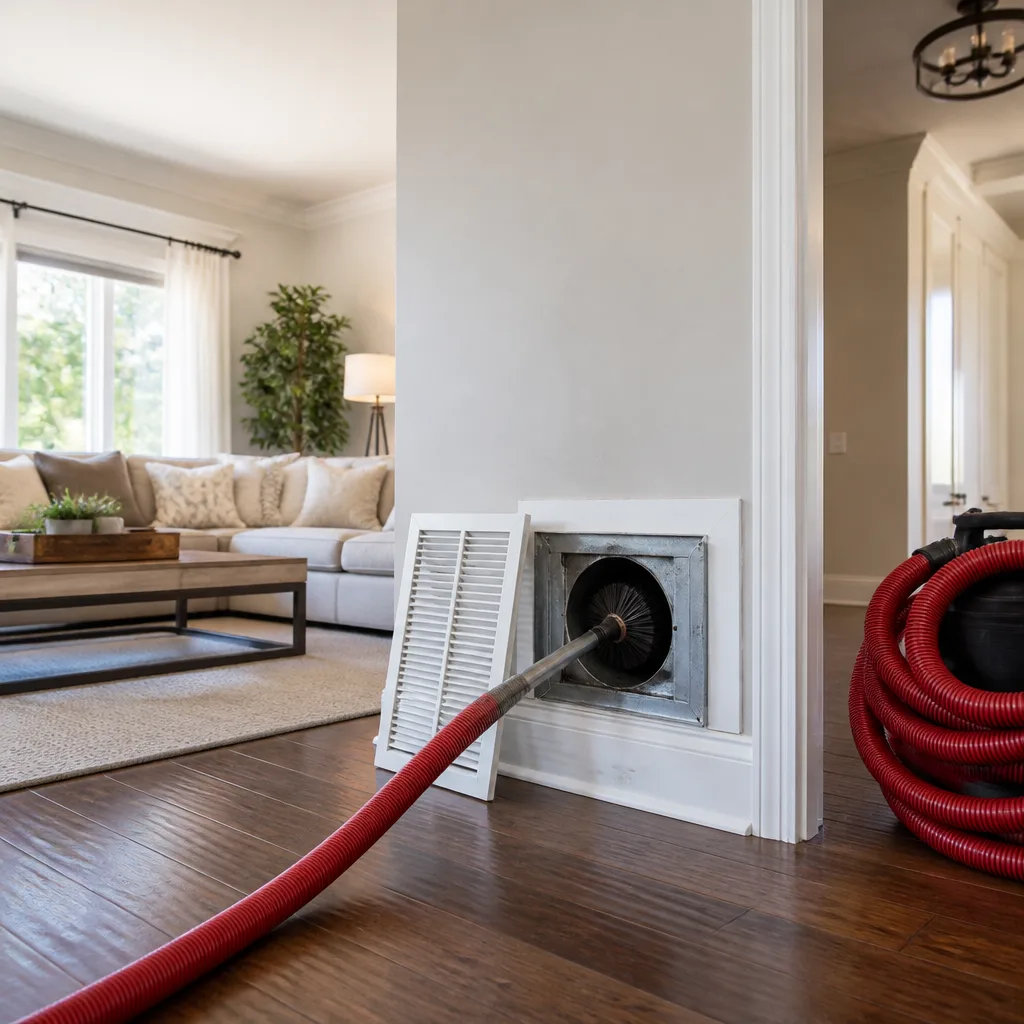
 Whole-home duct cleaning
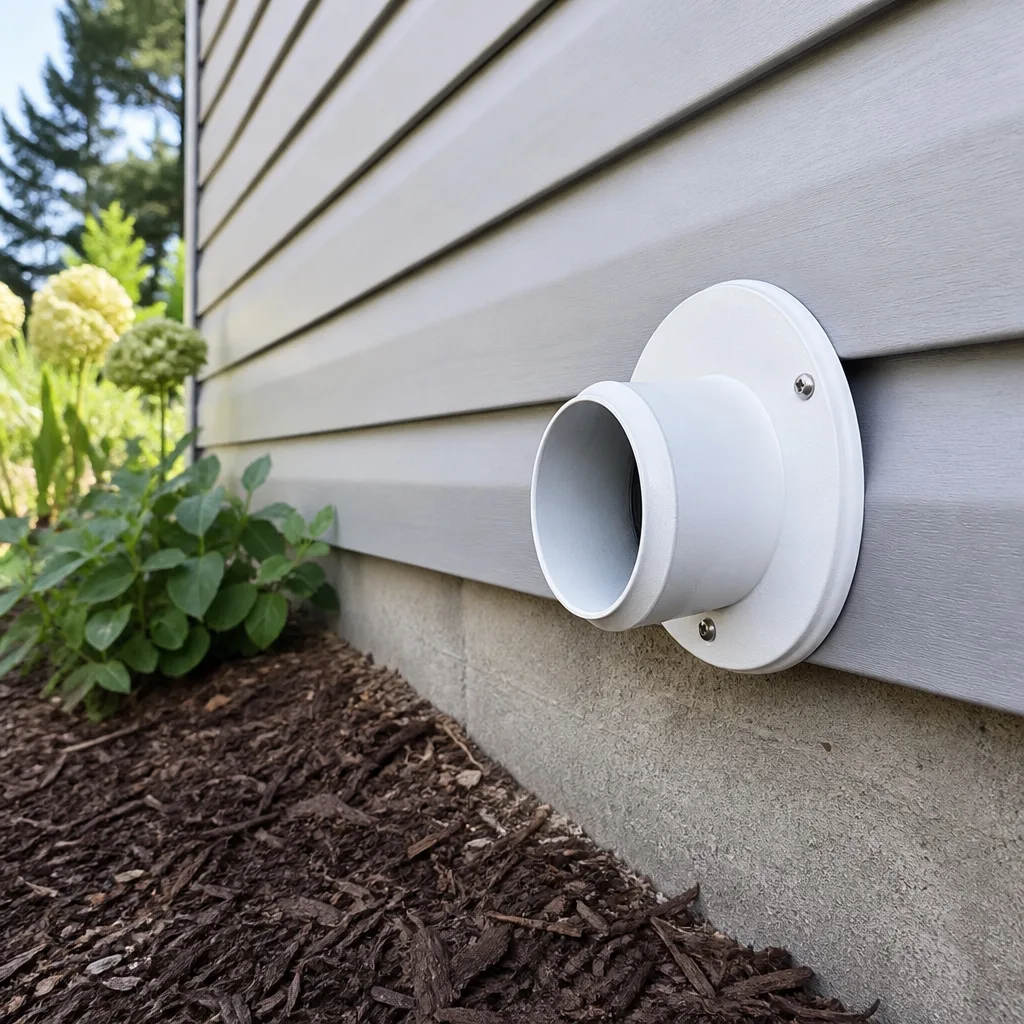 Dryer vent cleaning
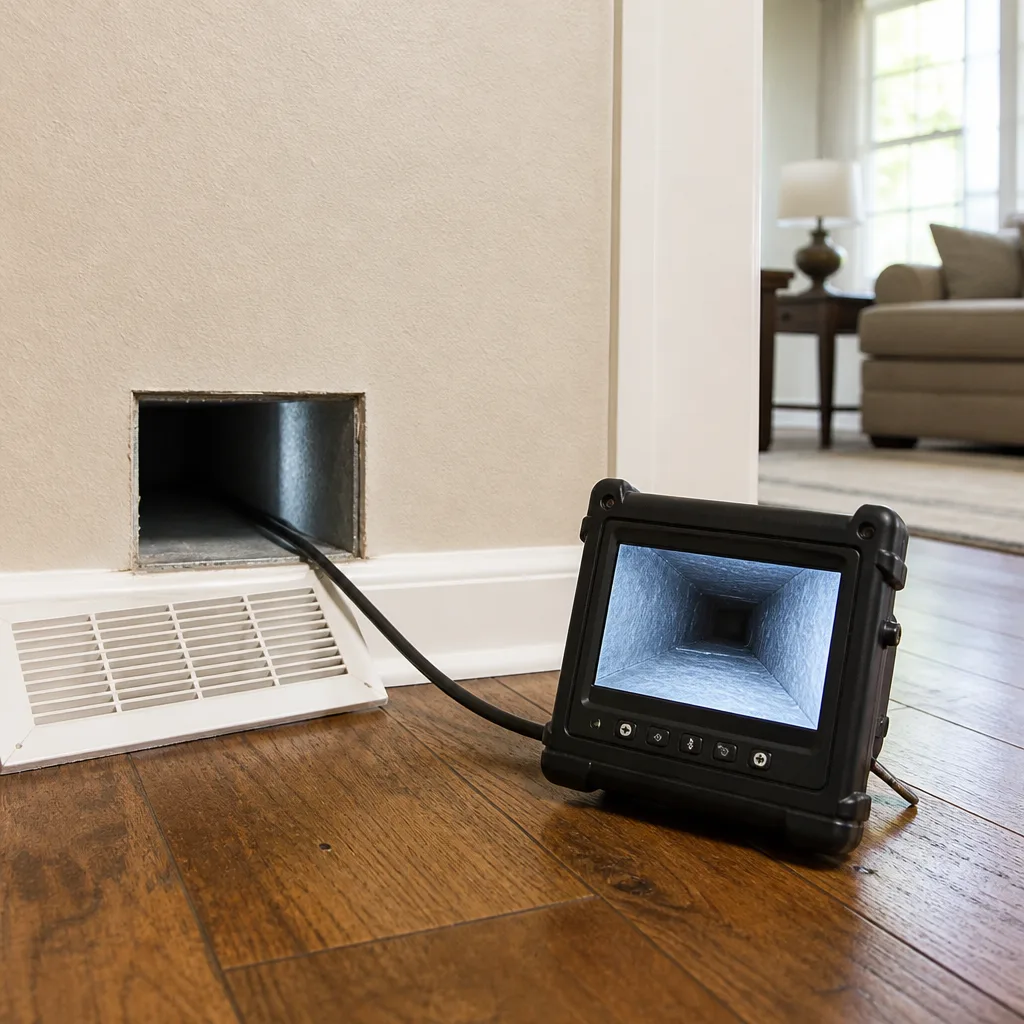 Camera inspection
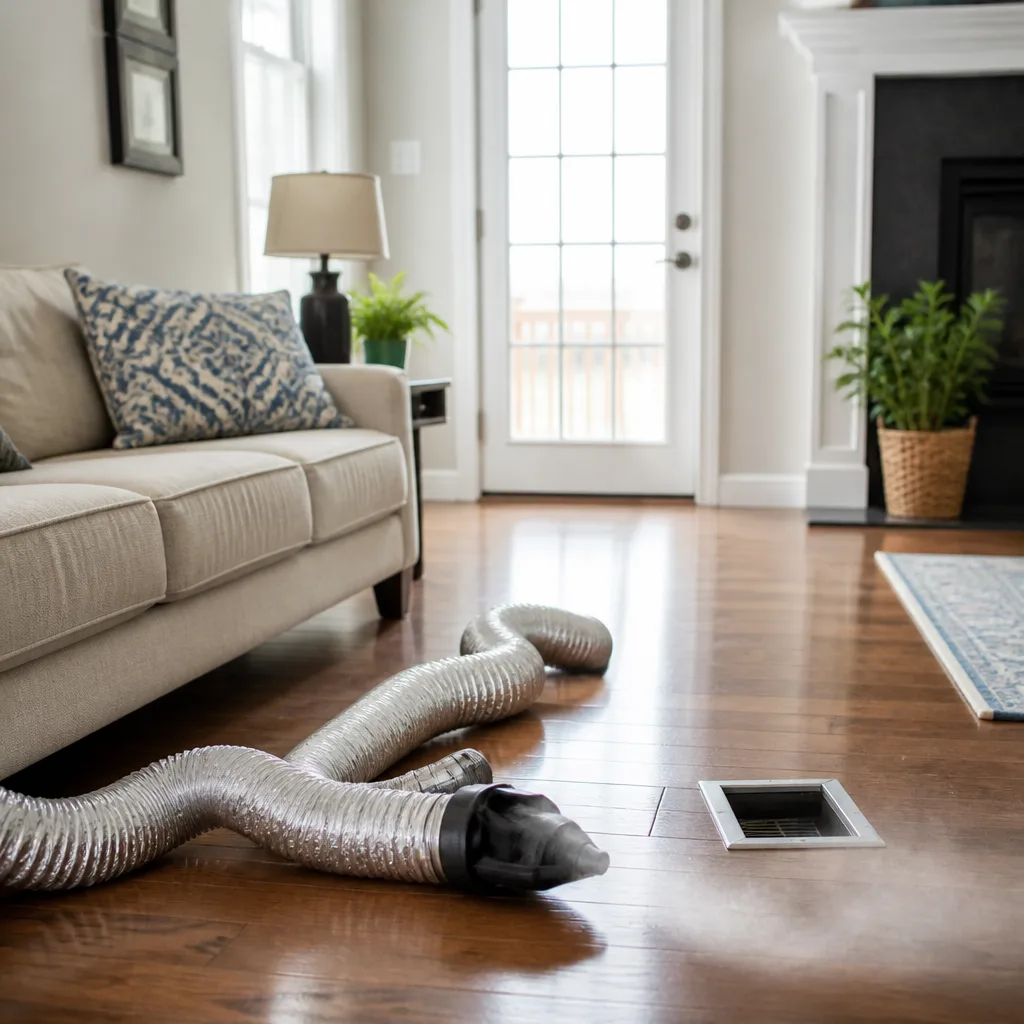 Sanitizing & deodorizing
Whole-system duct and dryer vent check with before-and-after photos - you see exactly what came out of your vents
That "$99 whole-house special" is a bait ad - the real number appears once they are in your hallway, or the "clean" is a shop-vac at the register. We photograph the inside of your ducts before and after instead.
Abatement Technologies Vent Sanitizing: The Austin Owner’s Guide
If you own an Abatement Technologies air purification unit in Austin and the vent sanitizing component has failed or is underperforming, we can source and install a compatible replacement, typically between $340 and $620 installed depending on your model and home layout. We stock Abatement Technologies-compatible vent sanitizing parts on our service trucks, so most Austin homeowners get this resolved in a single visit. The way most people discover the failure is gradual: a musty odor returns a few weeks after cleaning, allergy symptoms tick up, or the unit’s indicator light stays amber instead of cycling to green after the sanitizing cycle.

Vent sanitizing on an Abatement Technologies unit isn’t a filter change. It’s a UV or photocatalytic oxidation module (depending on your model year) mounted in the airstream, and when it degrades, the air moving through your ducts is no longer being treated. In Austin’s humidity, that degradation happens faster than the national average because mold spores and biofilms are more active in damp, warm duct environments. We see the strongest demand for this replacement in neighborhoods like Mueller, Circle C, and Steiner Ranch, where homeowners run their HVAC systems hard through long cooling seasons and the sanitizing module simply wears out from constant duty.
Here’s what matters before you buy anything: the part number on the module housing matters more than the model of the main unit. We’ll walk you through exactly how to identify it below, and if you want to skip straight to a quote, call us at (940) 461-7203.
Which Abatement Technologies Models This Applies To
Abatement Technologies has used several vent sanitizing configurations across their product lines, and the compatibility gotcha is this: the module housing dimensions changed between the older P-Series and the newer CAP and HEPA-AIRE lines, but the mounting brackets on the main unit often did not. That means you can sometimes install an updated module in an older housing, but rarely the reverse. Before you order anything online, check the silver label on the module itself. The part number starts with a three-letter prefix (usually PST, CAP, or HAP) followed by a four-digit sequence. If the label is missing or worn, we can identify the module from a photo of the bracket pattern and the overall housing length.
For Abatement Technologies units in Austin specifically, the decision between OEM and quality aftermarket comes down to one factor: how old the main unit is. If the unit is under five years old and still under the manufacturer’s parts coverage, we recommend OEM. If it’s older than that, a well-built aftermarket module with the same spectral output and lamp wattage typically saves $60 to $110 and performs identically in real-world conditions. We stock both, and we’ll tell you honestly which one makes sense for your unit before any money changes hands.
One checkable spec to keep in mind: genuine Abatement Technologies vent sanitizing modules are rated for continuous operation at airstream temperatures up to 140°F. Cheap imported modules often fail at 110°F or below. In Austin attics in August, the air moving through your ducts routinely hits 120°F to 130°F. That’s why some online-replacement parts fail within a single cooling season here. We only install modules rated for the heat load Texas attics actually produce.
Styles & brands we work with
Signs Your Abatement Technologies Vent Sanitizing Is Failing
- Musty or stale odor returns within weeks of cleaning. The most common sign. The module’s UV lamp or photocatalytic surface has degraded to the point where it’s no longer neutralizing the microbial load in the airstream. In Austin’s humidity, this shows up fast once the module starts slipping.
- The indicator light stays amber or red after a full sanitizing cycle. Abatement Technologies units run a self-diagnostic cycle. If it doesn’t complete cleanly, the module is almost always the cause, not the blower or the control board.
- Visible dust or film on the module housing. When the module surface gets coated with particulates, the sanitizing reaction can’t reach the airflow. This is more common in Austin homes with pets or recent renovation dust.
- Allergy symptoms return despite clean filters. If you’ve already confirmed the pre-filter and HEPA filter are clean and symptoms persist, the vent sanitizing stage is the likely culprit. Without active treatment, the air passing through your ducts is just circulating whatever the filters didn’t catch.
- The unit has been running continuously for five years or more. UV lamps and photocatalytic surfaces have a finite service life. In Texas, where HVAC systems run more annual hours than most of the country, the practical lifespan of a vent sanitizing module is typically four to six years, not the seven-to-nine you might see in manufacturer literature written for milder climates.
See the difference
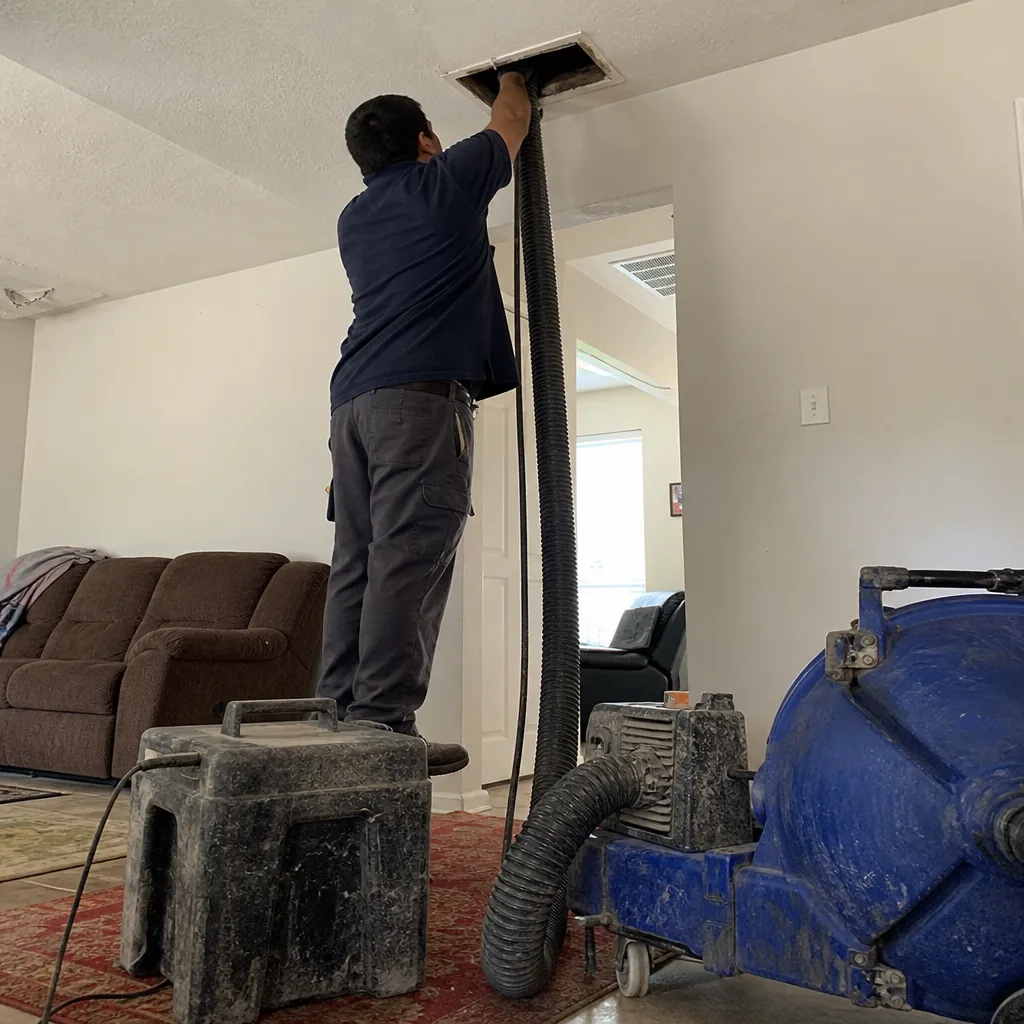 Before
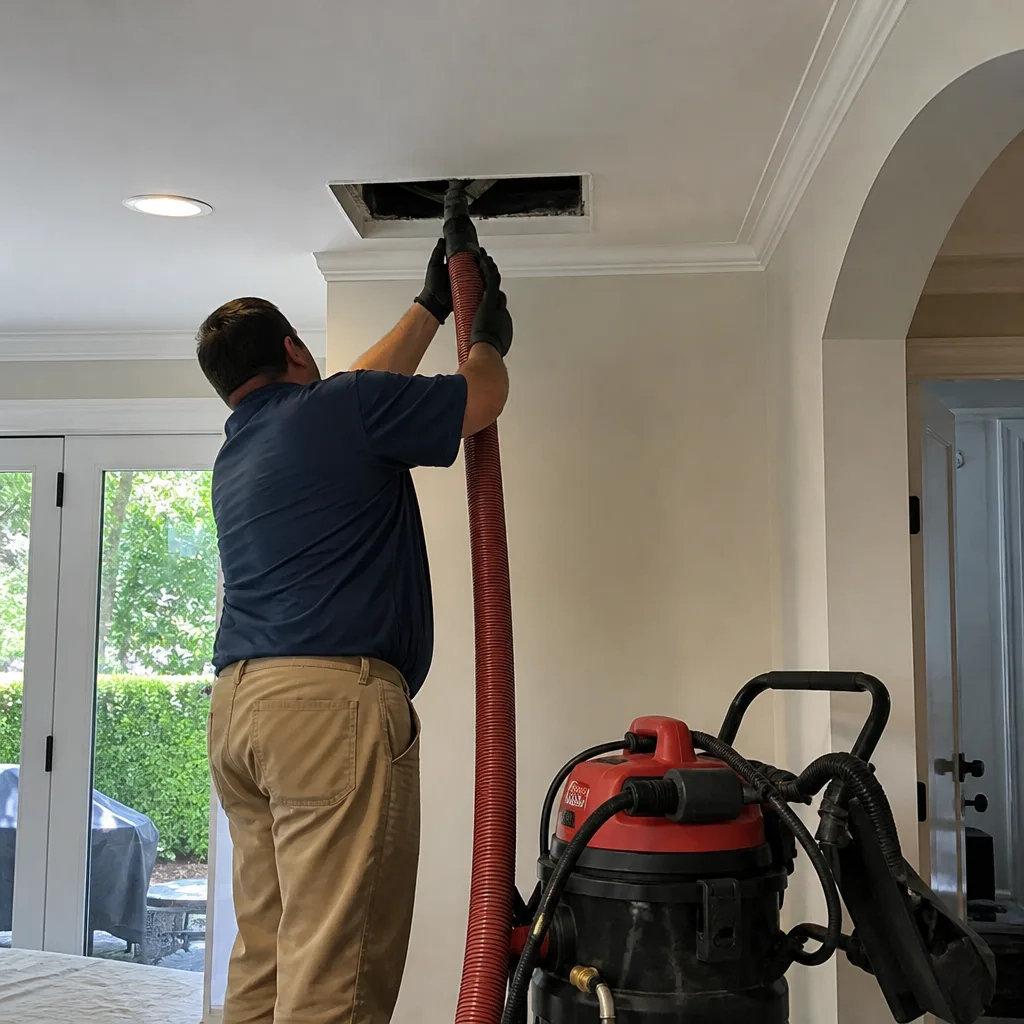 After
After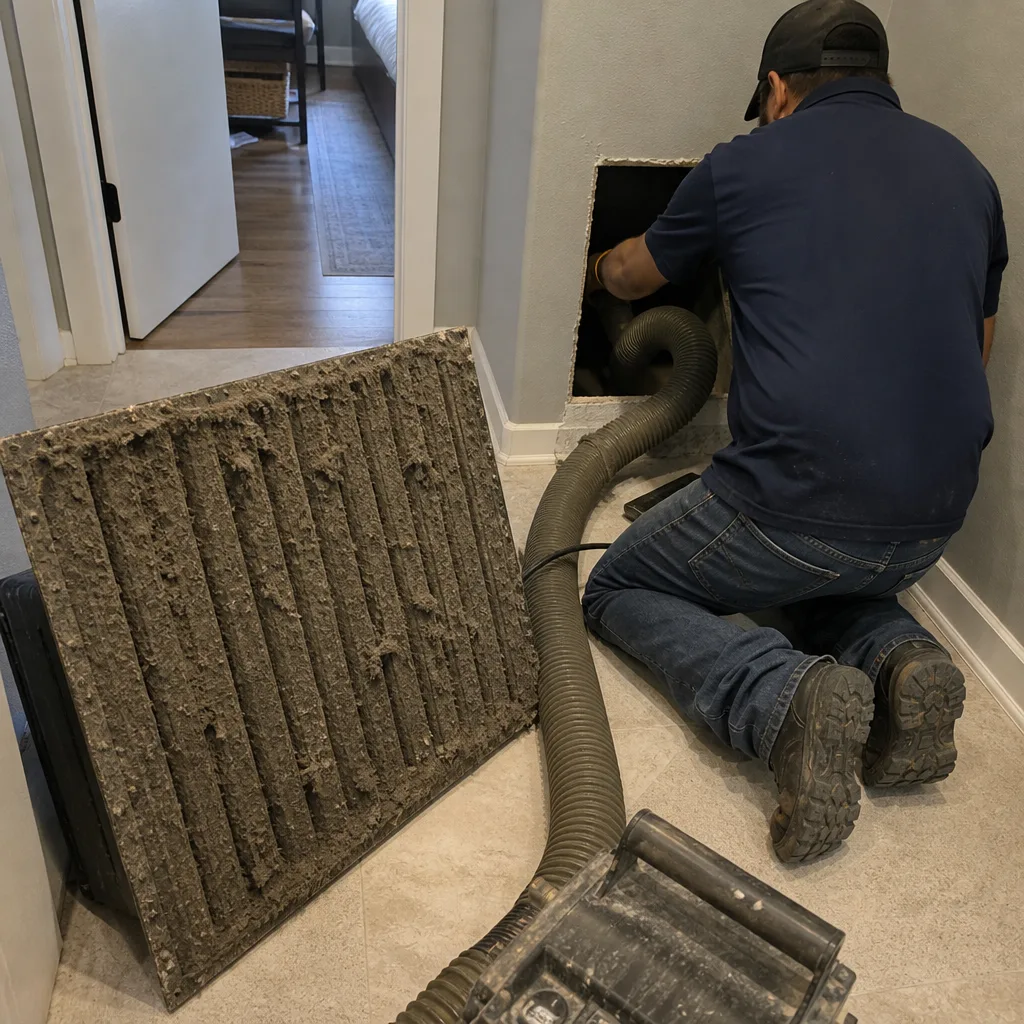 Before
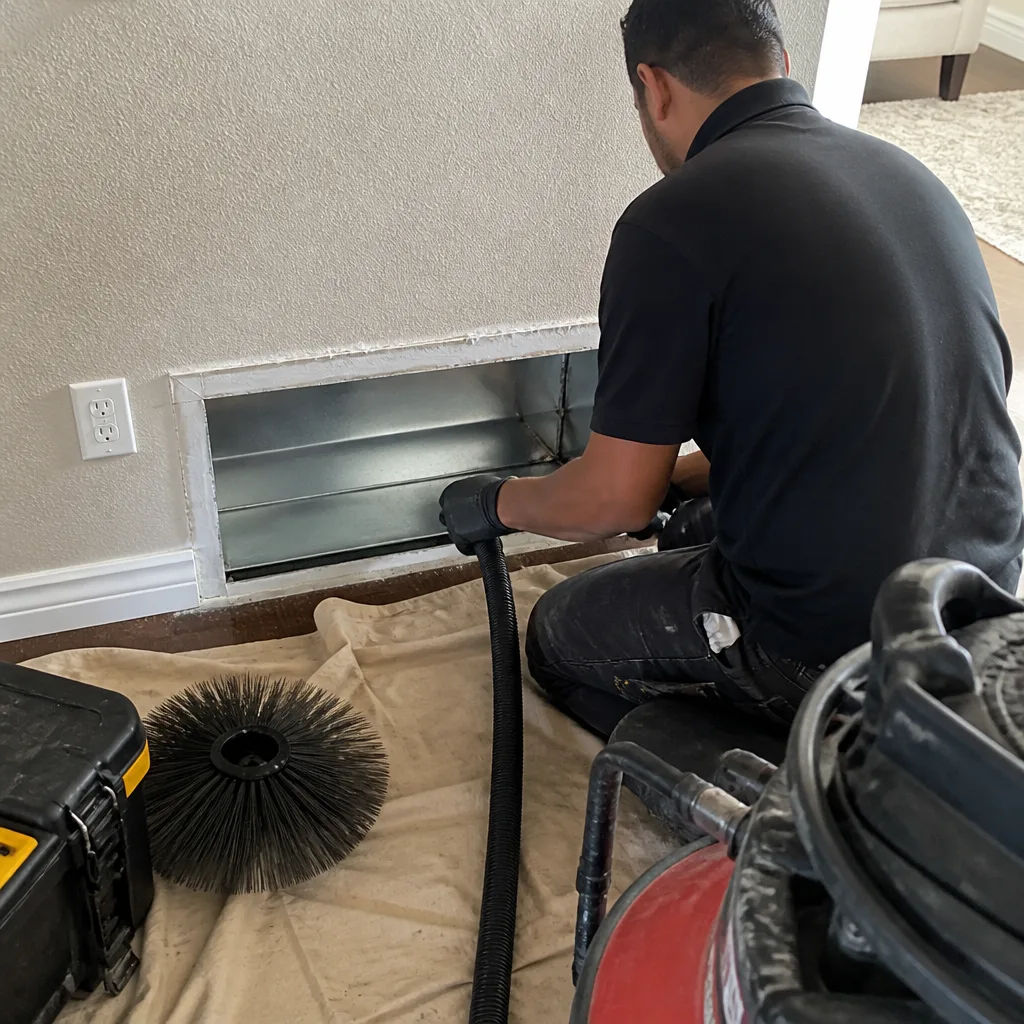 After
After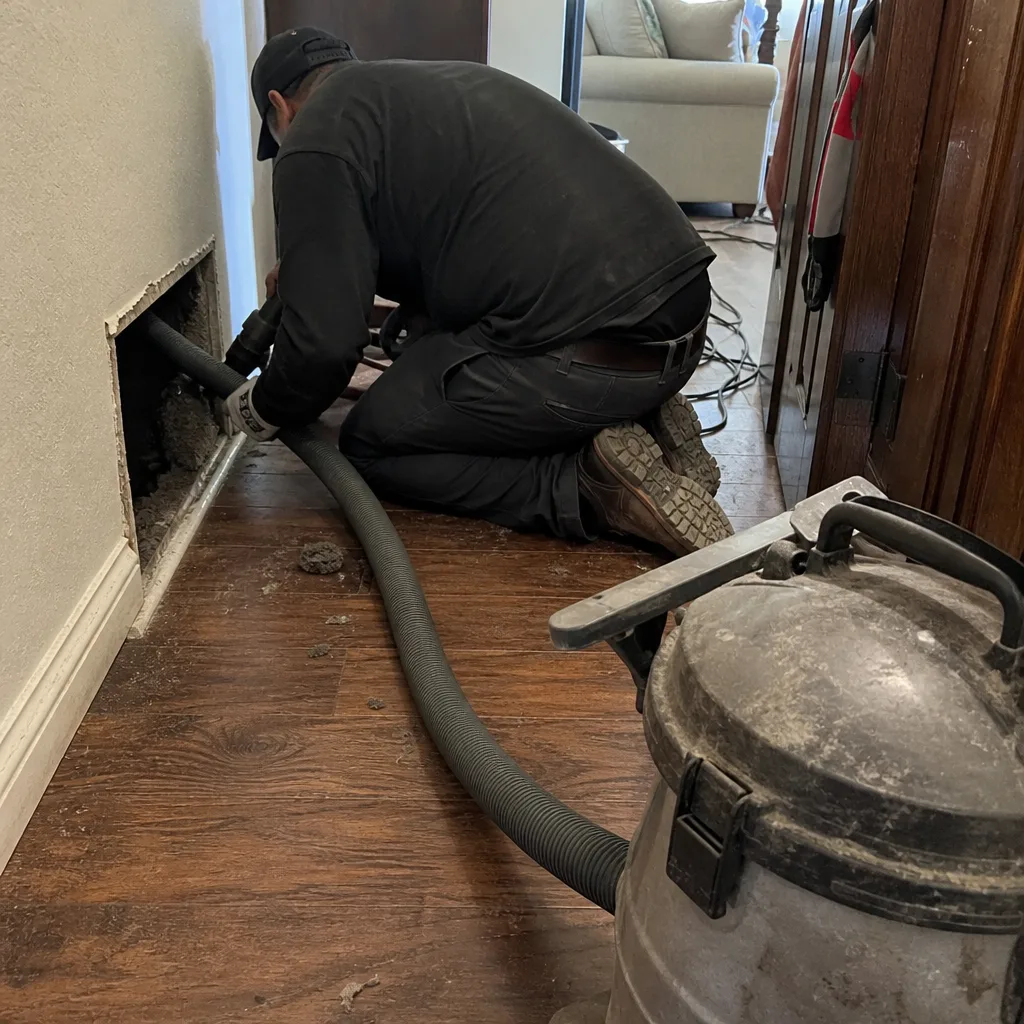 Before
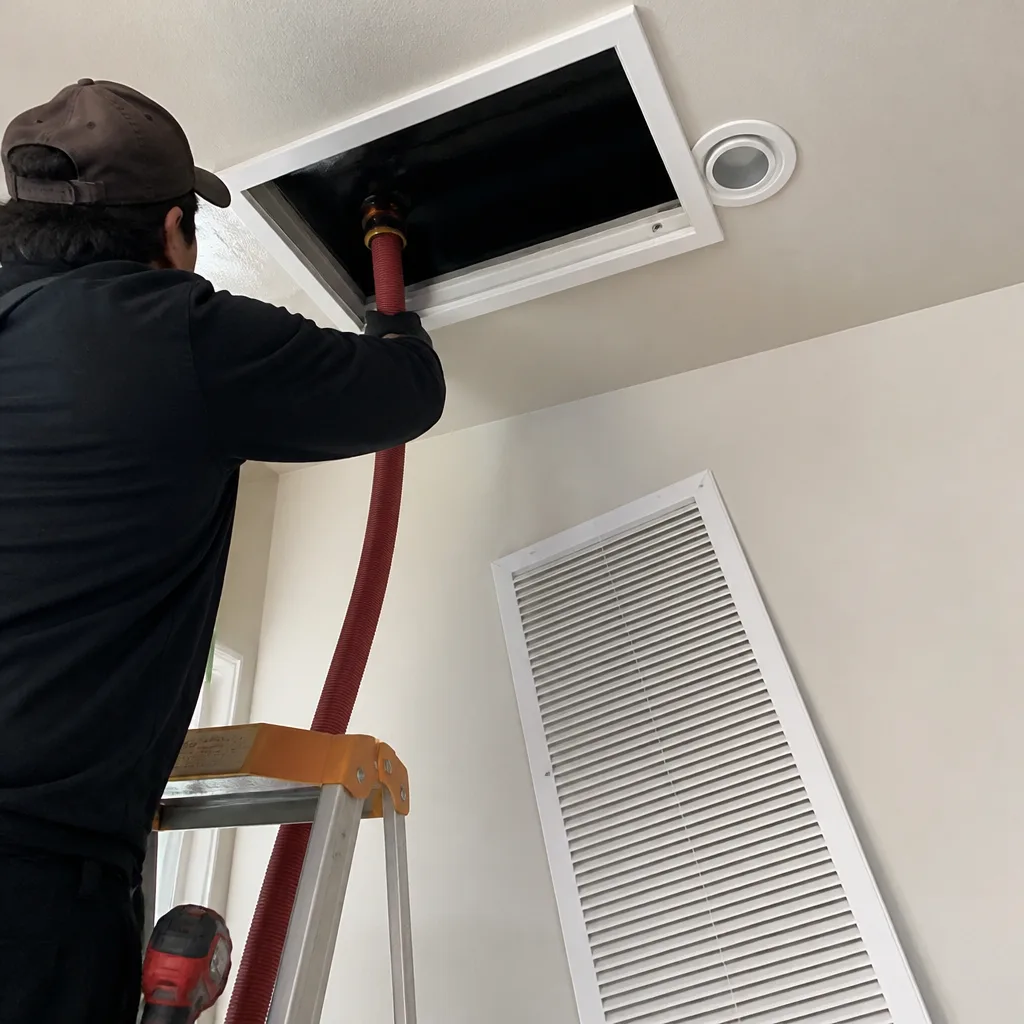 After
AfterReplacement Cost & What’s Included
In Austin, you should expect to pay between $340 and $620 for a complete Abatement Technologies vent sanitizing module replacement, installed. The range breaks down like this:
- OEM module, newer unit: $420 to $620 installed, depending on the model line and whether the mounting bracket needs adaptation.
- Quality aftermarket module, older unit: $340 to $480 installed, with the same spectral output and heat rating as OEM.
- Module only, no install: $210 to $390 if you want to handle the swap yourself (though we’d rather talk about that decision first).
Every quote includes the part, the labor to remove and replace the module, a cleaning of the surrounding housing, and a written price before any work begins. You’ll never get a surprise invoice from us at the end of the job. And because we’re the independent service provider, not affiliated with Abatement Technologies, we have no financial reason to push OEM over aftermarket. We’ll recommend what actually fits your unit and your budget. Marcus Veale, who runs Linden Air Duct Austin, walks every Abatement Technologies replacement himself and won’t leave until he’s tested the airflow and confirmed the module is running at spec.
DIY or Call Us?
Here’s the honest split. An owner can safely do two things: check the indicator light cycles and visually inspect the module housing for dust accumulation or visible lamp damage. That’s useful diagnostic information, and we’re happy to talk through what you’re seeing over the phone. The hands-on work is where it gets genuinely risky. The module on most Abatement Technologies units sits in the main supply plenum, and accessing it means opening the air handler cabinet. If the power isn’t fully disconnected at the breaker, you’re working next to live electrical connections and a potentially spinning blower wheel. This is not a job you want to learn on. We’ve cleaned up enough amateur installs in Austin to say that plainly: the $100 you save on labor isn’t worth a hospital visit or a damaged unit.
If you want this done once and done right, call us at (940) 461-7203. We’ll identify your exact module, bring the right replacement on the truck, and have the job finished the same day in most cases.
FAQs
In Central Texas, you should plan on four to six years of real service life, not the seven to nine you might see in manufacturer literature written for milder climates. The combination of long cooling seasons, high attic temperatures, and elevated humidity in Austin accelerates wear on the lamp and the photocatalytic surface. If your unit is approaching the five-year mark and you’re noticing musty odors returning, it’s worth having the module tested. Call (940) 461-7203 and we’ll give you an honest read on whether it’s time.
Almost never. The UV lamp inside an Abatement Technologies vent sanitizing module is not a user-serviceable part, and the photocatalytic coating cannot be re-applied in the field. Attempting a repair usually costs as much as a quality aftermarket replacement and rarely lasts more than a few months. In our experience, replacement is the cost-effective fix every time.
From the time our technician arrives to the time the system is tested and buttoned back up, the job usually takes 45 to 90 minutes. The variable is access: units mounted in tight attic spaces or older mechanical closets take longer to work around safely. We’ll confirm the timeline before we start and you’ll have a written price in hand before any work begins.
Yes. We carry OEM and aftermarket modules for the most common Abatement Technologies configurations in Austin, plus the adapters needed for older housings. If your unit takes a less common module, we’ll source it and schedule the install within a few business days. We also stock parts for Lennox, Trane, and Carrier systems, so if your unit is part of a larger HVAC setup, we can handle the whole job in one visit.
If your Abatement Technologies vent sanitizing component has failed and you want a straight answer on cost, compatibility, and how fast it can be fixed, call us at (940) 461-7203. We’ll tell you what the system is doing, and we’ll tell you what it needs – no upsell, no alarm, just the straight answer.
Written by Marcus Veale, Owner, Linden Air Duct Austin at Linden Air Duct Austin, serving Austin and nearby areas.