
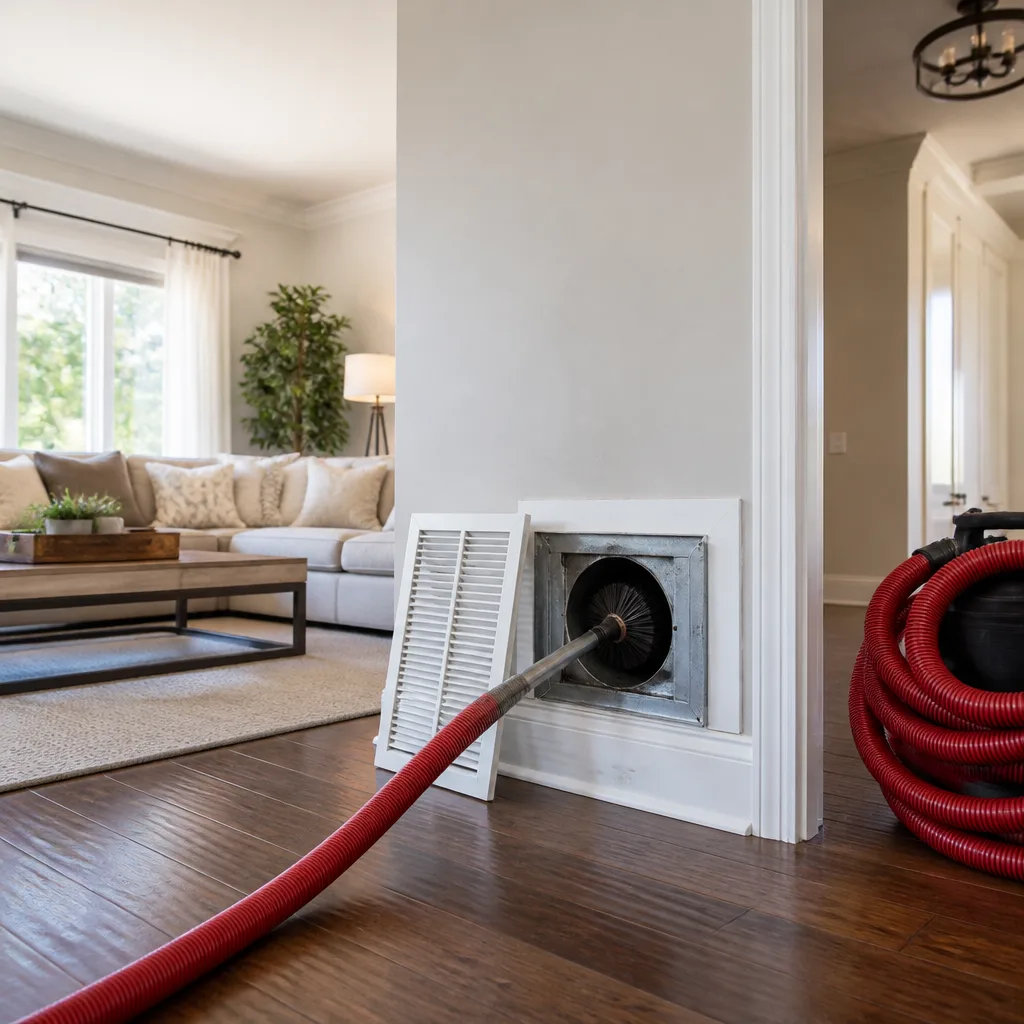
 Whole-home duct cleaning
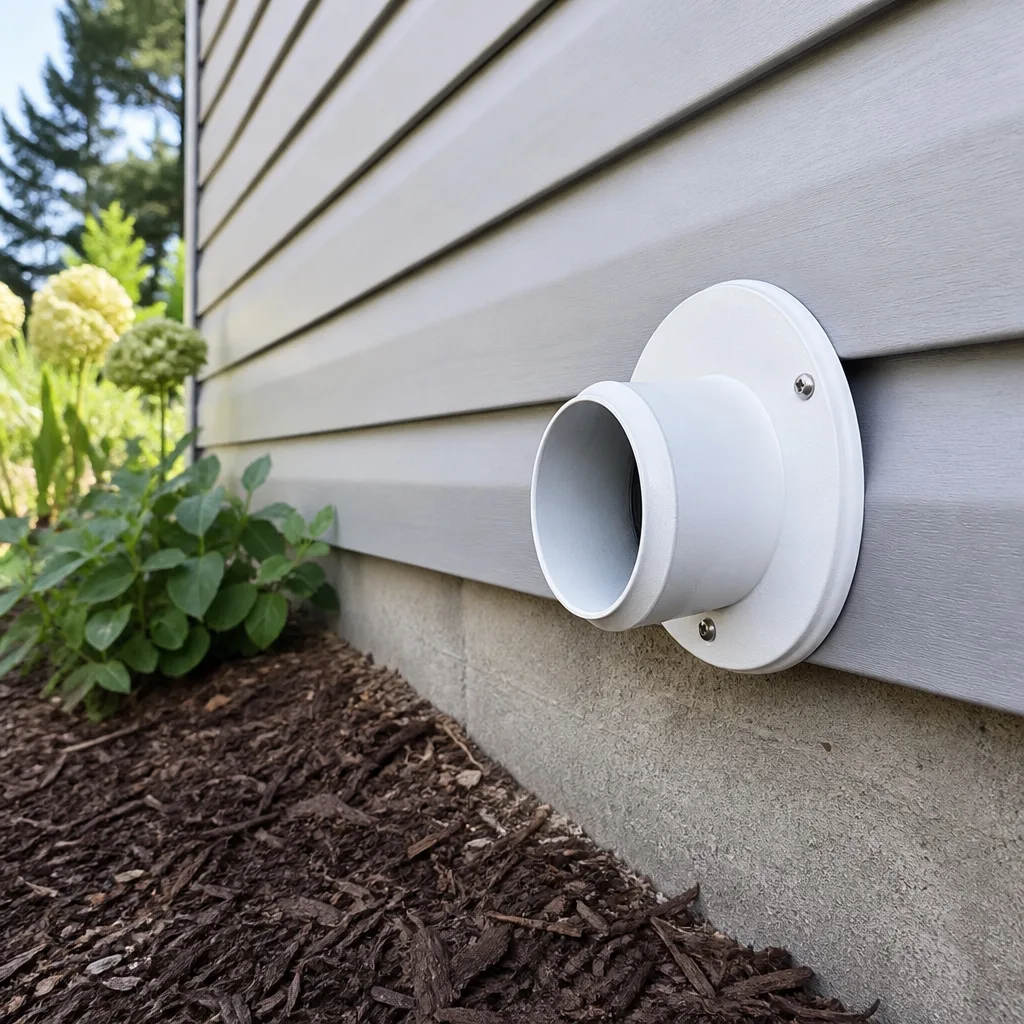 Dryer vent cleaning
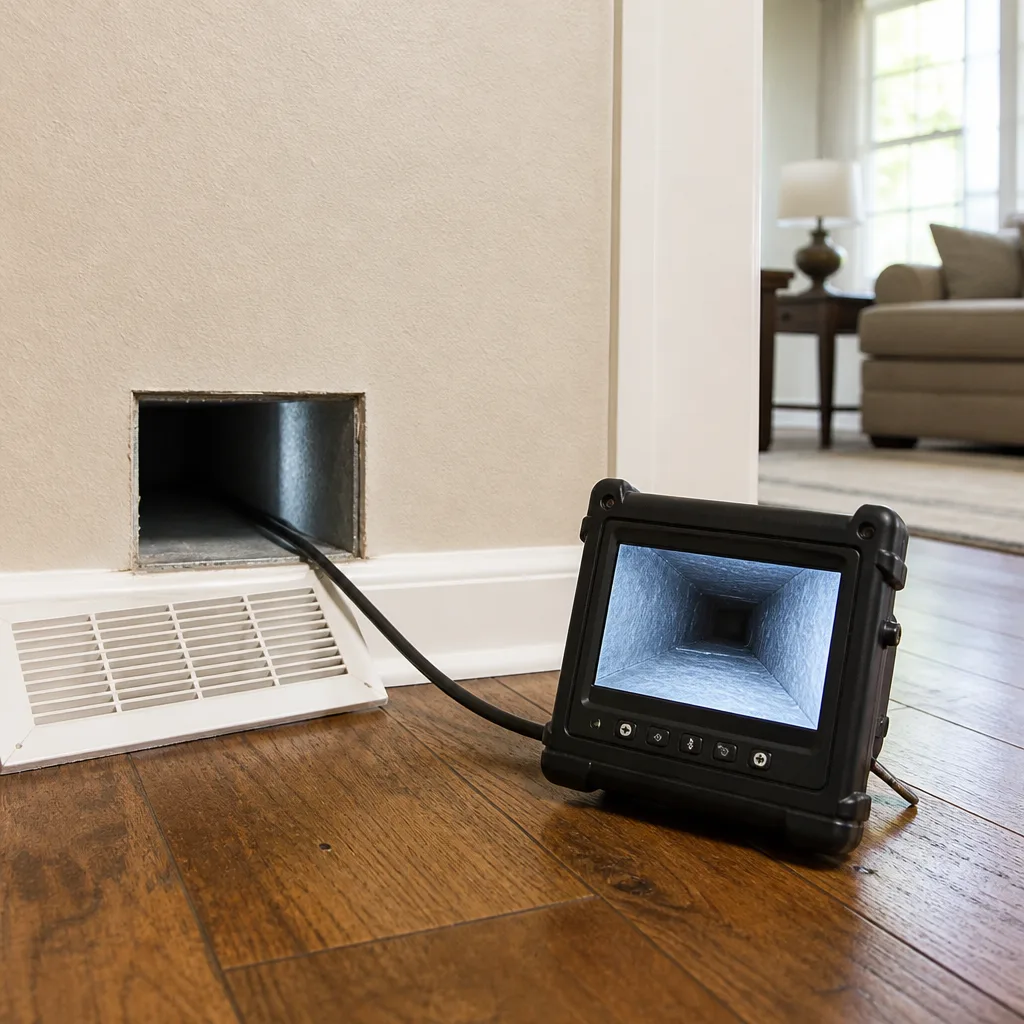 Camera inspection
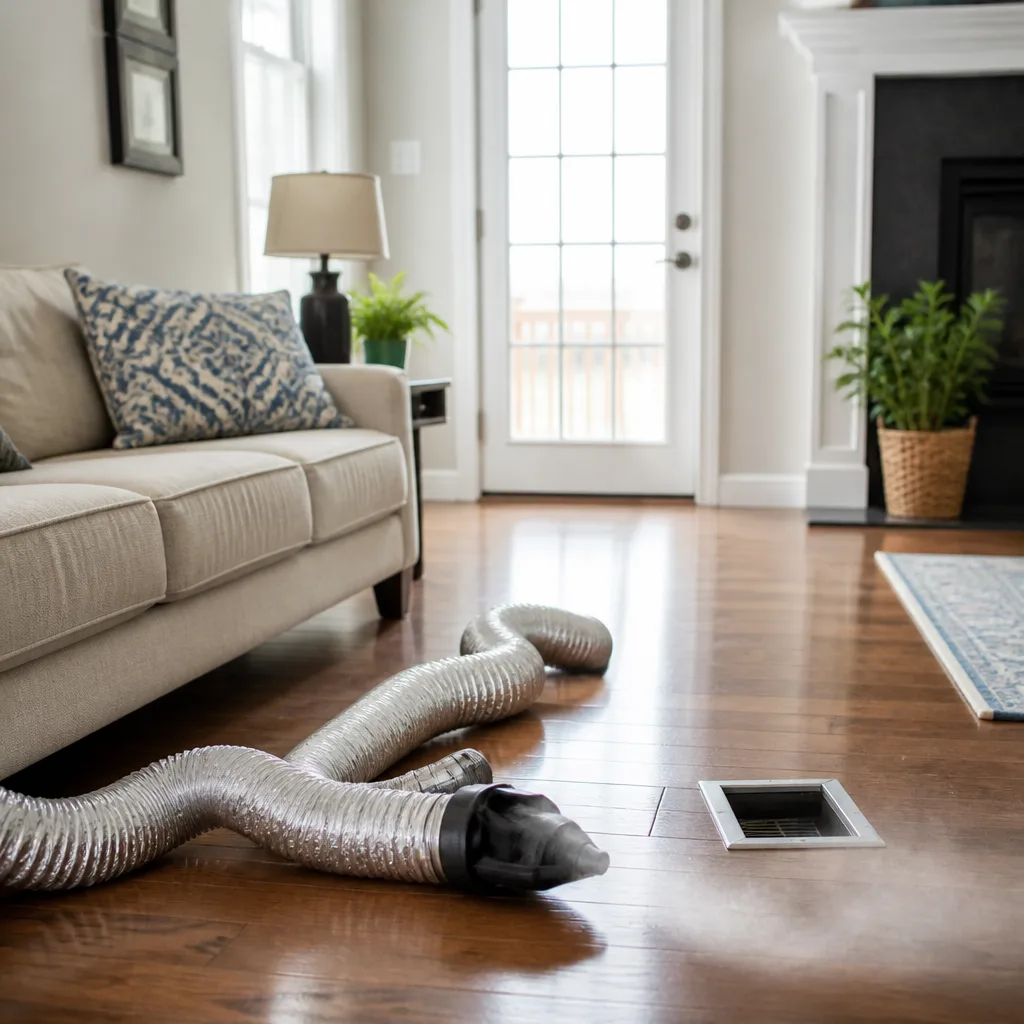 Sanitizing & deodorizing
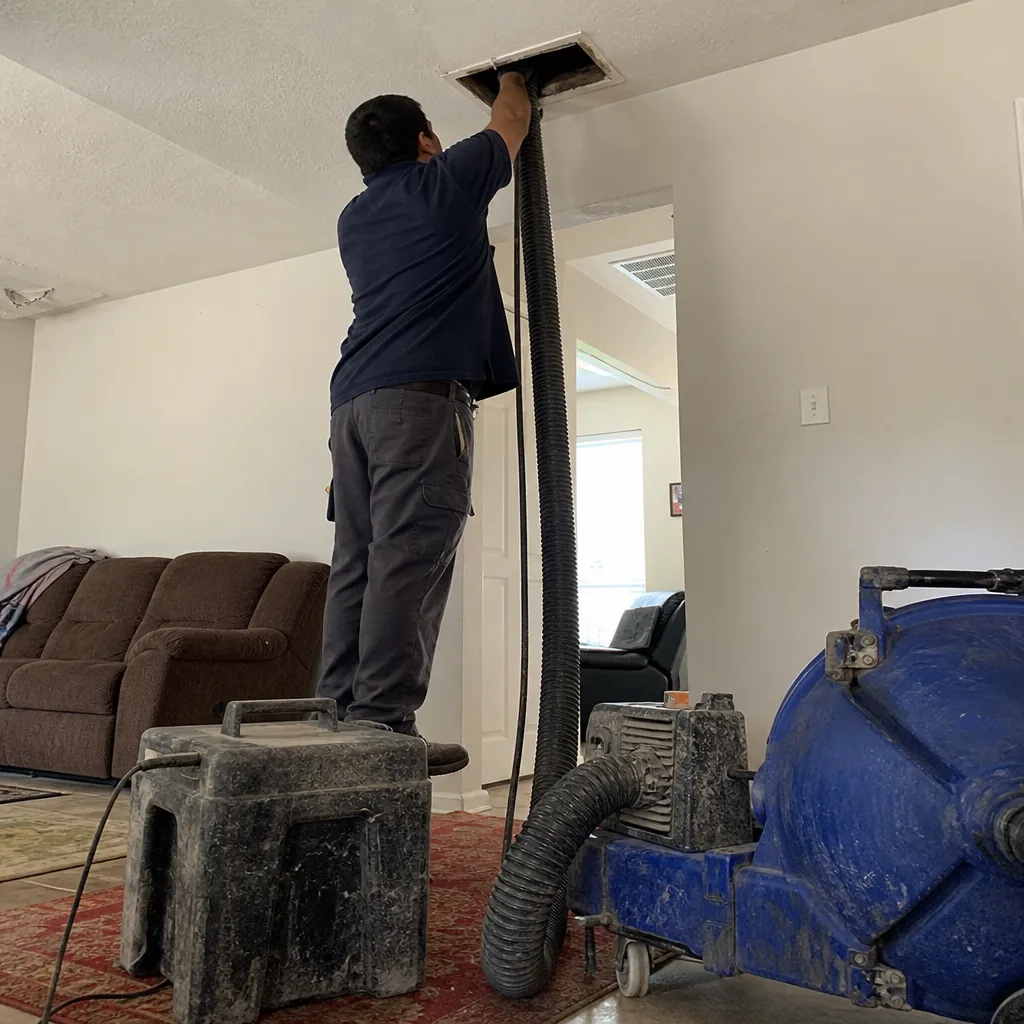
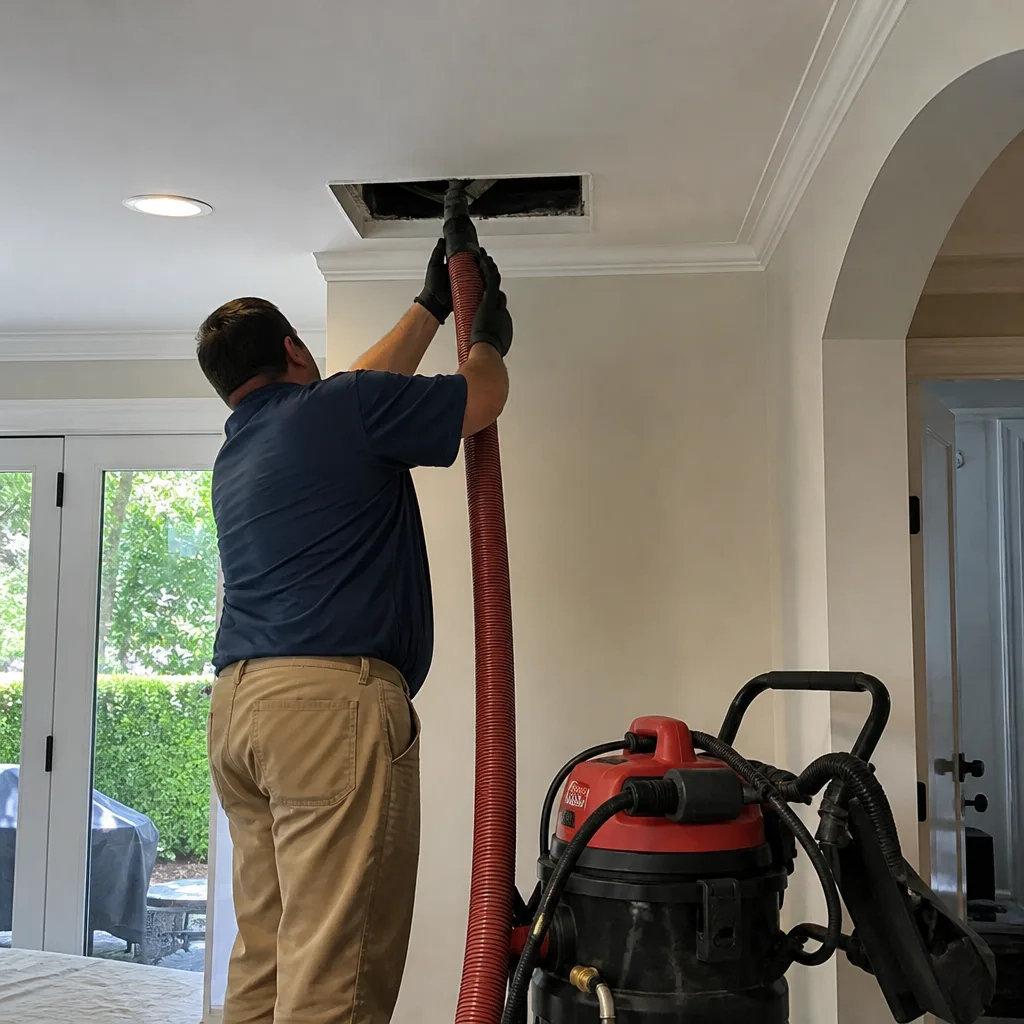
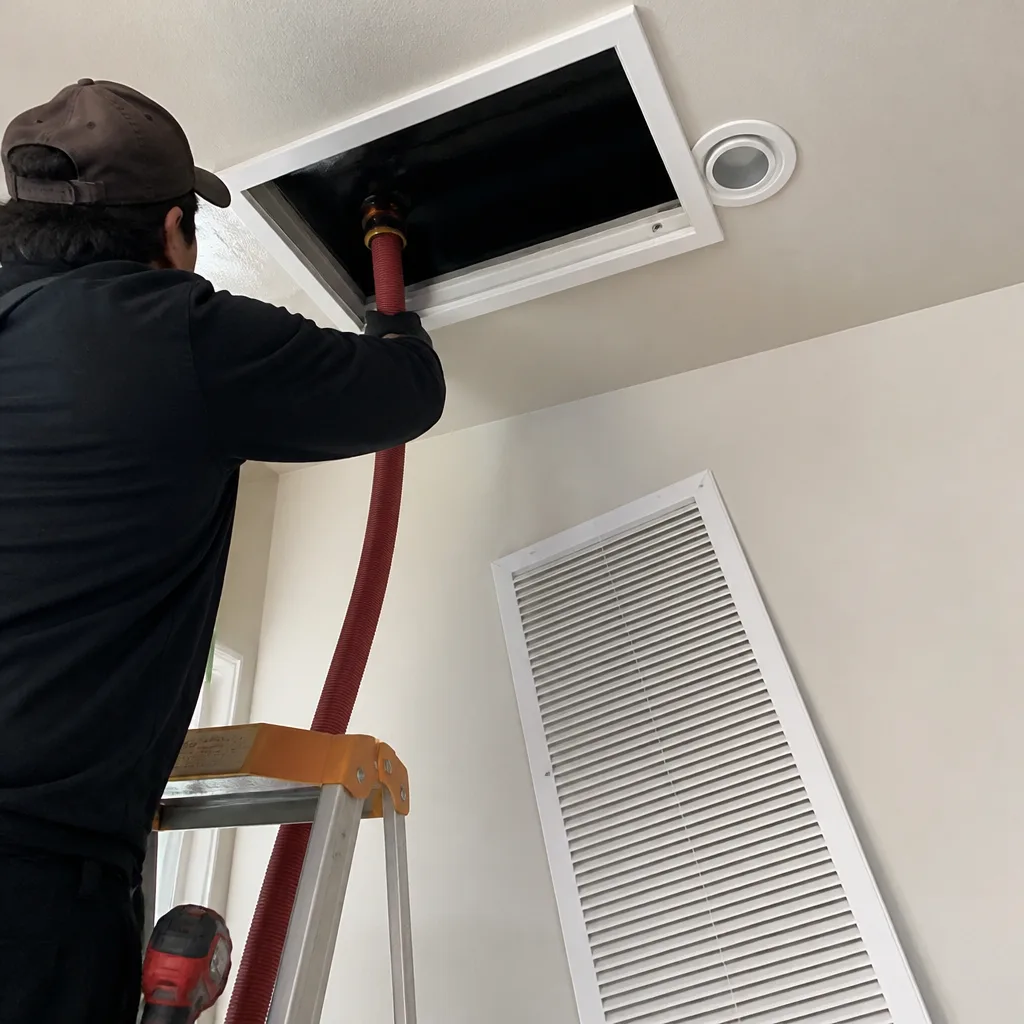
Whole-system duct and dryer vent check with before-and-after photos - you see exactly what came out of your vents
That "$99 whole-house special" is a bait ad - the real number appears once they are in your hallway, or the "clean" is a shop-vac at the register. We photograph the inside of your ducts before and after instead.
Why Austin Homeowners Choose Trane Air Duct Cleaning
We provide independent Trane service in Austin, and what sets our approach apart is that we work from the actual failure playbook of these systems, not a generic checklist. Trane equipment has specific design characteristics (tight coil spacing, variable-speed blower ramp profiles, the CleanEffects filtration stack) that turn ordinary dust into measurable airflow problems. If you own a Trane system in Austin, call (940) 461-7203 and you’ll get a straight answer about what your ducts actually need.

We are not affiliated with or authorized by Trane Technologies. We’re an independent Trane service provider, which means we can tell you the truth about what these systems need in this city without a manufacturer script. Marcus Veale and our crew have opened up enough Hyperion air handlers and XR condensers across Austin to know what fails here and why. From Allandale to Mueller to Steiner Ranch, the dust mix changes block by block, and your Trane notices it before you do.
Why Trust Linden Air Duct Austin for Your Trane Air Duct Cleaning?
Most duct cleaning companies treat a Trane like any other box. That’s the problem. Trane’s engineering makes some choices that generic cleaning misses entirely. Their variable-speed blowers ramp airflow in precise stages, and when the duct system is restricted, the motor compensates in ways that mask the underlying problem until it throws a code or burns out. Our techs recognize those patterns. We’ve worked inside hundreds of Trane systems across the Austin metro, from vintage XR80s still chugging along in Crestview bungalows to modern XV20i communicating systems in new Westlake builds, and we also offer Trane in Leander.
Marcus grew up in the San Fernando Valley, learned HVAC fundamentals at Los Angeles Trade-Technical College, then spent years in the field before narrowing to duct work exclusively. That focus matters because ducts are the part most contractors leave half-done. He’s known for walking a job start to finish himself: scoping the system, explaining what he finds before anyone touches a panel, and not leaving until airflow tests where it should. Over the years, he and the crew have cleaned systems in homes backing up to Barton Creek Greenbelt where the dust load alone tells you a lot about how a house breathes. He keeps a small notebook of unusual duct layouts he’s run across, mostly because the weird jobs teach you more than the straightforward ones ever will.
Every one of our techs is background-checked, identity-verified, and arrives in a marked uniform. You get their name and photo before the visit, and they show a photo ID badge at the door. The Threshold Standard isn’t marketing shorthand. It’s the protocol we’ve operated under since 2004, and it exists because opening your door to a technician is a real decision.
Styles & brands we work with
Common Trane Air Duct Cleaning Problems We Fix in Austin
Here’s what actually shows up when a Trane system in Austin starts misbehaving. These aren’t hypotheticals. They’re the five most common situations we walk into, in order of how often we see them.
- CleanEffects pre-filter loading and the whistling static spike. Trane’s CleanEffects whole-home air cleaner uses charged pre-filter cells that grab fine particles aggressively. In Austin, that means live oak pollen in spring, Ashe juniper in winter, and Saharan dust in summer all get captured fast. When those cells load up, static pressure climbs and you hear a whistle at the return. The blower starves for air and the high-limit switch can trip. Cleaning the collection cells isn’t enough; the pre-filter cells need a specific wash and dry cycle, or the field charger stops working right.
- Hyperion air handler blower wheel crud. The TAM7 and GAM5 Hyperion air handlers sit in hot, humid Austin attics. Trane’s TraneClean coil coating is slightly tacky by design, and when attic dust mixes with it and normal condensation, you get a sticky film on the blower wheel. That imbalance puts the variable-speed ECM motor into a low-frequency thumping mode that sounds like a diesel idle. Homeowners often think the motor is failing. Usually, the wheel just needs pulling and cleaning.
- XR-series outdoor coil inner-fins clogged with top-down dust. The XR14 and XR16 condensers pull air from the top, which means fine grit settles into the inner fin surface behind the fan. Standard pressure washing from the outside misses it completely. We see head pressures running 15 to 20 degrees higher than they should, with supply air coming out colder than the system was designed for. That’s not efficiency. It’s a restricted coil working overtime.
- XV20i communicating system “airflow reducer” phantom codes. This one frustrates homeowners the most. The XV20i stores an airflow restriction code when ducts are too tight, but the code clears itself after the system cools down. You reset the thermostat, everything seems fine, then the code comes back a week later. It looks like a ghost. What it actually is: the communicating system measuring static pressure against its expected curve and finding your ducts lacking. Clean the ducts, seal the leaks, and the code stops.
- Duct leakage in older Austin homes undermining the whole Trane package. Many central Austin homes have pier-and-beam foundations with metal ductwork running through unconditioned crawl spaces. Decades of Central Texas heat and humidity shifts have opened seams. Your Trane system can be doing everything right and still losing 20 to 30 percent of conditioned air under the house. Duct sealing with mastic, done properly, addresses this. We include it as a recommendation when our video inspection shows significant leakage.
Trane Parts & Our Repair-vs-Replace Approach
We’re straight about parts. When a Trane component communicates with the system, we use OEM Trane parts because the variable-speed algorithms depend on specific resistance values and signal timing. CleanEffects field chargers, Hyperion ECM motor modules, communicating thermostats: these need genuine Trane components, and we stock the common ones locally for fast turnaround.
For non-communicating mechanical parts like blower housings or standard capacitor mounts, quality aftermarket stainless options often outlast Trane’s plastic originals. We’ll tell you that plainly and let you decide. And when a duct system simply can’t meet a modern Trane’s low-airflow tolerances, we’ll say so instead of polishing it and sending you a bill. Tell me what the system is doing, and I’ll tell you what it needs, no upsell, no alarm, just the straight answer.
If you’re in Austin and wondering whether to repair or replace your duct setup around a Trane system, call (940) 461-7203 for an honest read. The inspection video goes to you, not into a sales pitch.
Our Trane Service Process – Step by Step
Here’s how a typical Trane service call works with us. No mystery, no skipped steps.
- 1
System scoping and video inspection. We map the full duct layout, check the static pressure at the air handler, and run a camera through the main trunk and branch lines. On Trane systems, we pay specific attention to the blower wheel, the CleanEffects cells if present, and the return-side ductwork, because those are where Trane’s design choices concentrate buildup.
- 2
Findings review before any work starts. You see the video. You hear what’s actually wrong, in plain words, with a written price for everything we recommend. Nothing gets done without your sign-off. If you don’t need the work, we tell you that too.
- 3
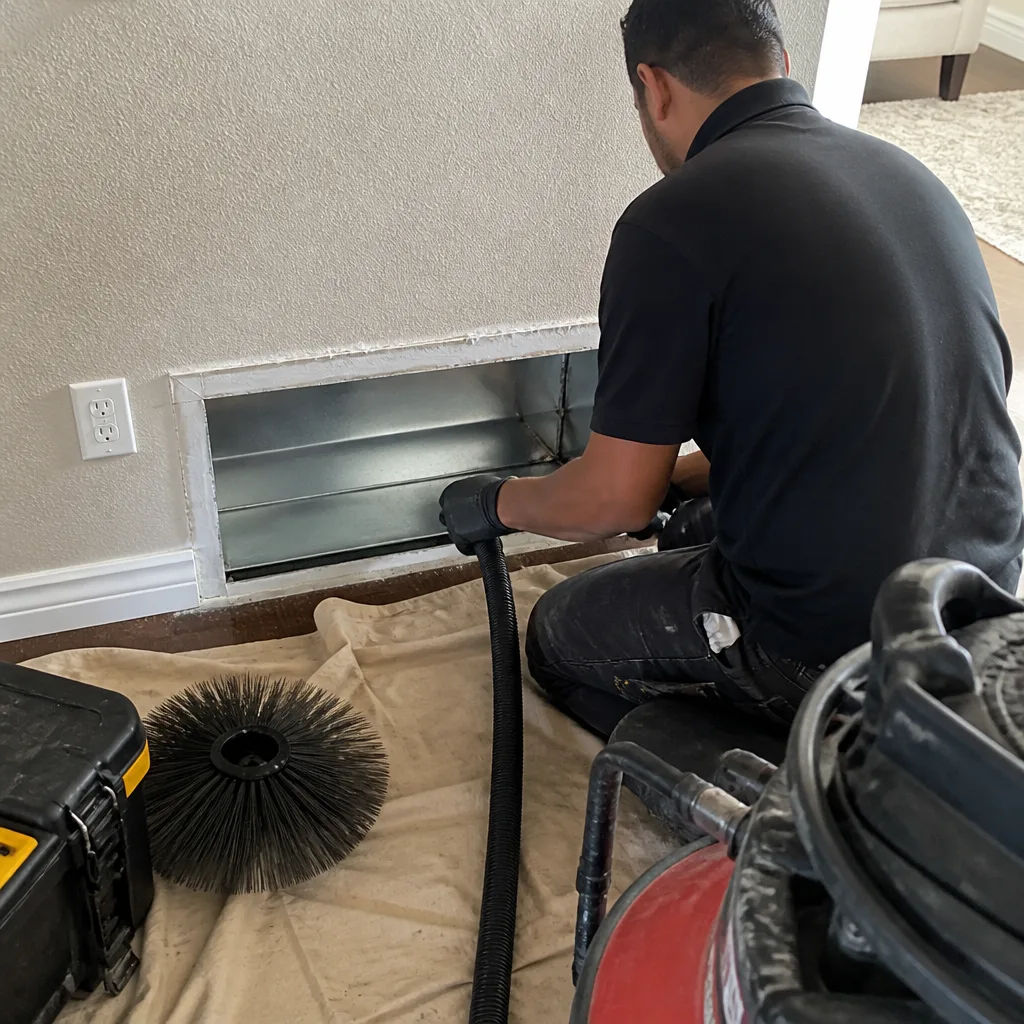
Negative-pressure extraction and targeted cleaning. We use Rotobrush and Nikro equipment to pull debris out under negative pressure, not push it around. For Hyperion units with coated blower wheels, the blower gets pulled, hot-water pressure washed, and the wheel reinstalled and balanced. For XR condensers, the inner coil gets the specific top-down cleaning it needs.
- 4
Duct sealing where the video showed leakage. All lateral takeoffs and accessible seams get proper mastic sealant, not tape. On older Austin pier-and-beam homes, this step usually makes the biggest measurable difference in airflow.
- 5
Static pressure re-test and before/after documentation. We measure again after the work, compare the numbers, and give you the report. Every repair is covered by a written guarantee, and if a covered repair doesn’t hold, we come back at no charge within 365 days.
See the difference
 Before
 After
After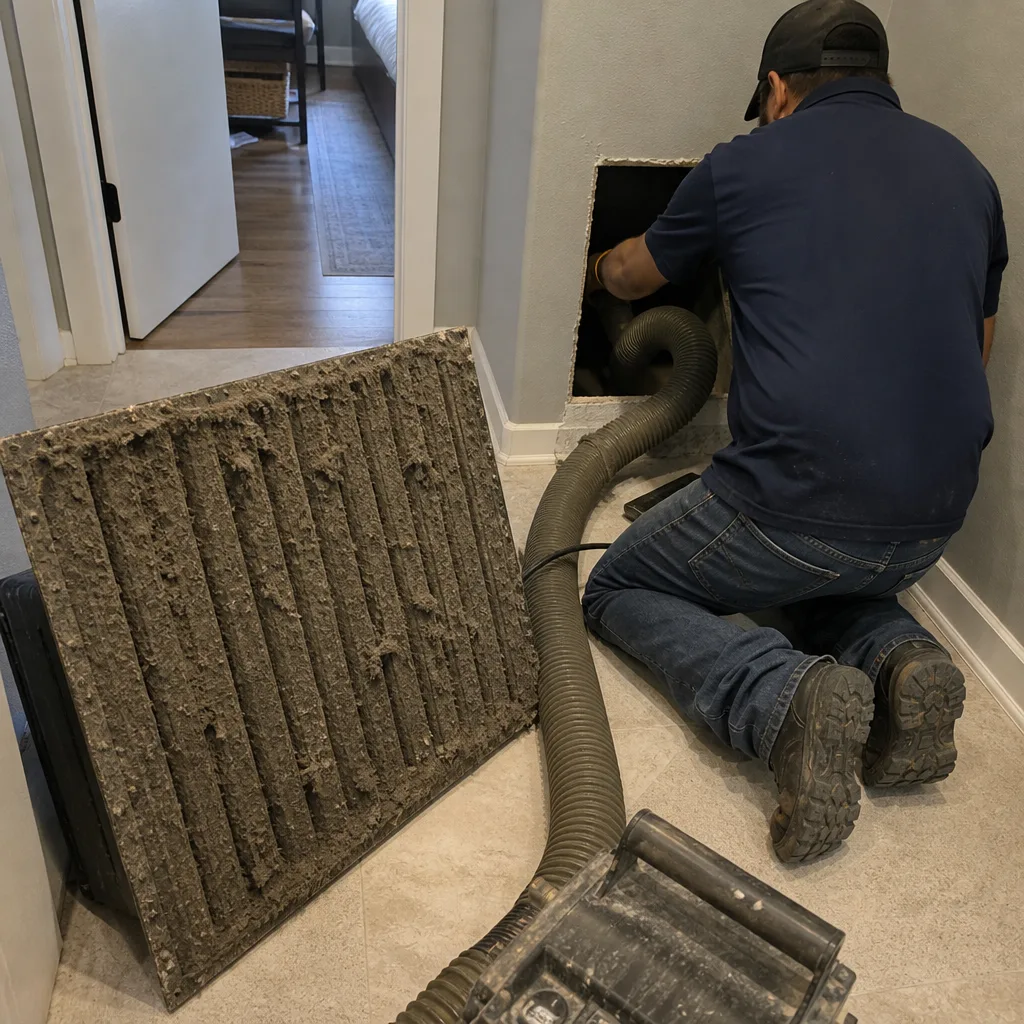 Before
 After
After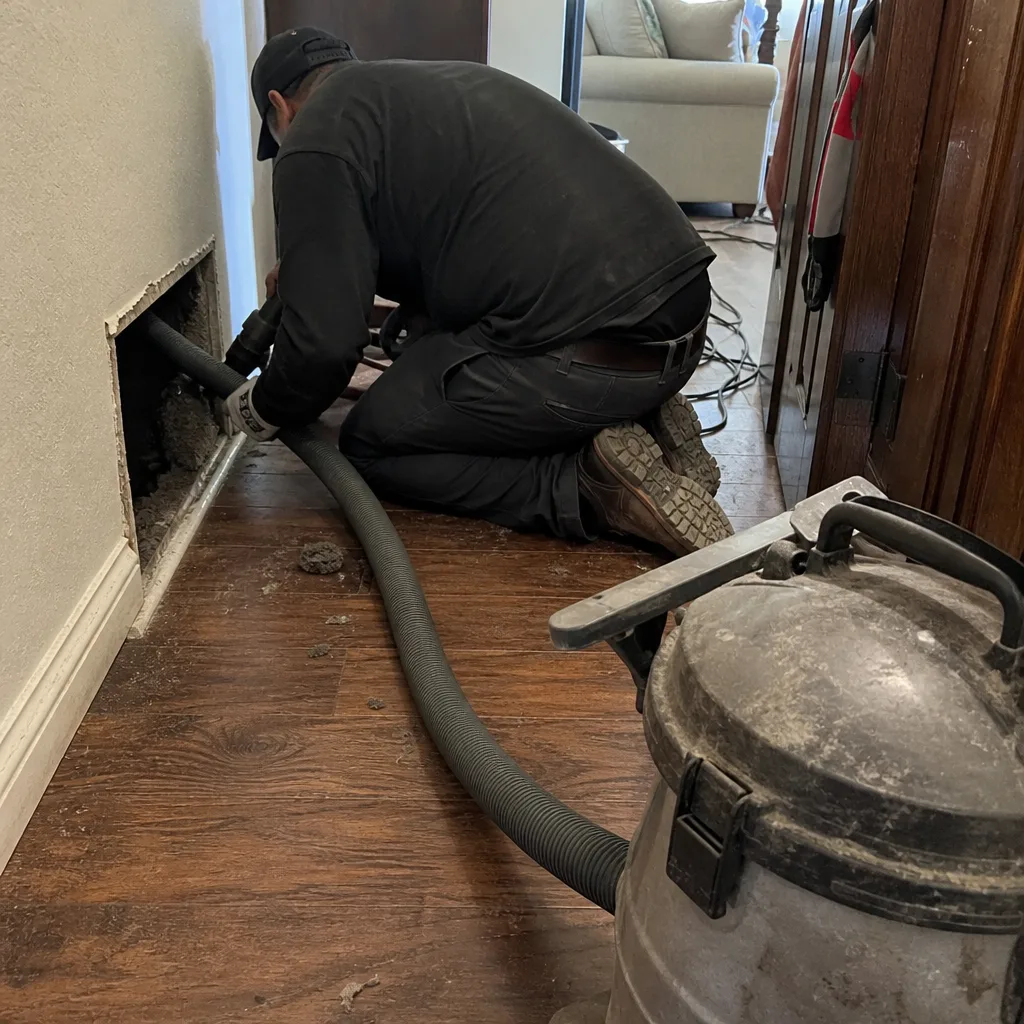 Before
 After
AfterTrane Products We Service & Install in Austin
Our Austin service area covers the full range of Trane residential product lines. On the air handler side, we work extensively with Trane Hyperion air handlers (TAM7, GAM5, and the newer models), plus the full XR condenser series (XR14, XR16) and the variable-speed XV series (XV18, XV20i). We also service and clean Trane CleanEffects whole-home air cleaners, including the pre-filter cells and field chargers, which are often neglected until a code appears or the whistling starts.
We stock common Trane-specific components locally in Austin, including CleanEffects replacement cells and Hyperion blower motor modules, so most repair jobs don’t wait on a parts shipment, and we also provide Georgetown Trane service. For full duct replacement or sealing work around a communicating Trane system, we’ll recommend the configuration that matches the system’s airflow requirements, not whatever’s easiest to install.
We Also Service These Brands
We’re not tied to one brand, and that’s an advantage. Trane is a big part of what we see in Austin, but we also service Lennox and Carrier systems regularly. If you have mixed equipment or you’re considering a switch, we can speak to all three without a sales bias. The ductwork doesn’t care whose badge is on the condenser.
FAQs – Trane Air Duct Cleaning Service in Austin
No. We are an independent Trane service provider and are not affiliated with or authorized by Trane Technologies. That independence means we can give you straight answers about your system without a manufacturer agenda. Our Trane expertise comes from field experience across hundreds of Austin homes, not from a corporate certification program.
We use genuine Trane OEM parts whenever the component communicates with the system’s electronics, like CleanEffects field chargers, Hyperion ECM motor modules, and communicating thermostats. For non-communicating mechanical parts like blower housings, we’ll often recommend a quality aftermarket option that outlasts the original. You’ll always know which is which and why before we start.
Most Trane systems in Austin take four to six hours for a full cleaning, depending on the number of returns and the condition of the blower components. If the Hyperion blower wheel needs pulling and detailed cleaning, that adds time. We’d rather take the extra hour and give you an accurate static pressure reading at the end. Call (940) 461-7203 and we’ll give you a realistic time window for your specific system.
We service the full Trane residential lineup that’s common in Austin: XR series condensers (XR14, XR16), XV series variable-speed systems (XV18, XV20i), Hyperion air handlers (TAM7, GAM5), and Trane CleanEffects whole-home air cleaners. If you have a model outside these, call us anyway. Between the systems we’ve opened and Marcus’s notebook of unusual layouts, there’s not much we haven’t seen.
No. Air Duct Cleaning and blower wheel cleaning do not void your Trane manufacturer warranty, as long as the work is done without damaging components. Where people run into trouble is when a tech forces open a sealed Hyperion housing or uses solvent-based cleaners on the coil. We service the Hyperion blower wheel by removing it properly, and we document the process. Every repair we do is covered under our written guarantee for 365 days. If a covered repair doesn’t hold, we return at no charge.
Trane air duct cleaning in Austin typically runs $450 to $800 for a full system, depending on home size, number of returns, and whether the blower wheel needs detailed cleaning. Systems with CleanEffects filtration add $80 to $150 for the cell cleaning and field charger check. Older central Austin homes with significant duct leakage may also need sealing, which we quote separately after the video inspection. The price we give you is the price on the invoice, written down before any work begins. Call (940) 461-7203 for an exact quote for your system. Estimates are free.
Because Austin’s air is loaded with fine, sticky particulate: live oak pollen in spring, Ashe juniper in winter, grass pollen in summer, and Saharan dust events in between. The CleanEffects pre-filter cells use an electrostatic charge to grab fine particles, which works aggressively in this environment. Homes near the Mueller development see an additional layer of fine white dust from the nearby airport’s concrete runways and the limestone quarry operations west of the city. That dust clings to the charged cells more readily than average airborne dust. The fix is more frequent cell cleaning, not disabling the filtration.
You can rinse the outer surface lightly from the outside, but the problem on XR-series condensers is the inner fin surface behind the compressor fan, where top-down dust ingestion packs in grit that ordinary pressure washing from the outside misses completely. That inner clog is what drives head pressure up 15 to 20 degrees. We use a specific top-down cleaning method that reaches those inner fins without bending them. If your XR is running but cooling poorly and you’ve already rinsed the outer coil, that inner layer is likely the culprit. Call (940) 461-7203 and we’ll take a look.
That “airflow reduced” code, especially on XV20i communicating systems, is the system telling you that static pressure is higher than the duct design allows. The code clears on reset because the system cools down and the sensors normalize, but the underlying restriction is still there. If you see that code more than once in a season, the ducts are the likely issue. Cleaning and sealing them is cheaper than replacing the variable-speed motor when it eventually gives up. Call us at (940) 461-7203 and we’ll run a static pressure test to tell you exactly where the restriction is.
No, as long as it’s done properly. The blower wheel needs to be pulled using the correct procedure, cleaned with methods that don’t damage the TraneClean coating, and reinstalled to spec. Where warranties get voided is when someone uses harsh solvents on the coated surfaces or forces the sealed housing open incorrectly. Our techs follow Trane’s own service procedures for Hyperion units, and we document the work. Every repair we perform is backed by our 365-Day Done Right Promise in writing.
It depends on what the video inspection shows. Many Austin homes built during the 2000s have undersized flex ducts with poor sealing, and a variable-speed XV20i is far less forgiving of those deficiencies than an older single-stage system. Cleaning removes the debris, but cleaning can’t fix duct runs that are too small, too long, or crushed in the attic. If the static pressure test shows the ducts are the bottleneck, rerouting or resizing is the right call. We’ll show you the numbers and let you decide.
Book Your Trane Service in Austin, TX
If your Trane is whistling, thumping, throwing codes, or just not cooling like it used to, call us. We’ll answer with a real person, walk you through what to expect, and schedule the service. The invoice you get matches the price you agreed to, in writing, before any work starts.
Call (940) 461-7203 for a free estimate on Trane air duct cleaning in Austin, TX.
Written by Marcus Veale, Owner at Linden Air Duct Austin, serving Austin since 2004.